The price difference between 304 and 316 stainless steel elevator doors mainly stems from raw material and corrosion resistance. 316 contains more nickel and molybdenum, boosting durability in humid or coastal environments. On average, 316 panels cost 30–50% more, but their longer lifespan and lower maintenance make them a smart choice for hotels, commercial buildings, or high-traffic installations.
1. Material Composition Differences
Understanding the material composition is key when comparing 304 vs 316 stainless steel elevator doors. The chemical makeup not only impacts corrosion resistance but also directly influences manufacturing and material costs. Here’s a clear comparison:
| Property / Element | 304 Stainless Steel | 316 Stainless Steel | Impact on Cost & Usage |
|---|---|---|---|
| Chromium (Cr) | 18–20% | 16–18% | Provides corrosion resistance; similar effect, minor impact on cost. |
| Nickel (Ni) | 8–10.5% | 10–14% | Higher nickel in 316 increases material cost and enhances corrosion resistance, especially in humid or coastal environments. |
| Molybdenum (Mo) | 0% | 2–3% | Improves pitting and crevice corrosion resistance; raises material cost significantly. |
| Carbon (C) | ≤0.08% | ≤0.08% | Minimal cost impact; affects welding properties. |
| Manganese (Mn) | ≤2% | ≤2% | Negligible cost impact. |
| Phosphorus (P) | ≤0.045% | ≤0.045% | Negligible cost impact. |
| Sulfur (S) | ≤0.03% | ≤0.03% | Negligible cost impact. |
| জারা প্রতিরোধের | Good | Excellent | 316 more resistant in marine, humid, or chemical environments, reducing long-term replacement costs. |
| Typical Usage | Indoor or low-humidity installations | Coastal, high-humidity, or heavy-use areas | 316 preferred for premium projects like hotel lobbies, commercial buildings, and high-traffic elevators. |
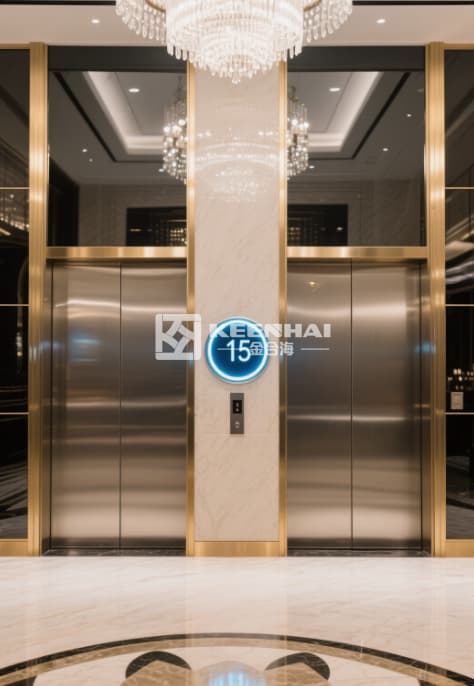
For a modern office building, 304 stainless steel elevator doors perform well indoors, while coastal resorts or spa facilities benefit from 316 doors due to superior corrosion resistance. This small material cost increase upfront is offset by reduced maintenance and longer lifespan.
1.1 Chemical Composition of 304 Stainless Steel
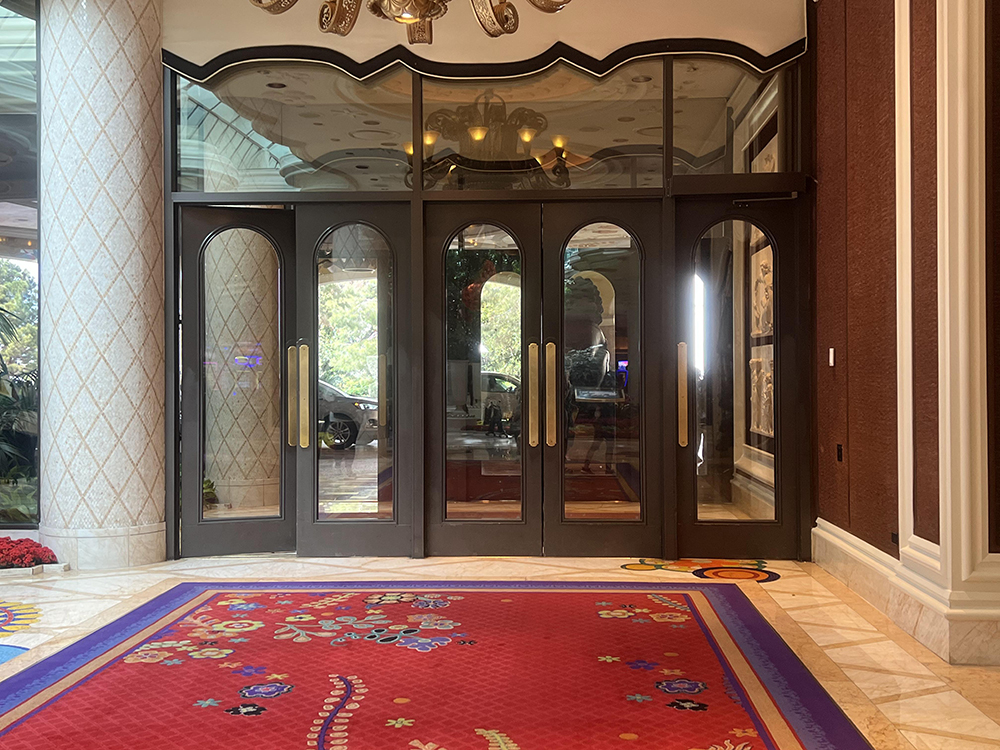
Grade 304 remains the default choice for most interior stainless steel elevator door panels, including lobby-facing doors and standard passenger elevators in malls, hospitals, or residential buildings. In these environments, humidity stays relatively stable, and exposure to chlorides stays low. Contractors like 304 because it offers predictable forming behavior and consistent surface quality during polishing.
The alloy maintains its durability thanks to its chromium-nickel structure, which gives the surface a stable passive layer. Fabricators can bend, press, and weld 304 without worrying about excessive cracking or distortions during door-frame assembly. When a project requires a smooth transition between door leaf and stainless steel elevator entrances—for example, in premium hotel lobbies—fabricators appreciate how 304 responds cleanly to welding and brushing.
1.2 Chemical Composition of 316 Stainless Steel
When installation sites sit near coastlines, outdoor plazas, swimming-pool areas, or ventilation zones with higher chloride levels, engineers choose 316 because its molybdenum content blocks pitting and crevice corrosion. You can see this difference clearly in high-end mixed-use buildings where the elevator system connects underground parking, open-air podiums, and indoor floors. The alloy simply performs better across varied micro-environments.
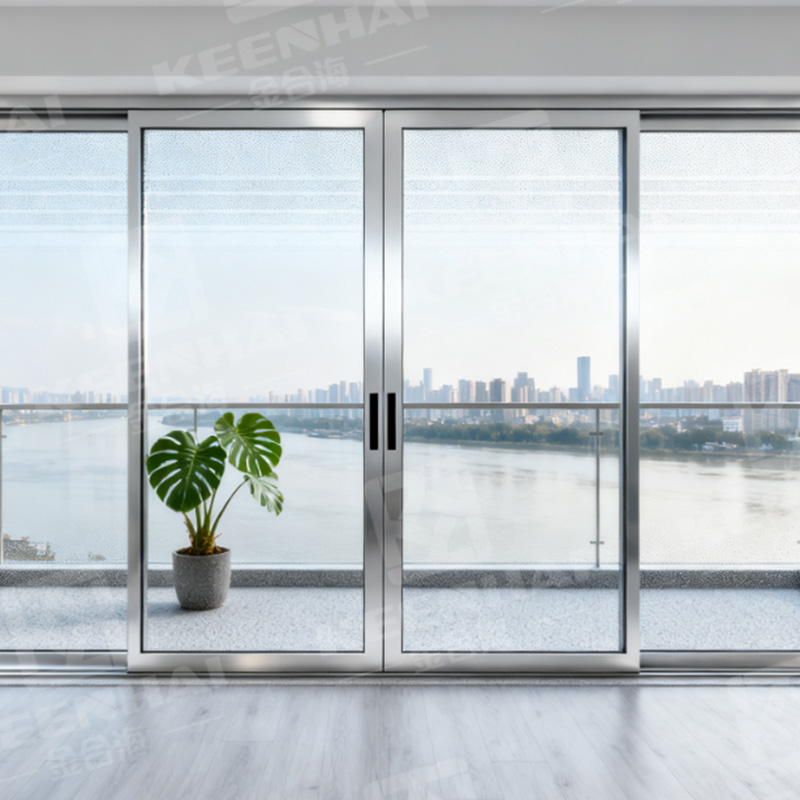
The additional molybdenum strengthens the passive film, especially where water droplets dry repeatedly on the door surface. This matters if the design includes a glass entrance door next to the elevator, because water exposure tends to concentrate near transparent panels due to condensation. Architects try to keep all visible stainless steel elements consistent, which makes 316 the safer long-term option.
1.3 How Composition Impacts Material Cost
Material cost follows a simple rule: as nickel and molybdenum content increases, the price rises. Because 316 contains noticeably more nickel and adds molybdenum, its raw-material cost remains higher year-round, and the gap becomes even wider during periods of metal-market volatility. Contractors planning a large elevator renovation—like replacing all cars and the surrounding high-quality stainless steel elevator door solution in a 20-year-old commercial tower—need to calculate these differences early in the budgeting stage.
In real projects, the material choice often depends on the following workflow:
-
Assess the environmental exposure — humidity, chloride presence, cleaning chemicals, ventilation patterns.
-
Define expected foot traffic — high-traffic commercial cores put more pressure on finish durability.
-
Match alloy grade to risk level — 304 for stable interiors, 316 for aggressive or mixed environments.
-
Balance long-term maintenance with upfront material pricing — 316 may cost more now but avoids premature corrosion in challenging environments.
A well-chosen alloy minimizes lifecycle costs, avoids unexpected finish failure, and keeps the elevator facade visually consistent with adjacent architectural elements.
2. Price Breakdown for Raw Stainless Steel Sheets
When architects and contractors plan a new elevator installation or a modernization project, the raw material cost of stainless steel can heavily influence the final budget. For both stainless steel elevator doors and other panels, understanding the price breakdown of 304 vs 316 is essential, especially for projects with multiple units or custom sizes. Prices fluctuate with market trends, but experienced buyers usually analyze them by tonnage, thickness, and surface finish to forecast total material expenditure.
2.1 Average Market Price per Ton (304 vs 316)
On average, 304 stainless steel sells for approximately $2,200–$2,600 per ton, while 316 ranges from $3,200–$3,600 per ton depending on global nickel and molybdenum prices. These numbers can shift rapidly, so procurement teams monitor the market weekly before committing to a large order.
For example, if a commercial building requires 5 elevator doors with raw panels, the total steel cost could easily reach $12,000 for 304 versus $18,000 for 316. This difference often determines whether designers choose 304 for indoor use or invest in 316 for high-humidity zones.
2.2 Thickness Impact on Cost (1mm–5mm Range)
The thickness of stainless steel directly drives raw material pricing. Thicker sheets provide better structural rigidity but naturally cost more. Architects usually calculate costs as follows:
-
1–2mm sheets: ideal for lightweight elevator doors in low-traffic residential buildings; cost is lowest.
-
2–3mm sheets: standard for commercial installations with moderate foot traffic; balances weight and durability.
-
4–5mm sheets: required for heavy-duty doors, fire-rated applications, or high-traffic lobbies; cost increases significantly.
Cost Impact Table by Thickness (Example)
| Thickness | 304 Price per m² | 316 Price per m² |
|---|---|---|
| 1mm | $18–$22 | $27–$30 |
| 2mm | $36–$40 | $54–$58 |
| 3mm | $54–$60 | $81–$87 |
| 4mm | $72–$78 | $108–$114 |
| 5mm | $90–$100 | $135–$145 |
Notice how each millimeter adds both material cost and weight, which affects shipping and installation. For multi-door projects, these small per-unit increases multiply quickly.
2.3 Surface Finish Cost Differences (Brushed, Mirror, Etched)
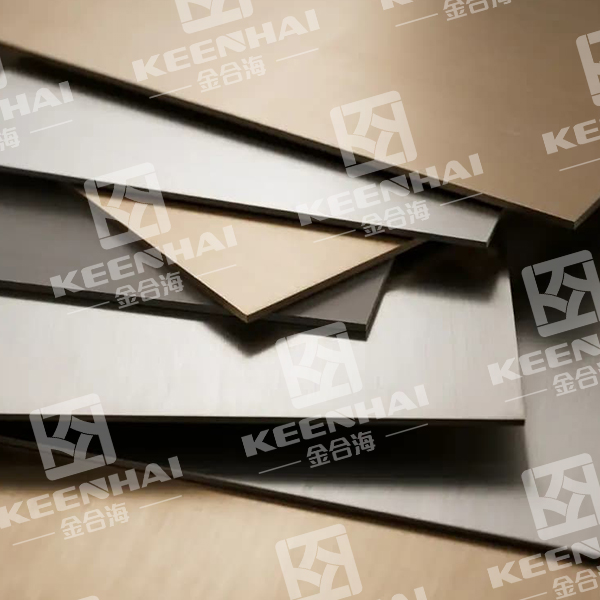
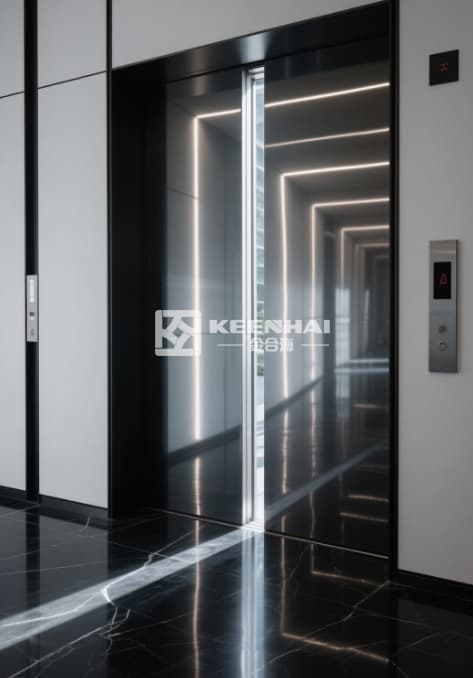
Surface finish is another major cost factor. Brushed finishes, widely used in office lobbies, require consistent polishing and increase fabrication time slightly. Mirror finishes demand highly controlled rolling and buffing processes, which can raise the price by 15–20% per panel. Etched or patterned surfaces are the most expensive because they involve additional tooling and labor.
For instance, when installing a set of custom stainless steel elevator door panels, the workflow typically includes:
-
Initial surface cleaning to remove mill scale.
-
Polishing or brushing based on design specification.
-
Inspection for consistency—any deviation can trigger rework.
-
Optional coating for anti-fingerprint or anti-corrosion properties.
If the project places the elevator adjacent to a Glass Entrance Door, designers often select a mirrored or semi-polished finish to match the adjacent glazing, ensuring visual cohesion while still protecting against frequent touching.
Brushed finishes are more forgiving in terms of fingerprints and scratches, which makes them cost-efficient for high-traffic commercial elevators, whereas mirror finishes provide premium aesthetics but require stricter maintenance.
3. Manufacturing Cost for Elevator Door Panels
The manufacturing stage contributes significantly to the overall cost of a premium stainless steel elevator door. Raw material costs are only part of the story—how a sheet is cut, bent, welded, and finished determines labor, equipment usage, and ultimately, the price per door. Understanding these factors helps project managers forecast budgets accurately and avoid unexpected overruns.
3.1 Cutting, Bending, and Welding Cost Differences
Fabrication involves three primary operations:
-
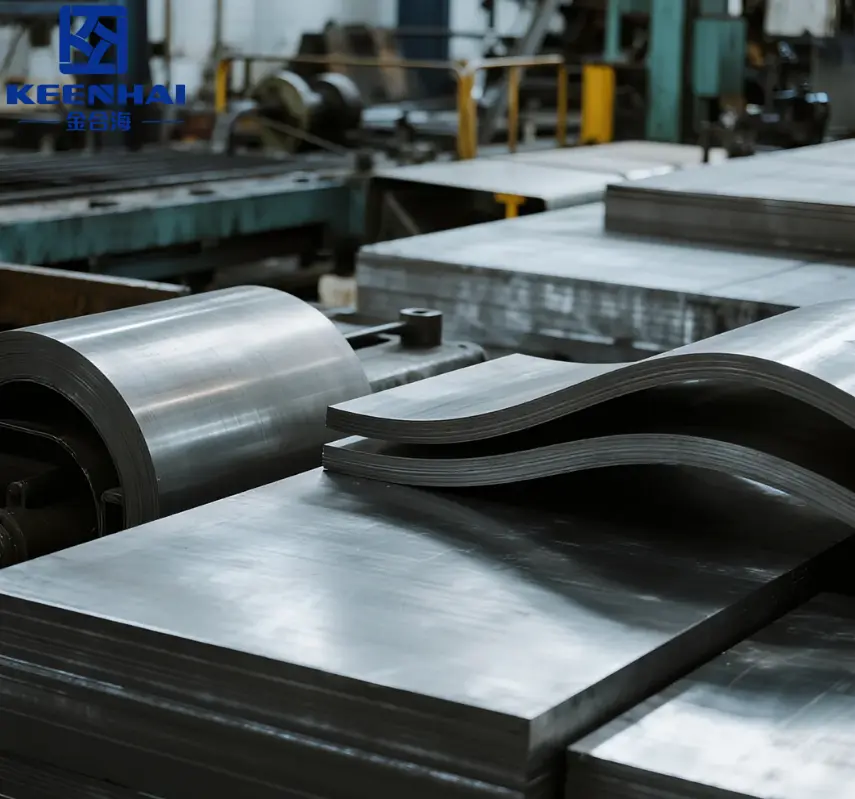
Cutting – Laser or plasma cutting ensures precise dimensions but varies in cost by sheet thickness and complexity. For standard 304 panels, cutting is fairly predictable; for 316, the higher alloy density slightly increases machine wear and energy usage.
-
Bending – High-quality elevator doors often require precise edge folds for flush alignment with frames. The number of bends, radius tightness, and metal thickness all contribute to time and labor cost.
-
Welding – Panels that form a full door leaf or frame are welded together. TIG welding is preferred for visible joints due to its clean finish, while MIG welding can be used for concealed areas to save costs.
| Operation | 304 Cost Impact | 316 Cost Impact |
|---|---|---|
| Cutting | মাঝারি | উচ্চ |
| Bending | মাঝারি | Medium-High |
| Welding | উচ্চ | Very High |
Architects often review door mockups in advance, especially when coordinating with stainless steel elevator entrances, to minimize expensive rework and ensure precise fit with the lobby’s design.
3.2 Anti-Fingerprint & Anti-Corrosion Coating Costs
Coatings can dramatically affect both performance and visual appeal. Anti-fingerprint coating reduces visible smudges in busy lobbies, while anti-corrosion treatments protect against moisture and cleaning chemicals. The workflow usually involves:
-
Cleaning the surface to remove contaminants.
-
Applying a primer or protective layer.
-
Curing at precise temperatures to ensure durability.
-
Quality inspection with a focus on uniformity and adhesion.
Coating cost varies with surface finish: mirror panels require more careful application to avoid visual distortions, while brushed panels are more forgiving. For large projects, coating can account for 10–15% of the total panel cost.
3.3 Custom Design Costs (Patterns, Grooves, Etching)
Custom designs significantly increase manufacturing costs. Patterns, grooves, and etching require additional tooling, labor, and sometimes iterative prototyping. The cost-driving factors include:
-
Pattern complexity – simple linear grooves add minimal cost; intricate geometric or branded motifs require CNC programming and more machine time.
-
Etching depth and area – deeper etches or larger surface coverage extend process time and increase material removal, impacting final price.
-
Alignment and tolerance checks – every decorative element must align precisely with the door leaf and surrounding panels, often requiring multiple inspections.
A hotel renovation team chose custom stainless steel elevator door panels with etched logo patterns to match the building’s interior theme. The manufacturer performed three sample iterations before final production, ensuring the finished doors aligned perfectly with lobby aesthetics.
4. Installation Cost Comparison
The installation phase often represents 20–30% of the total elevator door project cost, especially for high-end buildings. Choosing 304 vs 316 stainless steel affects labor complexity, structural compatibility, and adjustment time. Understanding these factors allows project managers to optimize budgets and avoid costly delays.
4.1 Labor Cost Differences for 304 vs 316 Doors
Labor costs vary mainly due to material hardness and weight differences:
-
Handling & positioning – 316 panels are heavier than 304, increasing manpower requirements and potentially requiring mechanical lifting devices.
-
Precision alignment – elevator doors must meet strict tolerances for smooth operation. Thicker or heavier 316 doors can extend alignment time by 15–25%.
-
Mounting finish panels – polishing or brushed surfaces require careful handling to avoid scratches, which adds labor time.
| Labor Task | 304 Cost Impact | 316 Cost Impact |
|---|---|---|
| Lifting & Positioning | মাঝারি | উচ্চ |
| Alignment & Leveling | মাঝারি | Medium-High |
| Surface Handling | মাঝারি | Medium-High |
For a 12-story office building, installation teams reported an extra 4 hours per door when using 316 panels versus 304.
4.2 Frame, Guide Rail, and Structure Compatibility Costs
Compatibility with existing frames and guide rails can add hidden costs, particularly in modernization or retrofit projects:
-
Measure existing shafts and compare with new panel thickness and weight.
-
Verify guide rail capacity; heavier 316 doors may require reinforcement.
-
Adjust frame connections, hinges, or rollers to maintain smooth operation.
Architects often coordinate with structural engineers early to prevent last-minute modifications, which can add 10–20% to labor costs if adjustments are needed after delivery.
4.3 Logistics & On-Site Adjustment Cost Factors
Transport, staging, and on-site adjustments contribute significantly to installation budgets:
-
Panel transport – heavier 316 doors may require forklifts or custom trolleys.
-
On-site storage – panels must be kept in climate-controlled environments to prevent scratches or corrosion.
-
Fine-tuning – leveling, gap adjustments, and door leaf synchronization are critical for elevator safety and smooth operation.
During a luxury hotel retrofit, 316 doors required an extra crane lift and two additional technicians for precise alignment, increasing on-site costs by nearly $500 per door compared to 304 panels.
5. Long-Term Cost Efficiency
Selecting the right stainless steel grade isn’t just about upfront price—it heavily impacts lifecycle costs. Facility managers and building owners must evaluate how material composition, maintenance, and corrosion resistance influence replacement cycles and total ownership costs. Long-term cost efficiency often drives the decision between 304 and 316, especially in high-traffic or humid environments.
5.1 Corrosion Resistance and Replacement Frequency
316 stainless steel outperforms 304 in environments exposed to moisture, chlorides, or frequent cleaning agents. This advantage translates into longer replacement intervals, reducing future capital expenditures.
-
Indoor, controlled environments – 304 typically lasts 10–15 years without significant corrosion, suitable for office buildings and low-humidity areas.
-
Semi-outdoor or coastal zones – 316 can last 20+ years due to superior pitting and crevice corrosion resistance.
| উপাদান | জারা প্রতিরোধের | Expected Replacement Frequency |
|---|---|---|
| 304 | Moderate | Every 10–15 years |
| 316 | উচ্চ | Every 20+ years |
In a seaside luxury hotel, 316 stainless steel elevator doors maintained flawless appearance and function for 18 years without any panel replacement, whereas nearby 304 doors in the same environment began showing minor pitting after 12 years.
5.2 Cleaning & Maintenance Cost Over 5–10 Years
Maintenance is a significant portion of total cost. High-traffic areas, such as shopping mall elevators, require regular cleaning and occasional polishing to maintain aesthetics:
-
Routine wiping – Brushed surfaces generally require weekly cleaning; mirror finishes need daily attention.
-
Periodic polishing – Every 6–12 months for mirror or high-gloss finishes to remove micro-scratches.
-
Protective coatings – Anti-fingerprint and anti-corrosion layers can extend cleaning intervals and reduce labor costs.
For a 10-floor commercial building, 304 elevator doors incurred an average of $250 per door annually for cleaning and maintenance, while 316 doors, due to better corrosion resistance, required only $150 per door annually.
5.3 Total Cost of Ownership: 304 vs 316 in Different Environments
When calculating total cost of ownership (TCO), consider:
-
Initial material and fabrication cost – 316 costs 30–50% more upfront.
-
Installation labor – Heavier 316 panels slightly increase initial installation costs.
-
Maintenance & cleaning – Lower for 316 in corrosive or high-traffic environments.
-
Replacement cycles – Fewer replacements for 316 reduce long-term capital expenditure.
TCO Comparison Table (Illustrative)
| Grade | Initial Cost | 10-Year Maintenance | Replacement | Total 10-Year Cost |
|---|---|---|---|---|
| 304 | $12,000 | $2,500 | $3,000 | $17,500 |
| 316 | $18,000 | $1,500 | $0 | $19,500 |
While 316 has higher upfront costs, its reduced maintenance and replacement requirements make it more cost-efficient in corrosive environments, such as coastal hotels, spa facilities, and outdoor-adjacent elevators.