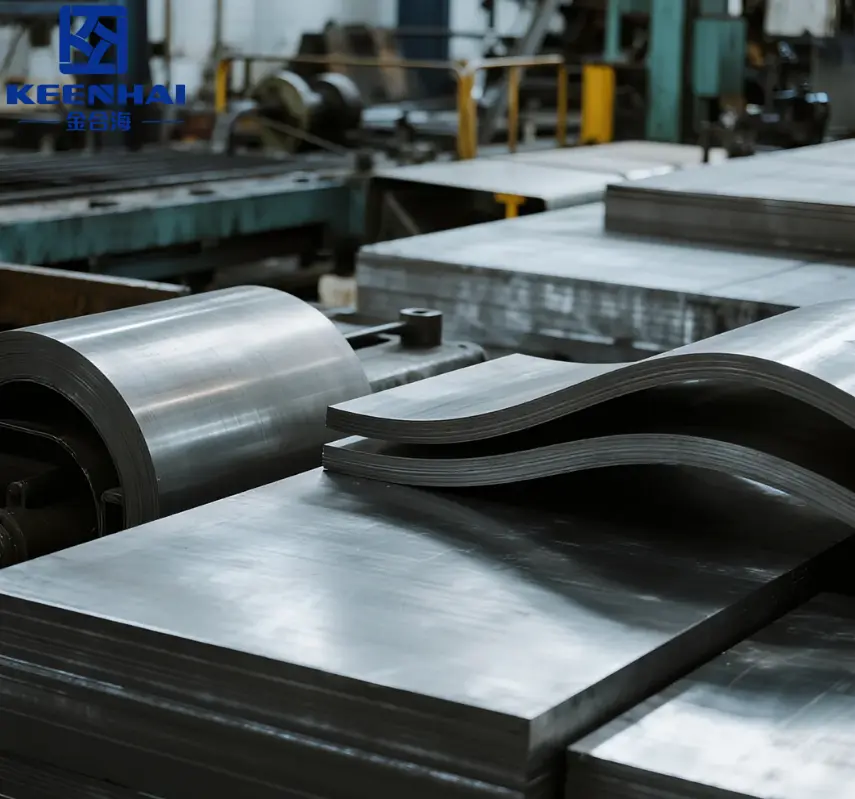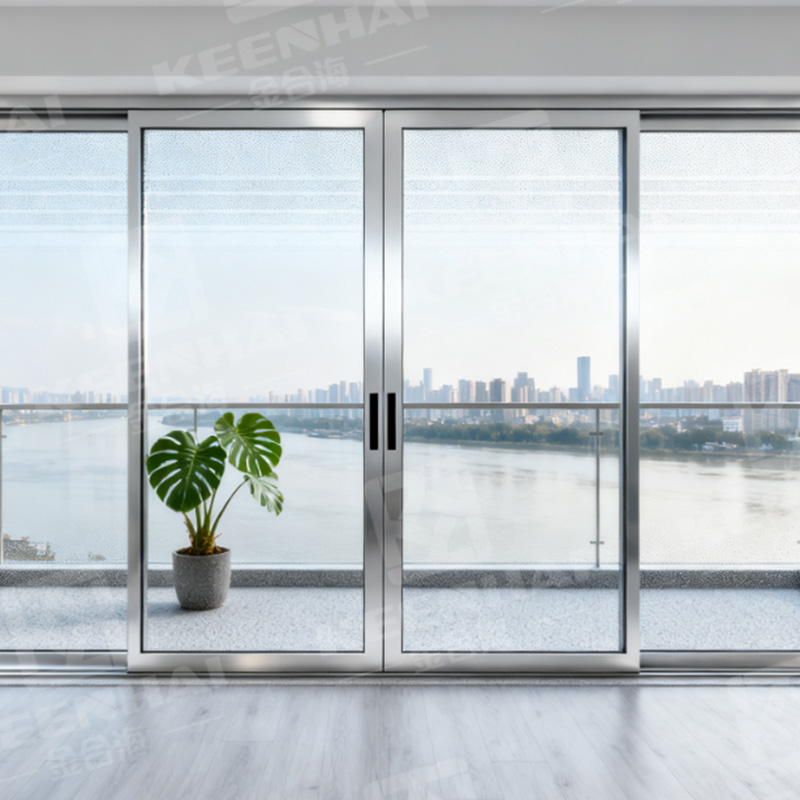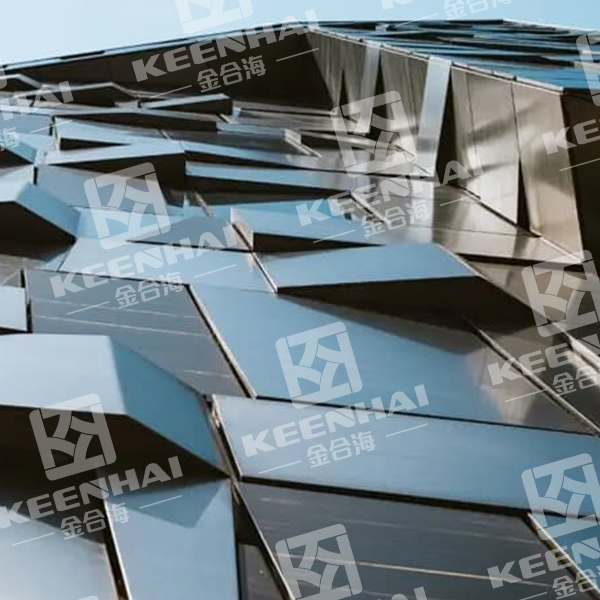
Supplier reliability is crucial when sourcing PVD stainless steel sheets. Always verify manufacturer credentials, production standards, and warranty coverage. Evaluate after-sales support and the supplier’s track record on similar projects. Access to mill test reports, quality documentation, and clear logistics information reduces purchasing risks. Selecting reputable suppliers ensures the sheets meet project specifications, maintain consistent quality, and provide long-term assurance for both commercial and residential applications.
1. Material and Grade Verification
1.1 Understanding Common Stainless Steel Grades for PVD Coating
When evaluating Stainless Steel Sheets for PVD applications, the first step is to identify the base metal grade. 304 and 316 stainless steel are the most widely used because of their excellent corrosion resistance and smooth surface finish, which ensures the PVD coating adheres evenly.
For example, in high-end interior projects like luxury elevator panels or custom cabinetry, 304 ανοξείδωτο ατσάλι offers a balance of cost and durability, whereas 316 ανοξείδωτο ατσάλι is preferable for humid or coastal environments due to higher nickel content that enhances corrosion resistance.
Key steps to check stainless steel grade:
-
Verify the material certification provided by the supplier.
-
Check chemical composition for chromium, nickel, and molybdenum percentages.
-
Confirm magnetic response—304 is generally non-magnetic, while 430 is magnetic.
By completing these steps, you can ensure the material is suitable for long-term PVD performance without premature peeling or discoloration.
1.2 Checking the Base Material Composition and Durability
The longevity of a PVD stainless steel sheet depends heavily on the base material’s composition. For instance, the carbon content, trace elements, and overall alloy balance directly influence hardness, corrosion resistance, and ability to hold polished or mirror finishes.
Consider a scenario where custom stair railings are fabricated for a commercial building. If the base sheet is low-grade 201 stainless steel, the PVD coating may wear off quickly under constant handling. By contrast, high-grade 304 or 316 sheets maintain surface integrity even after repeated cleaning and exposure to environmental stress.
Durability checklist for base material:
-
Review the mechanical properties such as tensile strength and yield strength.
-
Check for hardness (measured in HRB or HRC), which affects scratch resistance.
-
Confirm corrosion resistance through salt spray or acid resistance tests when possible.
This approach ensures that your selection is not only visually appealing but also robust for commercial or high-traffic applications.
1.3 Identifying Corrosion-Resistant and Wear-Resistant Grades
When selecting sheets for PVD coating, corrosion and wear resistance are critical. For instance, metal panels installed in restaurants, hotels, or exterior facades face frequent cleaning, humidity, and occasional abrasion. Choosing a Μεταλλική πλάκα από ανοξείδωτο χάλυβα with superior corrosion resistance avoids long-term maintenance costs.
A practical comparison of common grades can help:
| Grade | Αντοχή στη διάβρωση | Wear Resistance | Typical Application |
|---|---|---|---|
| 304 | High (interior & mild exterior) | Moderate | Elevator panels, furniture fixtures |
| 316 | Very High (coastal & humid) | High | Exterior panels, kitchens, marine environments |
| 430 | Moderate (interior only) | Low | Decorative wall panels with low contact |
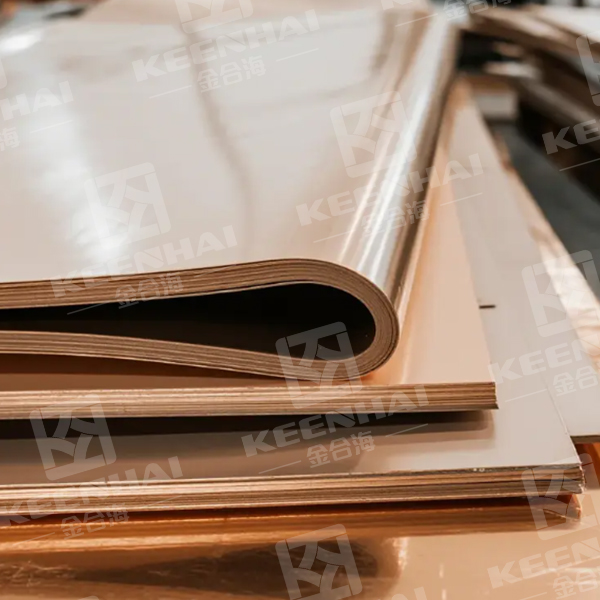
Additionally, you should evaluate surface hardness and finish compatibility. Higher wear resistance grades ensure the PVD coating remains intact after frequent polishing or mechanical contact. For example, mirror-finished 316 panels in hotel lobbies retain their luster for years with minimal maintenance.
2. Surface Finish and Coating Quality
2.1 Inspecting PVD Coating Uniformity and Adhesion
Ensuring the PVD stainless steel sheet maintains a consistent coating is critical for long-term performance, especially in commercial or high-traffic applications. Uneven coating or poor adhesion can lead to peeling, discoloration, and surface defects.
Inspection steps for coating quality:
-
Visual check under bright light: Look for streaks, blotches, or color variations across the panel.
-
Adhesion test: Use a small cross-cut test with a utility knife and adhesive tape to verify the coating sticks properly without peeling.
-
Thickness measurement: Employ a non-destructive coating thickness gauge to confirm uniformity, usually between 0.2–0.5 microns for standard commercial applications.
-
Scratch test: Lightly rub a small, inconspicuous area to evaluate wear resistance of the coating without damaging the panel.
For example, in luxury elevator interiors or custom kitchen backsplashes, inconsistent PVD application often becomes visible after installation. Following these inspection steps ensures a durable and visually flawless surface.
2.2 Recognizing Mirror, Hairline, Bead-Blast, and Etched Finishes
PVD coatings are applied to various surface textures, each serving a different aesthetic and functional purpose. Knowing how to identify these finishes helps buyers verify quality and suitability for the project:
| Finish Type | Characteristics | Common Applications |
|---|---|---|
| Mirror | Highly reflective, smooth, prone to fingerprints | Elevator panels, decorative wall cladding |
| Hairline | Fine linear texture, hides scratches better | Kitchen backsplashes, retail fixtures |
| Bead-Blast | Matte, uniform finish, softens reflections | Interior wall panels, furniture accents |
| Etched | Patterned or textured, aesthetic appeal | Decorative panels, commercial signage |
When evaluating Μεταλλικό φύλλο ανοξείδωτου χάλυβα for PVD coating, confirm that the chosen finish matches the intended visual impact and usage conditions. In high-traffic areas, hairline or bead-blast finishes are preferred to reduce visible wear.
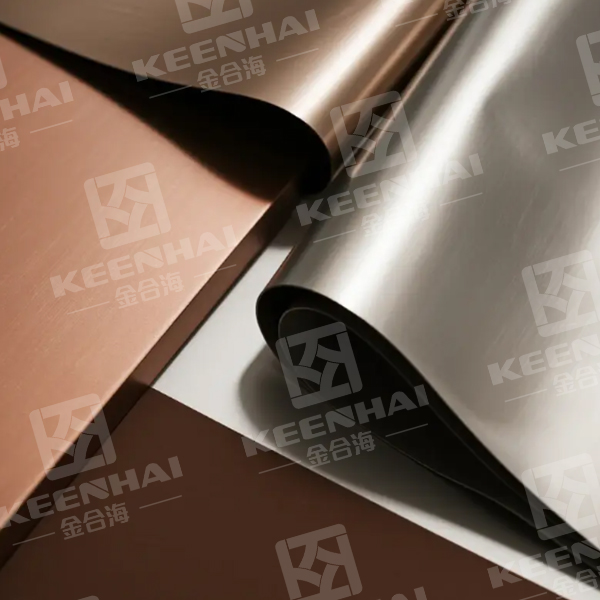
2.3 Color Consistency Across Panels and Batches
Color uniformity is a major factor in PVD stainless steel quality, particularly for projects involving multiple panels installed side by side. Variations in hue or brightness between batches can compromise the overall aesthetic.
Steps to ensure color consistency:
-
Compare panels from the same production batch under natural and artificial light.
-
Measure color using spectrophotometers if precise matching is required, particularly for gold, black, rose gold, or bronze PVD finishes.
-
Cross-check supplier batch numbers and production dates to avoid mixing panels from different runs.
In practice, for luxury hotel lobbies or retail façades, even slight differences in panel color are noticeable and can negatively affect client perception. Ensuring consistent PVD color across all sheets prevents costly replacements and enhances long-term satisfaction.
3. Thickness, Size, and Fabrication Precision
3.1 Measuring Sheet Thickness and Tolerance Accuracy
Accurate thickness and tight tolerances are crucial when purchasing stainless steel sheets for architectural or high-end decorative projects. A minor deviation in thickness can impact structural stability, fit, and coating adhesion.
Steps to verify thickness and tolerance:
-
Use a calibrated micrometer or thickness gauge to measure at multiple points across the sheet.
-
Compare readings against the specified tolerance, typically ±0.02–0.05 mm for precision applications.
-
Record any deviations and check whether the supplier provides certification for compliance.
-
In projects like custom elevator panels or furniture cladding, ensuring tolerance accuracy prevents installation issues and reduces rework costs.
By checking thickness early, buyers can also predict the sheet’s weight per square meter, which helps with logistics and installation planning.
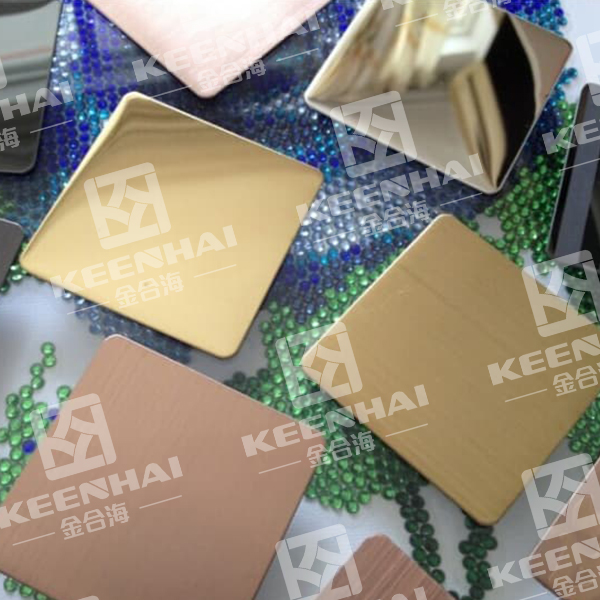
3.2 Evaluating Custom Sizes and Edge Finishing
Custom sheet sizes are common in decorative or structural applications, and proper edge finishing is essential to avoid sharp edges and alignment issues. Edge quality directly affects installation speed and safety.
Inspection checklist for custom sizes:
-
Verify sheet dimensions against the approved drawings.
-
Check edges for burrs, clean cuts, or radius finishing depending on application needs.
-
Confirm cut accuracy across multiple panels to ensure uniformity, especially for modular or panelized installations.
-
Document any irregularities and discuss tolerances with the manufacturer before installation.
For instance, when using stainless steel metal plates για retail fixtures or commercial wall panels, precise sizing prevents gaps and ensures a seamless aesthetic.
3.3 Checking Fabrication Quality for Minimal Defects
Fabrication precision determines how well the final installation performs visually and structurally. Minor defects like warping, scratches, or dents can become highly visible once PVD coatings are applied.
Key points for fabrication inspection:
-
Examine panels for flatness, ensuring deviation is within ±0.5 mm per linear meter for critical applications.
-
Check for scratches, dents, and imperfections before finishing, as these can be magnified by PVD coatings.
-
Inspect bends, folds, or cutouts for clean edges and proper angles according to specifications.
-
Record findings and request corrective actions if necessary.
In high-end hotel lobbies or custom furniture projects, even small fabrication defects can disrupt the visual continuity and compromise long-term durability. Ensuring precise fabrication at this stage saves both time and cost during installation.
4. Protective Features and Performance Enhancements
4.1 Anti-Fingerprint, Anti-Scratch, and Protective Film Coatings
Modern PVD stainless steel sheets often come with specialized coatings designed to enhance durability and maintain aesthetic appeal in high-contact environments. Anti-fingerprint and anti-scratch coatings prevent smudges and surface damage, which is crucial for areas like elevator panels, kitchen backsplashes, or retail fixtures.
Steps to verify protective features:
-
Lightly touch a sample panel to check for smudge resistance.
-
Conduct a scratch test using a soft metal tool or standardized abrasion tester.
-
Examine if the protective film adheres uniformly without bubbles or peeling.
-
For colored PVD sheets, confirm that the coating maintains consistent color tone under different lighting angles.
This inspection ensures that metal stainless steel sheets maintain their polished appearance over prolonged handling.
4.2 Testing Durability Under Typical Use Conditions
Durability tests simulate real-world usage to predict how the sheet will perform over time. Panels installed in high-traffic areas must resist scratches, dents, and discoloration without compromising structural integrity.
Durability evaluation process:
-
Place panels in controlled environments with repeated contact and friction tests.
-
Measure any visible wear or surface damage after set cycles (e.g., 1000 touches or 500 abrasion strokes).
-
Inspect for corrosion or coating degradation, particularly in humid or coastal conditions.
-
Record all deviations from the original surface finish for comparison against supplier standards.
Through this approach, buyers can confidently select sheets that withstand daily use, such as elevator doors, office partitions, or decorative wall panels.
4.3 Confirming Long-Term Resistance to Wear and Handling
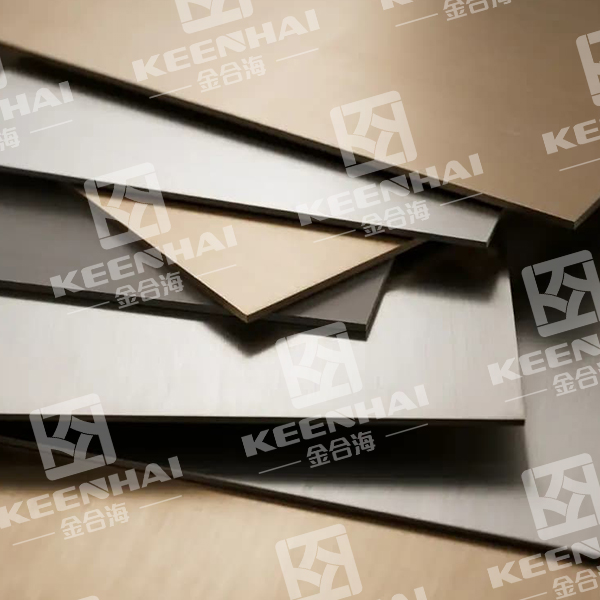
Long-term performance is key to cost-effective installations. High-quality PVD-coated sheets retain their shine and structural integrity even after years of repeated contact.
Key checks for long-term resistance:
-
Inspect joints, edges, and surfaces for signs of delamination or discoloration after stress testing.
-
Confirm that protective coatings remain intact even after cleaning with mild detergents or polishing agents.
-
Compare wear patterns between panels exposed to different levels of handling to predict maintenance needs.
Panels that pass these tests perform reliably in commercial and residential applications, ensuring both aesthetic consistency and functional durability.
5. Supplier Reliability and Product Certification
5.1 Reviewing Manufacturer Credentials and Production Standards
When sourcing PVD stainless steel sheets, verifying the manufacturer’s credentials is crucial. Reliable suppliers maintain ISO certifications, follow strict production protocols, and provide transparency about their factory operations. For instance, a credible manufacturer will document each production stage, from raw material selection to final coating application, ensuring consistent quality.
Steps to review manufacturer credibility:
-
Request copies of ISO 9001 or equivalent certifications.
-
Verify production capacity and equipment standards to ensure large-scale consistency.
-
Confirm that quality control protocols are in place, such as in-process inspections and post-coating testing.
-
Check if the supplier offers detailed process documentation and third-party audits.
5.2 Understanding Material Certification and Quality Reports
Material certification guarantees that the stainless steel sheet meets required chemical composition and mechanical standards. High-quality PVD stainless steel panels should come with mill test reports (MTRs), detailing alloy grade, thickness tolerance, and coating adherence results.
Key points when evaluating material certifications:
-
Confirm the grade and alloy composition match your project requirements.
-
Check for certifications like ASTM, EN, or JIS standards.
-
Review test reports for corrosion resistance, tensile strength, and surface uniformity.
-
Ensure that coatings have passed adhesion and wear-resistance tests.
By reviewing these reports, you reduce the risk of purchasing substandard stainless steel sheets and can confidently proceed with installation for commercial or decorative projects.
5.3 Evaluating Warranty, After-Sales Support, and Supplier Reputation
Supplier reliability extends beyond product delivery. A trustworthy supplier provides clear warranty terms, responsive after-sales support, and a proven track record in project installations.
Evaluation steps:
-
Verify warranty coverage for both the base metal and PVD coating.
-
Assess responsiveness of customer service for handling defects or replacement needs.
-
Research supplier reputation through past client reviews or case studies.
-
Prefer suppliers who offer consultation on project-specific requirements, installation guidance, and maintenance tips.
For example, choosing a reputable supplier like pvdstainlesssteel ensures buyers receive reliable documentation, professional support, and long-term assurance for both decorative and structural applications.
Identifying high-quality PVD stainless steel sheets requires a systematic approach that combines material verification, surface inspection, and supplier evaluation. By checking stainless steel grades, reviewing coating consistency, measuring thickness and fabrication precision, and confirming durability and supplier reliability, buyers can confidently select sheets that meet both aesthetic and structural requirements. Applying these practical steps ensures that your investment delivers long-term performance, uniform appearance, and minimal maintenance issues across any project.