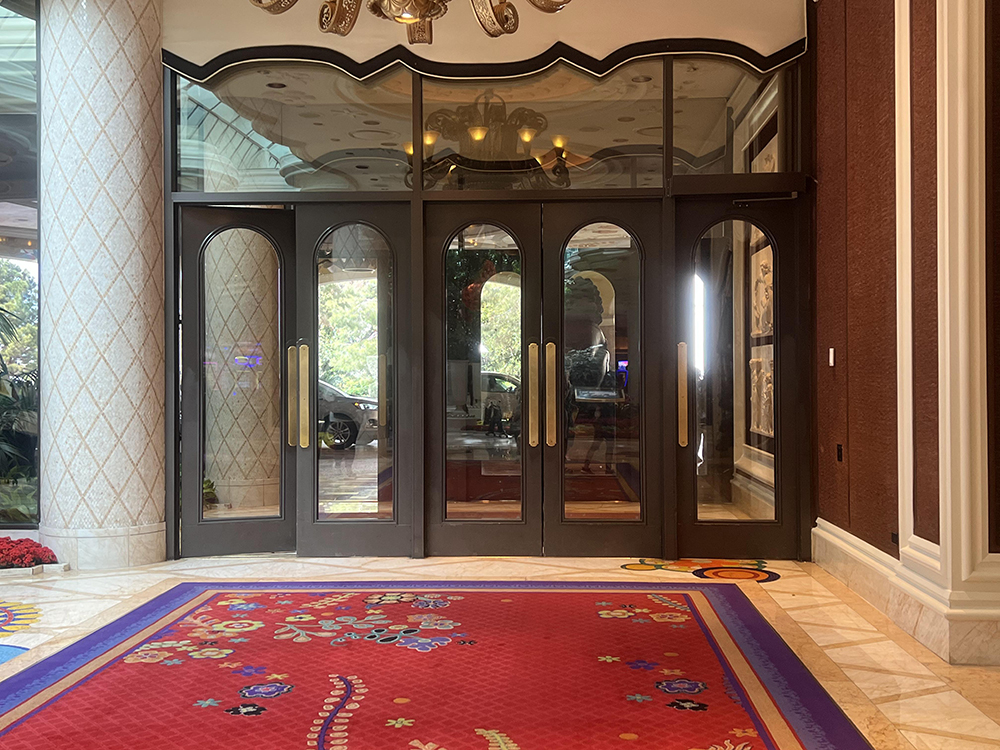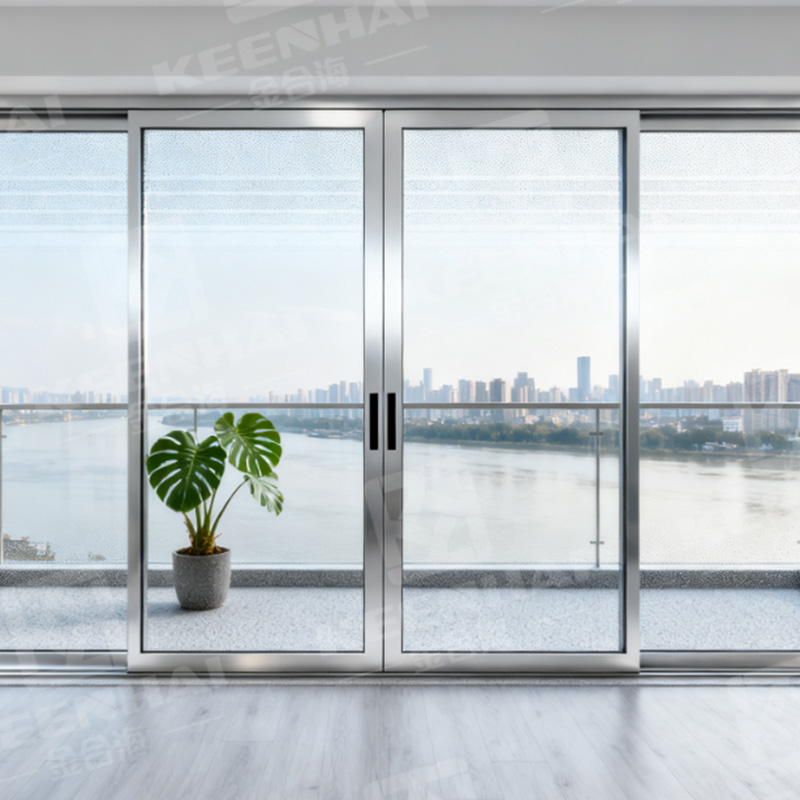
Stainless steel sliding doors excel in durability thanks to reinforced frames, corrosion-resistant coatings, and precision rollers. They handle heavy use in commercial or residential settings without warping or bending. Frameless glass doors, while visually striking, are more susceptible to scratches, chips, and frame instability if not supported properly. Investing in high-quality stainless steel sliding door solutions ensures long-term performance, minimal maintenance, and consistent smooth operation over 15–25 years, whereas standard glass doors often require replacement or repairs within a decade.
1. Material and Structural Design
In high-traffic commercial lobbies and modern homes, the material and structural design of sliding doors defines both their durability and ease of use. When properly designed, a sliding door can operate smoothly for decades while handling heavy daily use without sagging or misalignment.
1.1 Frame Composition and Thickness
The door frame provides the main structural support. Premium stainless steel sliding door systems use Ανοξείδωτο ατσάλι 304 ή 316, with frame thicknesses typically between 1.5 mm and 3 mm, depending on the door size and weight. This ensures rigidity under constant use and prevents warping in humid or coastal environments. By contrast, minimal hardware frames in frameless glass doors can handle lighter weights but may require additional support for large spans.
1.2 Glass Type and Reinforcement Options
Glass selection directly impacts safety and sound insulation. Common choices include:
-
Tempered Glass – Breaks into small, blunt pieces for safety.
-
Laminated Glass – Layers of glass with interlayer provide high impact resistance and soundproofing.
-
Low-Iron Glass – Offers maximum clarity, ideal for modern designs requiring transparency.
| Door Type | Πάχος γυαλιού | Safety Rating | Sound Reduction (dB) |
|---|---|---|---|
| Συρόμενη πόρτα από ανοξείδωτο χάλυβα | 10–12 χιλιοστά | High | 32–38 |
| Frameless Glass Door | 8–10 mm | Moderate | 25–30 |
The table above highlights that reinforced glass in steel sliding doors delivers superior safety and sound insulation compared with frameless designs.
1.3 Weight Distribution and Load Support
Even weight distribution is critical for smooth operation. Sliding doors with steel frames spread the load evenly across the top track using precision rollers, which reduces stress on both the door and its frame. Frameless glass doors, however, concentrate weight at anchor points, increasing the risk of sagging or misalignment, especially for large openings.
For example, a 10-foot-wide lobby entrance using a high-quality stainless steel system can handle over 5,000 passages daily without noticeable wear on rollers, while a similar frameless glass door would need reinforced mounting hardware to maintain the same durability.
1.4 Corrosion and Surface Protection
Stainless steel naturally resists rust, and PVD-coated options add extra protection against harsh cleaning chemicals and environmental factors. This makes them ideal for coastal hotels, commercial buildings, or any location with high humidity. Frameless glass doors rely on anodized or powder-coated hardware, which can wear faster under similar conditions.
2. Aesthetic and Architectural Appeal
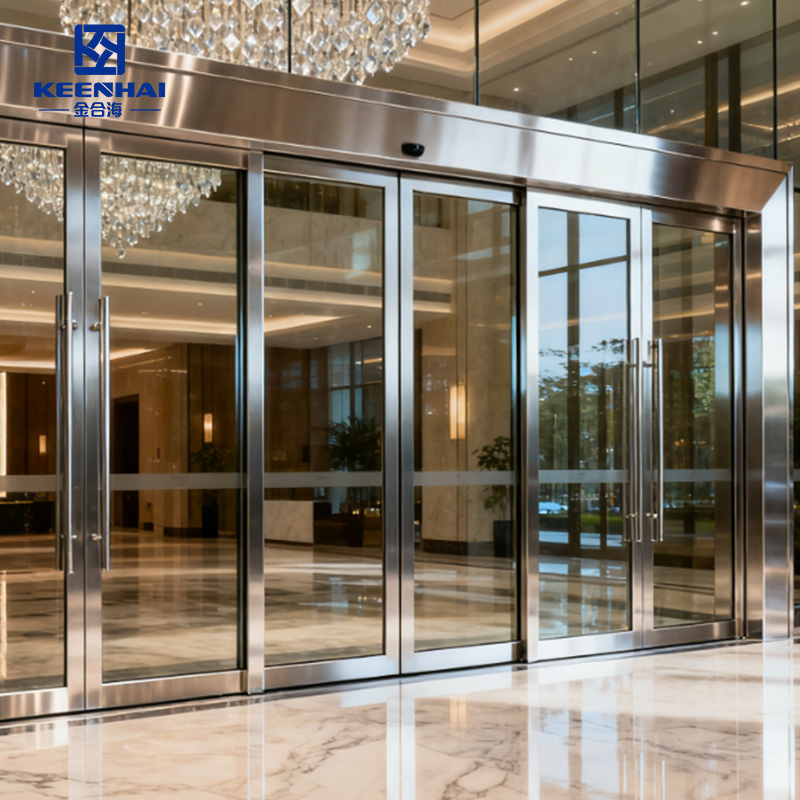
The visual presence of sliding doors can dramatically influence a space’s overall feel. In luxury apartments or hotel lobbies, stainless steel sliding doors provide a modern, polished look that complements both contemporary and industrial design schemes. Frameless glass doors, in contrast, emphasize transparency and minimal obstruction, giving a more airy and open feel.
2.1 Modern vs Minimalist Design Language
Modern designs often integrate bold steel frames, contrasting textures, and visible hardware for a striking aesthetic. Minimalist designs, on the other hand, focus on sleek lines, hidden tracks, and subtle finishes that make the door appear almost invisible. Architects frequently balance these styles by choosing frame color, track finish, and handle type, ensuring the door complements the surrounding décor without overwhelming it.
2.2 Frame Visibility and Visual Transparency
Frame visibility affects how open or enclosed a space feels. For instance:
-
Thicker steel frames give a strong structural statement, ideal for high-traffic commercial areas.
-
Slim or concealed frames maintain maximum transparency, perfect for residential or boutique hotel entrances.
-
Glass type further influences light transmission and privacy: laminated or tinted glass can reduce glare while maintaining openness.
| Door Type | Frame Thickness | Transparency (%) | Recommended Use |
|---|---|---|---|
| Συρόμενη πόρτα από ανοξείδωτο χάλυβα | 1.5–3 mm | 60–75 | Commercial / High-traffic |
| Frameless Glass Door | Minimal | 85–95 | Residential / Showrooms |
As the table shows, steel frames reduce transparency slightly but offer more architectural presence and durability, while frameless doors maximize light flow and visual continuity.
2.3 Suitability for Residential vs Commercial Interiors
Residential spaces benefit from sliding doors that balance visibility and style, allowing natural light while providing thermal and acoustic insulation. Commercial spaces, especially lobbies or conference areas, require doors that handle heavy use, maintain alignment, and withstand frequent cleaning. A PVD-coated stainless steel sliding door is often preferred in high-end hotels for its corrosion resistance and premium finish, while frameless glass doors work best in low-traffic or decorative areas where aesthetic transparency is prioritized.
3. Durability, Maintenance, and Lifespan
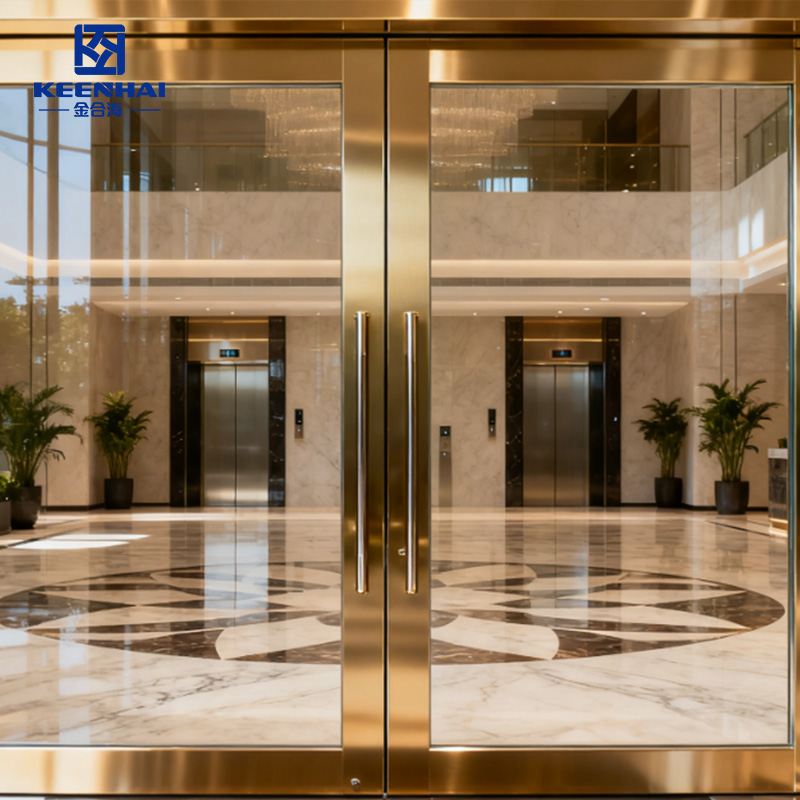
In both residential and commercial spaces, door longevity is a critical factor. In busy office lobbies or hotel entrances, premium stainless steel sliding solutions endure thousands of open-and-close cycles each year without bending, warping, or showing unsightly scratches. Glass panels combined with reinforced steel frames further increase impact resistance while preserving a sleek aesthetic.
3.1 Corrosion, Scratch, and Impact Resistance
High-quality stainless steel offers excellent corrosion resistance, even in humid environments or near coastal areas. Surface hardness ratings often range from 5–6 on the Mohs scale, reducing the likelihood of scratches from jewelry, keys, or luggage. For heavy-use scenarios:
| Door Type | Αντοχή στη διάβρωση | Scratch Resistance | Recommended Setting |
|---|---|---|---|
| Standard Stainless Steel Sliding | High | Moderate | Residential / Moderate Traffic |
| PVD Coated Stainless Steel Door | Very High | High | Commercial / Hotels |
| Frameless Glass Door | Low–Moderate | Moderate | Decorative / Low Traffic |
As shown above, coating and material choice directly affect long-term durability and maintenance needs.
3.2 Cleaning Frequency and Surface Protection
To maintain that polished look:
-
Wipe frames and glass weekly with a non-abrasive microfiber cloth.
-
Apply protective coating or polish every 6–12 months for high-traffic areas.
-
Avoid harsh chemicals that can erode steel or glass surfaces.
Regular upkeep prevents small scratches from becoming permanent blemishes and ensures the rollers and tracks operate smoothly over time. In commercial hotels, motion-sensor sliding doors are often cleaned daily in busy lobbies to maintain pristine appearance.
3.3 Average Lifespan and Replacement Cost
A well-maintained stainless steel sliding system typically lasts 15–25 years, depending on traffic and environmental conditions. PVD-coated variants can exceed 30 years without major wear. Replacement considerations:
-
Track systems may need adjustment or lubrication every 3–5 years.
-
Glass panels generally last 20+ years if impact and surface protection are observed.
-
Upgrading handles, locks, or sensors periodically extends overall lifespan.
Investing in durable materials upfront reduces long-term maintenance costs and ensures consistent performance for both residential and commercial installations.
4. Performance and Functionality
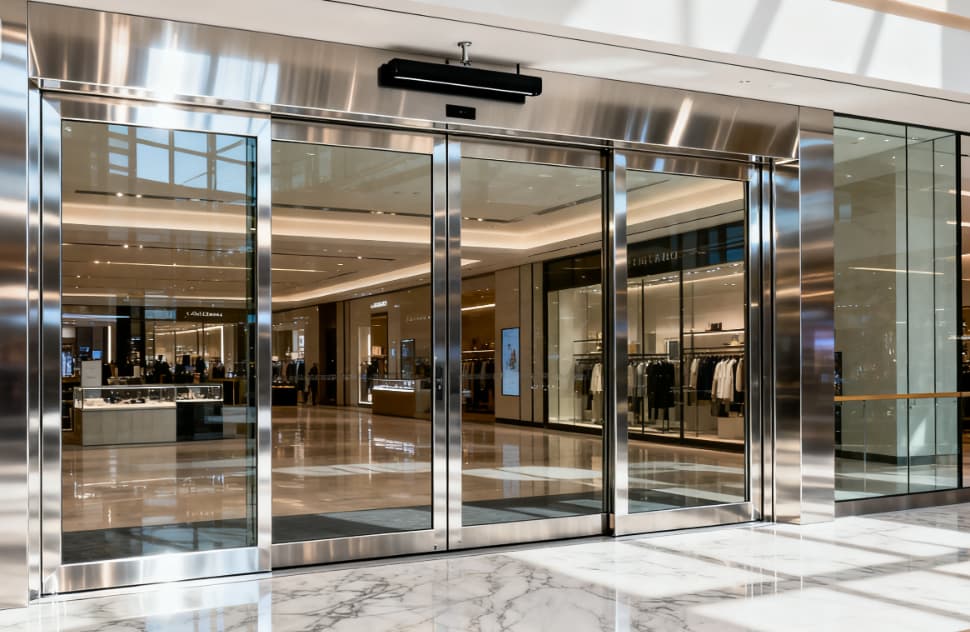
In high-traffic areas like office lobbies or luxury apartments, door performance directly impacts user experience. Modern stainless steel sliding doors deliver a combination of smooth motion, quiet operation, and energy-efficient insulation, outperforming many traditional hinged or frameless options.
4.1 Noise Reduction and Smoothness of Motion
The glide of a sliding system depends heavily on the quality of rollers and track alignment. For optimal performance:
-
Check roller bearings for wear before installation.
-
Lubricate tracks with a silicone-based lubricant every 6 months to maintain smooth motion.
-
Adjust door weight distribution to prevent dragging or uneven sliding.
High-end doors operate at 35–45 dB, making them virtually silent even in busy commercial environments. In hotels, automatic stainless steel doors reduce slamming noises that typically disturb guests, enhancing comfort and creating a premium feel.
4.2 Thermal and Acoustic Insulation
Energy efficiency and acoustic separation are often overlooked but critical features. Premium sliding systems:
-
Use insulated glass panels ranging from 6mm to 12mm, often laminated for extra protection.
-
Include rubber or EPDM gaskets along the frame edges to minimize air leakage.
-
Reduce heat transfer by 15–20% compared to standard uninsulated doors, lowering HVAC costs.
Such design choices make these doors ideal for climate-controlled offices, luxury apartments, or conference rooms where maintaining consistent temperature and sound privacy is essential.
4.3 Privacy and Security Considerations
Security and privacy are enhanced without compromising aesthetics:
-
Multi-point lock systems ensure door panels cannot be lifted or forced open.
-
Frosted or tinted glass options provide visual privacy while maintaining natural light flow.
-
Reinforced frames and tempered glass resist impacts and deter break-ins.
Investing in high-quality sliding doors balances convenience, safety, and performance, delivering a solution that works smoothly for children, elderly users, and busy commercial settings alike.
5. Installation and Cost Comparison
When upgrading entryways in residential or commercial spaces, understanding installation complexity and cost implications is crucial. Premium stainless steel sliding doors combine durability and elegance, but their upfront cost and installation requirements differ from traditional hinged or frameless glass doors.
5.1 Track System and Hardware Requirements
A high-quality sliding door requires precision-engineered components:
-
Upper track capable of supporting 150–200 kg per panel.
-
Rollers and guides designed for smooth motion under repeated daily use.
-
Floor brackets and stoppers to maintain alignment and prevent rattling.
| Συστατικό | Standard Door | Premium Stainless Sliding Door |
|---|---|---|
| Μέγιστο βάρος πάνελ | 80 kg | 200 kg |
| Track Material | Aluminum | Ανοξείδωτο ατσάλι |
| Roller Type | Plastic | Ball Bearing Steel |
| Noise Level | 50–60 dB | 35–45 dB |
| Installation Complexity | Μέσον | Μέτρια-Υψηλή |
As shown above, investing in reinforced hardware significantly improves longevity, glide smoothness, and noise reduction.
5.2 Installation Time and Labor Complexity
Installation duration depends on site preparation and panel configuration:
-
Measure and mark doorway precisely to ensure track alignment.
-
Secure upper track and check level using a laser or spirit level.
-
Mount door panels and adjust rollers for smooth glide.
-
Install floor guide and stoppers, followed by handles and optional locks.
For a standard single-panel setup, professional teams usually require 2–4 hours, while double-panel or heavy-duty designs may take 5–7 hours. Labor complexity increases with custom sizes, added automation, or reinforced glass panels.
5.3 Price Range and Long-Term Value
Costs vary widely based on materials, glass type, and hardware quality:
-
Standard frameless glass doors: $600–$1,200 per panel.
-
High-end stainless steel sliding doors: $1,200–$3,500 per panel depending on finish, automation, and optional coatings.
-
Automatic or PVD coated options can increase upfront investment but often pay off over time with reduced maintenance, enhanced security, and longer lifespan (15–25 years vs 7–12 years for standard glass doors).
By comparing installation effort, upfront cost, and durability, it becomes clear that premium sliding systems offer superior long-term value while improving aesthetic appeal, performance, and noise reduction in both residential and commercial applications.