Selecting a PVD stainless steel sheet supplier for commercial projects requires examining their production capacity, material quality, and quality assurance processes. Look for suppliers with robust in-house PVD coating lines, consistent batch-to-batch performance, and strong documentation practices. Reliable delivery, clear communication, and proven commercial project experience ensure that your order is fulfilled accurately and on time, providing peace of mind for complex architectural and interior installations.
1. Supplier Capability in PVD Stainless Steel Production
Selecting a supplier for PVD stainless steel sheets begins with a deep understanding of their production capabilities. For commercial projects, reliability and precision are non-negotiable. The right supplier demonstrates not only advanced PVD coating technology but also strict process control, consistency, and the ability to handle custom requirements. Without these capabilities, even the best specifications can fail in real-world applications.
1.1 In-House PVD Coating Lines and Process Control
Top suppliers operate fully in-house PVD coating lines, allowing them to maintain control over every production stage. This ensures color uniformity, surface adhesion, and repeatable finish quality across batches. When evaluating suppliers, consider:
-
Number and capacity of PVD chambers
-
Automation level in coating deposition and vacuum management
-
In-process monitoring for temperature, pressure, and deposition rate
Suppliers with advanced process control can consistently deliver high-quality PVD stainless steel sheets for commercial-scale projects, avoiding issues such as uneven coating or surface defects.
1.2 Consistency of Coating Quality Across Commercial Batches
Consistency is critical for projects requiring multiple panels installed across large areas. Even slight variations in finish or hue can disrupt the overall aesthetic. Reliable suppliers follow strict quality protocols:
-
Pre-production sample validation
-
Batch-to-batch inspection using spectrophotometers
-
Randomized post-production checks
A comparative overview of typical commercial-grade PVD finishes can help buyers make informed decisions:
| Parameter | Standard Grade | Premium Commercial Grade | Notes |
|---|---|---|---|
| Color Tolerance (ΔE) | ±3 | ±1.5 | Lower ΔE ensures better color match across panels |
| Surface Roughness (Ra, μm) | 0.3–0.5 | 0.2–0.3 | Smoother surface reduces reflectivity variations |
| Adhesion (Cross-cut Test) | 2B | 1B | Better adhesion prevents peeling under long-term use |
Prioritizing suppliers with documented batch consistency protects both the project’s aesthetics and installation efficiency.
1.3 Ability to Handle Large-Format and Custom Sheet Specifications
Commercial projects often require large-format panels or custom-cut dimensions. Not every supplier can accommodate sheets beyond standard sizes without risking warping or coating defects. Key capabilities include:
-
Large PVD chambers capable of handling extended sheet lengths
-
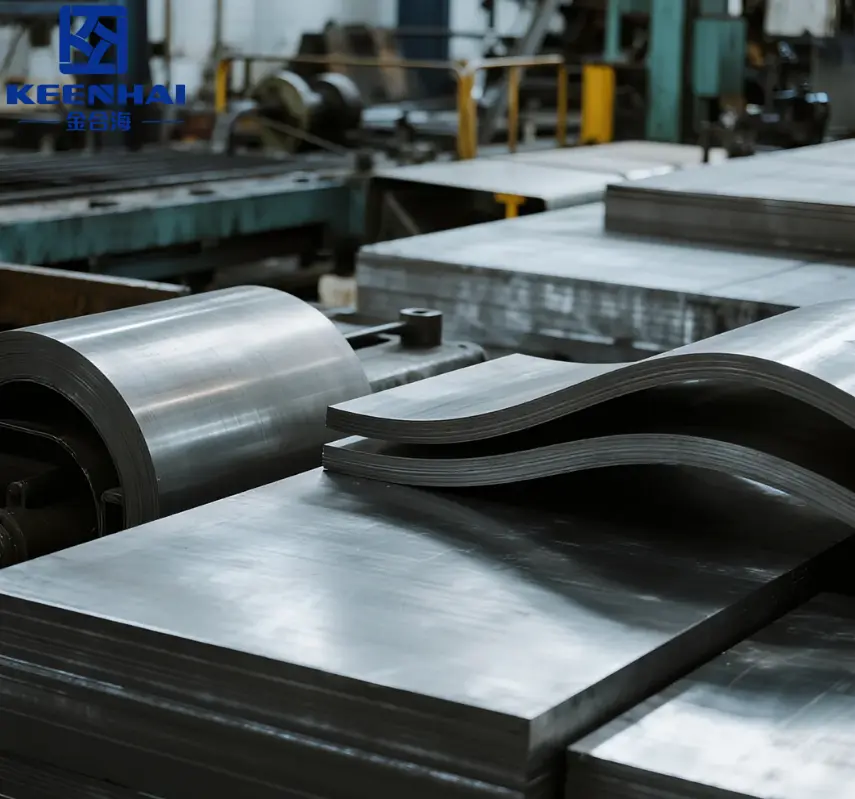
Precision cutting tools and flattening systems for exact size tolerances
-
Support for complex surface textures and customized finishes
Suppliers that can manage these requirements allow designers and contractors to implement large, seamless installations without compromise. For specific needs, consider whether they can process Roostevabast terasest metallplaat or Metallist roostevabast terasest leht variations, ensuring flexibility in commercial design applications.
2. Material Quality and Specification Reliability
The foundation of a successful commercial project lies in selecting materials that meet strict performance and aesthetic standards. Even the most advanced PVD coating cannot compensate for poor stainless steel quality. Buyers must focus on grade selection, thickness accuracy, flatness, and finish repeatability to ensure panels withstand installation and long-term use.
2.1 Stainless Steel Grade Options for Commercial Environments
Commercial projects require stainless steel that resists corrosion, maintains structural integrity, and supports consistent PVD coating adhesion. Commonly, suppliers offer:
-
304/304L Stainless Steel: Excellent corrosion resistance, suitable for interior and moderately humid exterior applications.
-
316/316L Stainless Steel: Superior resistance to aggressive environments, ideal for coastal or high-humidity areas.
-
Specialty Alloys: Customized compositions for ultra-durable or fire-rated installations.
Always confirm that the supplier provides certified mill test reports for the stainless steel used in PVD stainless steel sheets. This ensures material traceability and avoids inconsistencies that could affect coating adhesion or project longevity.
2.2 Thickness Accuracy, Flatness Control, and Surface Stability
Accurate dimensions and flatness are critical for large panels and modular systems. Even minor deviations can cause misalignment, gaps, or surface ripples after installation. Key steps to ensure quality:
-
Measure incoming sheets using calibrated micrometers or laser scanners to verify thickness within ±0.05 mm for standard commercial panels.
-
Check flatness via optical or mechanical flatness gauges; large-format panels (>1.2m × 2.4m) require <1.0 mm deviation.
-
Assess surface stability by applying gentle pressure and checking for springback or warping tendencies, particularly on thinner gauges.
A supplier with proven control in these areas reduces installation errors and ensures the PVD coating remains uniform across the entire surface. For commercial designs needing custom sizes, they should support Metallist roostevabast terasest leht fabrication without compromising flatness.
2.3 Color Uniformity and Finish Repeatability Under Project Lighting
PVD finishes are visually striking, but inconsistencies are highly noticeable under different lighting conditions. Suppliers must demonstrate:
-
Batch-to-batch color consistency, verified with spectrophotometer readings (ΔE <1.5 for premium commercial projects).
-
Finish uniformity across panels with complex geometries or textured surfaces.
-
Test installations under real lighting conditions before full-scale production to detect variations early.
For example, a commercial office façade may combine vertical and horizontal panels; without controlled color repeatability, slight hue differences can disrupt the design integrity. Choosing a supplier who documents these processes protects the visual impact and reduces costly rework.
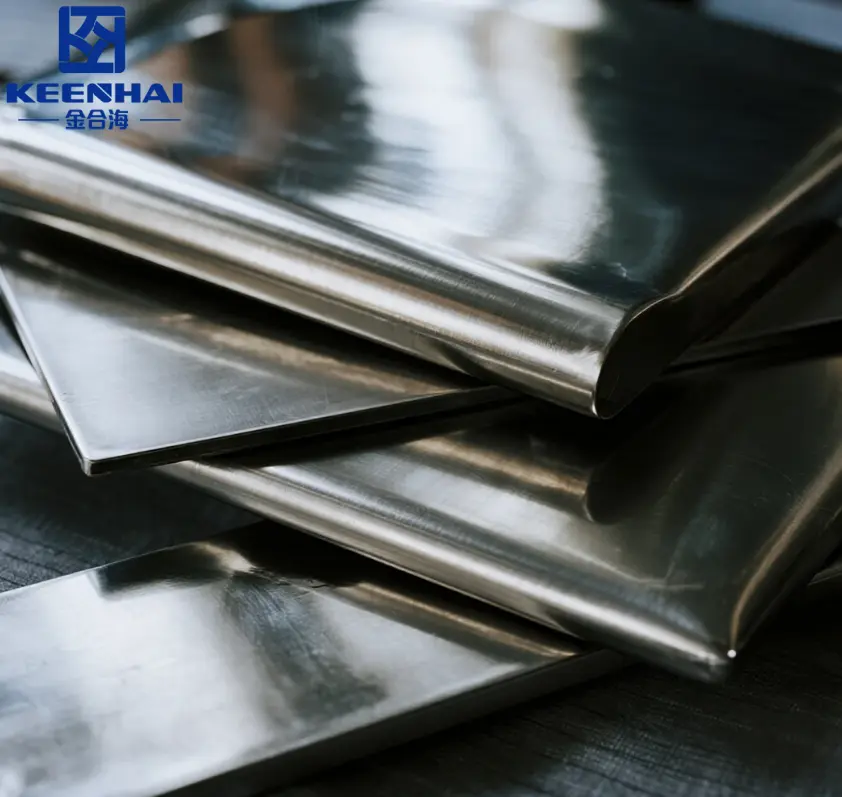
3. Commercial Project Experience and Execution Ability
Selecting a supplier with proven commercial project experience is critical for ensuring smooth execution and high-quality results. A supplier’s track record directly reflects their ability to manage complex architectural applications, coordinate with construction teams, and deliver on schedule. Without this expertise, even high-grade PVD stainless steel sheets can result in installation delays, mismatched finishes, or costly adjustments.
3.1 Experience with Commercial Buildings and Architectural Applications
Suppliers who regularly handle office towers, hotels, retail complexes, or hospital façades understand the unique challenges of large-scale commercial projects. They are familiar with:
-
Working with architectural renderings and translating them into precise panel specifications
-
Selecting finishes that maintain visual impact under varying natural and artificial lighting
-
Providing guidance on material performance in high-traffic or high-humidity environments
This ensures that every panel, whether a Roostevabast terasest metallplaat or a custom textured variant, meets both design intent and functional requirements. Suppliers who document past projects with photographs and reference data provide confidence in their reliability.
3.2 Coordination with Drawings, Schedules, and Installation Sequences
Complex commercial installations require seamless integration between production, logistics, and on-site teams. Experienced suppliers manage:
-
Verification of technical drawings before production to prevent dimensional errors
-
Scheduling deliveries aligned with construction sequences to avoid storage issues
-
Continuous communication with contractors to adjust for site-specific constraints
By following these steps, suppliers minimize rework and installation conflicts, which is especially important when panels are coated in PVD finishes, as mishandling can damage surface integrity.
3.3 Handling Multi-Zone or Phased Commercial Orders
Large commercial projects often involve multiple zones or phased rollouts. Competent suppliers plan for staggered deliveries and phased production:
-
Segment production to match site zones while maintaining batch-to-batch consistency
-
Track color and surface finish across different production phases to prevent variations
-
Provide quality control reports for each phase, ensuring every section aligns visually and structurally
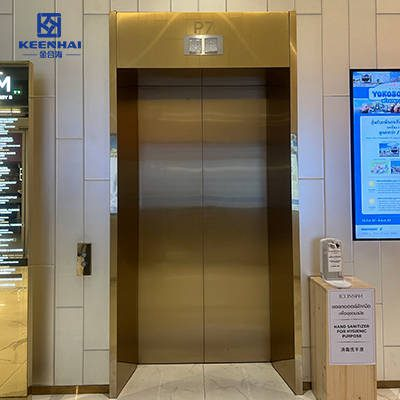
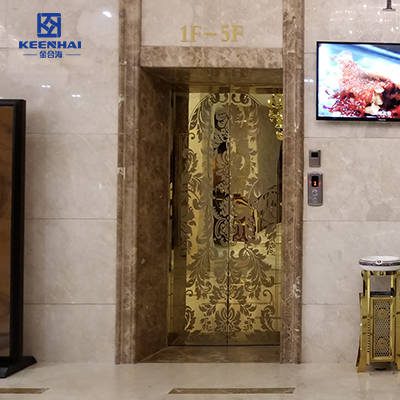
This ability to manage phased orders ensures a smooth, uninterrupted construction process, whether the installation involves curtain walls, elevator claddings, or decorative interior panels. Experienced suppliers can also adapt quickly if project timelines shift, ensuring both schedule and quality remain intact.
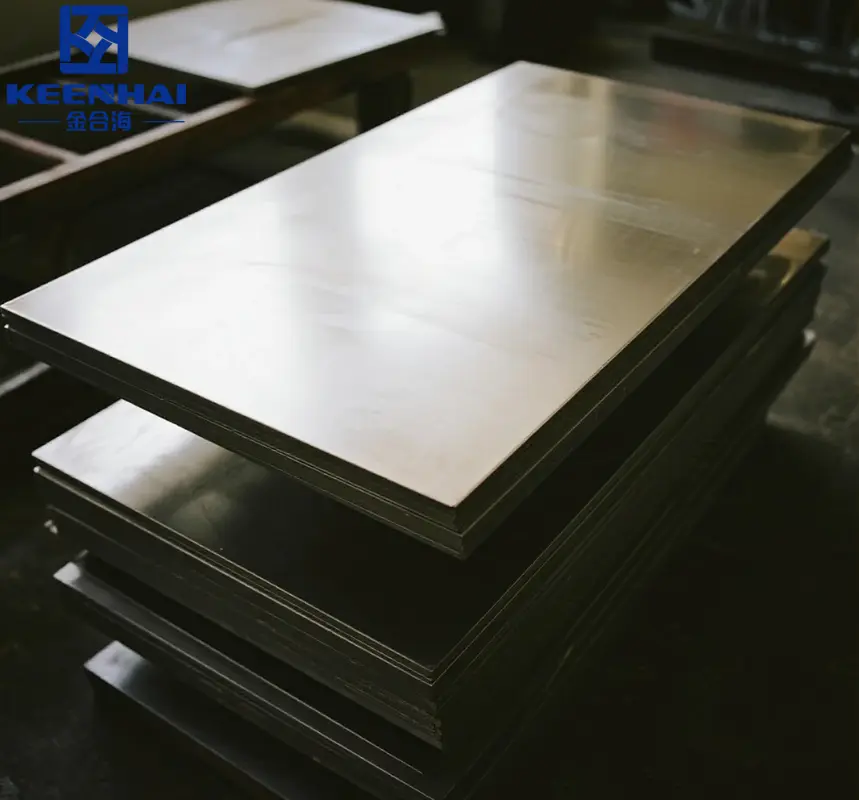
4. Quality Assurance and Inspection Standards
Ensuring consistent quality is crucial for PVD stainless steel panels in commercial projects. Even minor defects in coating, surface flatness, or color can compromise the final appearance and structural performance. Experienced suppliers implement rigorous inspection standards and document every stage to guarantee commercial acceptance.
4.1 Internal Quality Control Procedures Before Shipment
Top suppliers maintain structured internal quality control (QC) protocols that cover every production phase. Key practices include:
-
Dimensional verification: Measure thickness, width, and flatness of each sheet to ensure compliance with project tolerances.
-
Surface inspection: Check for scratches, pits, or coating irregularities using visual and tactile evaluation.
-
Adhesion and hardness testing: Conduct scratch tests or tape pull tests to validate PVD coating durability.
For large-format panels, these steps are repeated for each batch to prevent inconsistencies during installation. Suppliers who consistently apply such QC protocols reduce onsite errors and rework significantly.
4.2 Sample Validation and Batch-to-Batch Color Control
Color and finish consistency is critical in commercial applications where multiple panels form visible façades or interior claddings. Suppliers should:
-
Produce pre-shipment samples reflecting exact project specifications.
-
Use spectrophotometers to measure color differences between batches (ΔE <1.5 for high-end projects).
-
Document variations and adjust production parameters to maintain uniformity across all deliveries.
This approach ensures that PVD stainless steel sheets installed in hotels, office towers, or retail interiors exhibit seamless color continuity, even under varying lighting conditions.
4.3 Inspection Documentation for Commercial Acceptance
Comprehensive inspection records provide transparency and confidence for project stakeholders. Effective documentation includes:
-
QC checklists for dimensional, surface, and coating inspections.
-
Photographic records of each batch before shipment.
-
Certificates of compliance for material grade, coating type, and finish specifications.
Such documentation not only streamlines acceptance but also supports warranty claims and future maintenance. Suppliers who prioritize thorough records demonstrate accountability and reliability, which is vital for commercial construction timelines.
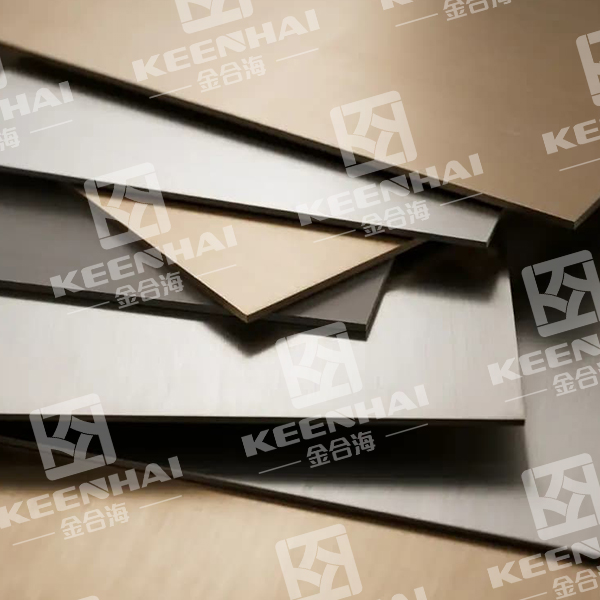
5. Supply Reliability and Lead Time Management
Ensuring reliable supply and predictable lead times is a major concern for commercial projects using PVD stainless steel panels. Delays or inconsistent deliveries can disrupt construction schedules, increase labor costs, and compromise installation quality.
5.1 Production Capacity for Commercial-Scale Orders
Top suppliers clearly demonstrate their production capabilities for large-volume projects. They provide data on:
-
Maximum monthly output of standard and custom PVD stainless steel sheets
-
Availability of large-format or specialized panels
-
Backup capacity for urgent orders or project expansions
By reviewing past project volumes and comparing them to current orders, clients can assess whether the supplier can handle commercial-scale demand without compromising quality or delivery times.
5.2 Lead Time Stability During Peak Production Periods
Commercial projects often coincide with high-demand periods, so suppliers must maintain stable lead times even under peak workloads. Critical measures include:
-
Implementing staggered production schedules to avoid bottlenecks
-
Maintaining inventory of common stainless steel grades and PVD coatings
-
Providing clear communication on expected shipment dates to align with site schedules
These steps ensure that project timelines are predictable, which is essential for multi-zone or phased installations.
5.3 On-Time Delivery Performance for Ongoing Projects
Reliable suppliers track delivery performance metrics, including:
-
Percentage of shipments delivered on or before agreed dates
-
Average delay in days and root causes
-
Contingency plans for unexpected production issues
By consistently meeting delivery commitments, suppliers reduce project risk and prevent costly delays.
Choosing the right PVD stainless steel sheet supplier for commercial projects is not just about price—it’s about reliability, consistent quality, and proven execution ability. A top-tier supplier ensures precise material specifications, maintains strict quality control, and delivers on schedule, which is essential for large-scale installations. By carefully assessing production capabilities, commercial project experience, and inspection standards, you secure a partner who can meet demanding project requirements while reducing risk and ensuring seamless implementation.