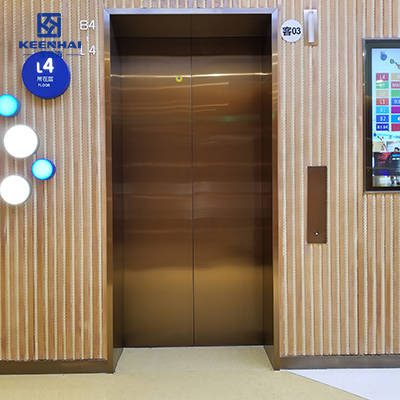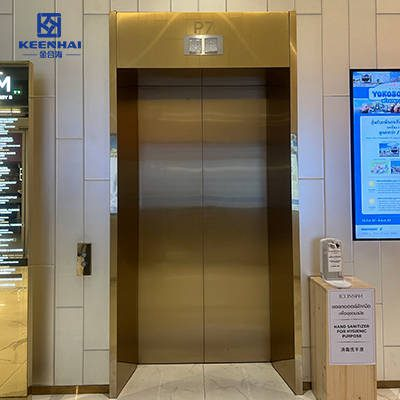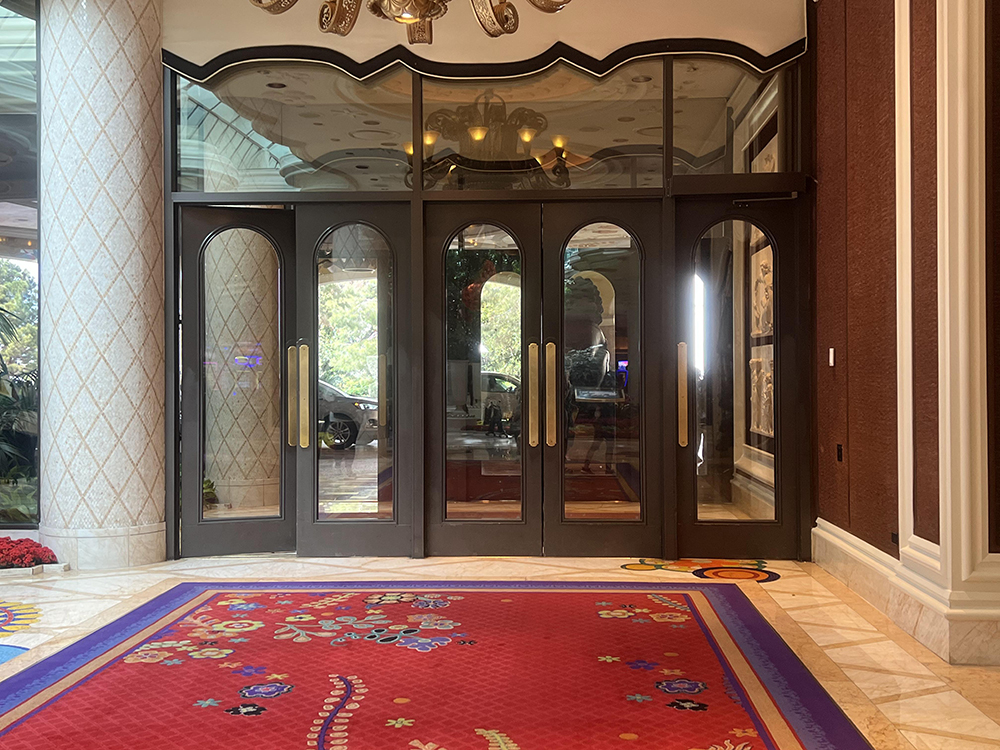
Commercial projects demand elevator doors that perform reliably under heavy usage while complementing interior design. Stainless steel doors provide precise alignment, durable finishes, and structural reinforcement suitable for offices, hotels, and retail complexes. When paired with lift entrances or customized cab interiors, they create cohesive, visually appealing elevator systems. Their adaptability, longevity, and seamless integration make stainless steel elevator doors the preferred choice for modern commercial building projects.
1. Commercial Building Requirements for Stainless Steel Elevator Doors
Commercial building projects impose clear, non-negotiable requirements on elevator door systems. Developers, architects, and contractors focus on operational reliability, long service life, and visual consistency across public-facing spaces. In high-traffic environments, Roestfrij stiel liftdoarren must handle constant use without deformation, surface failure, or visual degradation. For this reason, many large office towers and mixed-use complexes specify commercial-grade stainless steel systems from the early design stage, rather than treating elevator doors as a decorative afterthought. In practice, project teams often align elevator door specifications with lobby finishes, wall cladding materials, and traffic flow forecasts to avoid costly revisions during construction
1.1 Traffic Volume and Usage Frequency Considerations
Traffic volume defines almost every technical decision in commercial elevator planning. A typical downtown office tower can exceed 1,000–2,000 door cycles per elevator per day, especially during morning and evening peak hours. In these conditions, elevator doors must maintain stable alignment, smooth opening speed, and consistent surface appearance despite repeated impact from carts, luggage, and cleaning equipment. Designers often select reinforced door skins and thicker stainless steel panels to avoid vibration noise and edge deformation over time.
In high-density commercial buildings, planners usually follow three practical steps:
-
Estimate daily passenger flow based on floor count, tenant density, and elevator grouping.
-
Match door structure thickness and reinforcement to expected opening cycles.
-
Coordinate door systems with entrance assemblies, such as stainless steel elevator entrances, to ensure consistent tolerances and long-term reliability.
This approach explains why large transport hubs, convention centers, and headquarters buildings consistently favor stainless steel systems over painted or laminated alternatives.
1.2 Durability Expectations in Office, Hotel, and Retail Buildings
Durability requirements vary by building type, but commercial projects share one expectation: the doors must look acceptable after years of visible use. Office buildings prioritize scratch resistance and rigidity, hotels focus on surface consistency and noise control, while retail environments demand impact resistance from carts and merchandise movement. Stainless steel remains the preferred option because it tolerates abrasion, resists corrosion from cleaning chemicals, and maintains structural integrity under repeated stress.
The table below illustrates how durability priorities typically differ across commercial settings:
| Building Type | Primary Stress Factors | Durability Focus |
|---|---|---|
| Office Buildings | High daily cycles, peak-hour congestion | Structural stability, surface wear resistance |
| Hotels | Luggage impact, guest visibility | Dent resistance, refined surface finish |
| Retail & Malls | Carts, cleaning equipment, public misuse | Impact resistance, easy surface restoration |
In large retail complexes, project teams often pair elevator doors with stainless steel lift entrance systems to protect exposed edges and reduce long-term maintenance costs, especially in open-plan layouts where elevators remain visible from multiple angles.
1.3 Aesthetic Consistency with Commercial Interior Design
Aesthetic alignment plays a critical role in commercial interiors, especially in premium office towers, hotels, and branded retail spaces. Elevator doors sit at eye level and frequently appear in architectural photography, leasing brochures, and tenant walkthroughs. Designers therefore treat elevator doors as part of the overall material language, not just a functional component.
Common strategies include matching brushed grain direction with lobby wall panels, coordinating tone with metal ceilings or handrails, and selecting finishes that age evenly under artificial lighting. In projects that rely heavily on digital coordination, architects often integrate Stainless Steel Elevator Door Revit models into the design workflow to verify proportions, clearances, and finish compatibility before fabrication. This step reduces on-site conflicts and ensures that the elevator doors reinforce the intended spatial identity rather than disrupt it.
In practice, well-executed commercial projects use elevator doors to quietly reinforce brand quality, durability, and design discipline—without drawing unnecessary attention or requiring frequent refurbishment.
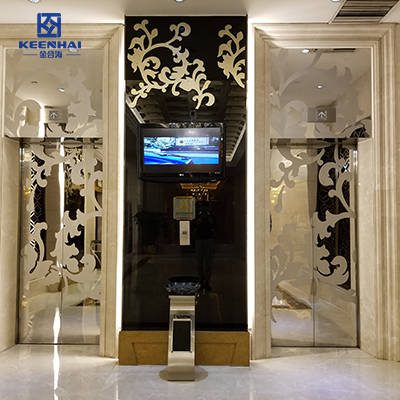
2. Material Grades and Surface Finishes Used in Commercial Projects
Material selection in commercial elevator systems goes far beyond appearance. Developers and consultants evaluate mechanical strength, corrosion resistance, fabrication tolerance, and long-term surface stability before approving specifications. In practice, material grade and surface finish work together—a premium finish cannot compensate for an unsuitable steel grade, and a high-grade alloy still fails expectations if the surface degrades under daily use.
2.1 Common Stainless Steel Grades for Elevator Doors in Commercial Buildings
Commercial buildings most commonly specify 304 and 316 stainless steel for elevator door applications, but the choice depends on traffic load, environment, and cleaning routines. Office towers and hotels typically use 304 due to its balance of strength and cost, while coastal buildings, transport hubs, and luxury retail projects favor 316 for its superior resistance to chlorides and aggressive cleaning agents.
| Stainless Steel Grade | Typical Chromium / Nickel Content | Commercial Use Scenario | Practical Advantage |
|---|---|---|---|
| 304 | ~18% Cr / 8% Ni | Offices, hotels, mixed-use buildings | Stable forming, good corrosion resistance, cost-efficient |
| 316 | ~16% Cr / 10% Ni + Mo | Coastal projects, airports, premium retail | Higher corrosion resistance, better surface longevity |
| 430 | ~16% Cr / no Ni | Low-budget or back-of-house areas | Lower cost, reduced corrosion resistance |
In real projects, contractors often pair elevator door panels with stainless steel elevator entrances to ensure consistent material behavior at joints, edges, and impact zones, especially where carts or luggage frequently contact the frame.
2.2 Brushed, Mirror, and Anti-Fingerprint Finishes for High-Traffic Areas
Surface finish determines how well elevator doors age under constant contact. Brushed finishes hide micro-scratches and align well with modern commercial interiors, making them the default choice for high-rise offices. Mirror finishes deliver visual impact in hotels and luxury retail but demand stricter cleaning discipline. Anti-fingerprint coatings reduce visible smudging, particularly in buildings with continuous public access.
In high-traffic environments, project teams typically evaluate finishes based on three operational criteria:
-
Scratch visibility under direct lighting, especially in glass-walled lobbies.
-
Cleaning frequency and chemical exposure, which affects long-term surface tone.
-
User interaction intensity, such as hand contact near call buttons and door edges.
Once the finish appears in drawings and mockups, teams rarely change it, because even small surface differences become obvious across multiple elevator banks.
2.3 Finish Selection Based on Maintenance and Visual Impact
Maintenance strategy directly influences finish selection. Buildings with daily professional cleaning crews can sustain more reflective surfaces, while offices with limited maintenance windows usually specify brushed or bead-blasted textures to maintain a consistent appearance. During design coordination, architects often validate finish performance using Stainless Steel Elevator Door Revit models, allowing them to simulate lighting conditions, reflections, and alignment with adjacent wall panels before fabrication.
In completed commercial projects, well-chosen finishes reduce visible wear, shorten cleaning cycles, and preserve the perceived quality of the elevator core—an outcome that directly supports tenant satisfaction and long-term asset value.
3. Customization Options for Commercial Elevator Door Systems
Modern commercial projects demand elevator door systems tailored to both operational and aesthetic requirements. Standard dimensions often fail to meet unique lobby layouts, high-traffic patterns, or branded interior schemes. By combining material selection with advanced customization, designers and contractors ensure doors remain functional, durable, and visually aligned throughout the building lifecycle.
3.1 Door Size, Thickness, and Structural Configuration
Door dimensions and structural design form the foundation of reliable commercial elevator operation. For high-rise office towers, typical door heights range 2100–2400 mm, with widths of 900–1200 mm per leaf, while heavy-traffic hotels may require reinforced panels up to 2.5 mm thick to resist dents and maintain alignment over millions of cycles. Fabricators also adjust door frame tolerances to match hoistway dimensions precisely, avoiding misalignment that can cause excessive wear.
To ensure long-term performance, project teams usually follow three steps:
-
Measure clear hoistway dimensions and ceiling offsets accurately.
-
Specify panel thickness and reinforcement based on anticipated daily cycles.
-
Integrate structural stiffeners within the panel and frame to resist lateral impact.
Many commercial projects integrate Roestfrij stiel liftdoarren into the overall elevator system, ensuring both size and structural design meet the functional requirements of high-traffic areas.
3.2 Patterned, Etched, and PVD-Coated Design Options
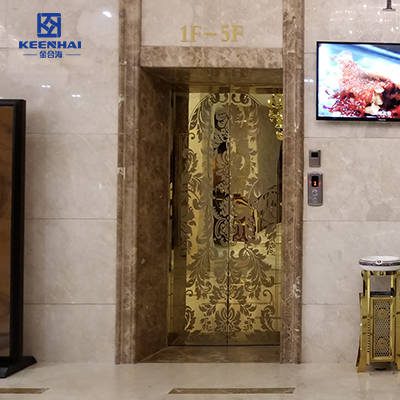
Beyond basic dimensions, customization extends to surface treatments. Patterned embossing, laser etching, and PVD-coated finishes allow architects to maintain brand identity, lobby design cohesion, and luxury perception without compromising durability. PVD coatings in particular enhance color stability and resistance to abrasion, making them suitable for hotels, high-end offices, and retail environments.
Design teams often evaluate:
-
Pattern visibility and scale relative to lobby space.
-
Finish resilience against frequent contact and cleaning.
-
Integration with lighting and reflective surfaces to avoid glare or uneven wear.
For advanced commercial projects, designers also coordinate Yngong fan roestfrij stiel lift treatments with door finishes to create a seamless visual transition from the cab to the hall, improving the overall passenger experience.