Selecting a constant temperature wine cabinet starts with assessing your bottle capacity and wine types. Dual-zone cooling systems allow you to store reds and whites at their optimal temperatures, while high-quality insulation maintains stable conditions. Materials like stainless steel provide durability and easy maintenance, and modern cabinets often include humidity control, digital sensors, and app integration for precise monitoring. Choosing a cabinet with proper ventilation and correct electrical setup ensures consistent performance, making it a smart investment for both home collectors and commercial spaces.
1. Determine Your Storage Needs
Choosing the right constant temperature wine cabinet starts with understanding your storage requirements. Not all wine cabinets are created equal, and picking the wrong size or type can lead to wasted space or insufficient temperature control, which may compromise your wine collection.
1.1 Assess Bottle Capacity Requirements
Before selecting a cabinet, calculate how many bottles you need to store. Home collectors often underestimate the number of bottles they accumulate, while commercial establishments need to plan for peak storage capacity. Typical ranges include:
| Cabinet Size | Bottle Capacity | Ideal Use Case |
|---|---|---|
| Small | 12–48 | Personal kitchens, compact wine corners |
| Miðlungs | 50–150 | Home enthusiasts, small bars or restaurants |
| Large | 151–300+ | Commercial wine rooms, high-volume storage |
| Custom/Luxury | 300+ | Boutique hotels, upscale restaurants |
For example, a small dual-zone constant temperature wine cabinet can comfortably hold 48 bottles, making it perfect for homeowners who enjoy a curated wine selection. Medium and large cabinets are better for restaurants or commercial wine bars that rotate bottles frequently.
1.2 Consider Wine Types and Aging Duration
Different wines require distinct temperature and humidity conditions. Red wines generally prefer 58–65°F (14–18°C), while white wines and sparkling varieties need 45–55°F (7–13°C). If you’re planning to age wine for several years, choose a cabinet that provides stable temperature and humidity with minimal fluctuation.
-
Single-zone cabinets work well if you mostly store one type of wine.
-
Dual-zone cabinets are ideal for mixed collections, allowing precise control for reds and whites simultaneously.
-
Long-term storage considerations: Cabinets with high insulation and vibration-free compressors prevent corks from drying or sediment from disturbing the wine.
Some collectors prefer a stainless steel constant temperature wine cabinet for durability and hygienic surfaces, especially when storing high-value bottles over years.
1.3 Identify Home vs Commercial Use
The intended environment drastically affects the size, design, and features required:
-
Home use: Space constraints and aesthetics are critical. Small to medium cabinets fit into kitchens, dining rooms, or basements. Many homeowners choose glass-front doors to showcase their collection.
-
Commercial use: Restaurants, wine bars, and hotels demand high-capacity, durable units that can withstand frequent door openings and fluctuating ambient conditions. Cabinets with stainless steel frames, reinforced shelves, and smart humidity controls are common.
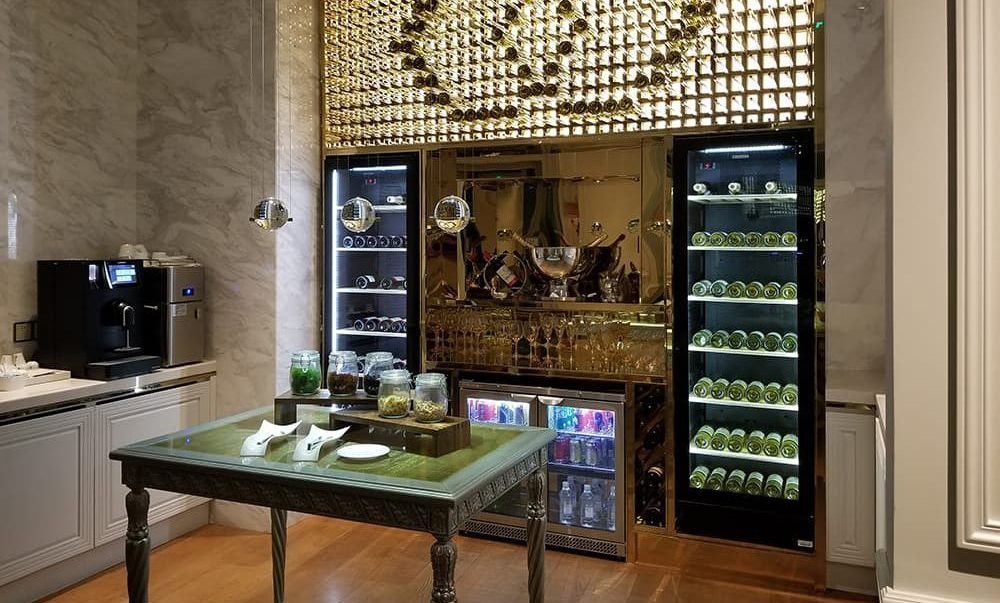
A boutique wine bar in New York installed a medium-sized stainless steel wine cellar with dual-zone cooling to store 120 bottles. The setup allowed staff to keep reds and whites at ideal temperatures while maximizing floor space, proving that capacity planning and type selection directly impact both wine quality and operational efficiency.
2. Choose the Appropriate Cooling System
Selecting the right cooling system is crucial when investing in a constant temperature wine cabinet. The cooling method determines how well the cabinet maintains the target temperature, its noise level, energy efficiency, and overall reliability. Choosing incorrectly can lead to fluctuating temperatures, spoilage, or higher electricity bills.
2.1 Compressor-Based vs Thermoelectric Cooling
Two primary cooling systems dominate the market:
| Cooling System | Advantages | Drawbacks | Ideal Use Case |
|---|---|---|---|
| Compressor-Based | Fast cooling, handles large capacities, stable under frequent door openings | Slightly noisier, higher initial cost | Medium to large cabinets, commercial use |
| Thermoelectric | Silent operation, low vibration, energy-efficient for small units | Limited cooling capacity, slower temperature recovery | Small home cabinets, single-zone collections |
Compressor-based units are perfect for high-capacity or commercial use, where maintaining precise temperatures is essential. In contrast, thermoelectric systems excel in quiet home environments where subtle vibrations matter, such as storing delicate sparkling wines.
If you want a cabinet that supports a wide range of bottles in a dual-zone setup, choose a compressor model with advanced insulation for maximum stability.
2.2 Single-Zone vs Dual-Zone Temperature Control
Temperature zoning allows you to store different wine types under optimal conditions.
-
Single-Zone Cabinets: Maintain one consistent temperature. Suitable for collectors who focus primarily on one wine type, like reds.
-
Dual-Zone Cabinets: Offer two independently controlled temperature sections, ideal for mixed collections with whites and reds.
A homeowner storing both Cabernet Sauvignon and Chardonnay would benefit from a dual-zone constant temperature wine cabinet, keeping reds at 62°F (17°C) and whites at 50°F (10°C). This ensures each bottle ages correctly without sacrificing space or performance.
2.3 Temperature Stability and Energy Efficiency
When evaluating a cooling system, consider these critical factors:
-
Temperature Fluctuation: Look for units with ±2°F stability. Sudden swings can damage corks and affect wine quality.
-
Energy Consumption: Modern cabinets consume between 100–350 kWh/year depending on size and technology. Efficient models reduce electricity costs while maintaining optimal conditions.
-
Noise & Vibration: Compressor-based units may be louder but handle frequent use; thermoelectric units are quieter but better for low-traffic setups.
Installation note: To maximize efficiency:
-
Place the cabinet away from direct sunlight or heat sources.
-
Ensure adequate airflow around the unit.
-
Avoid overcrowding bottles, as this can restrict air circulation and create hot spots.
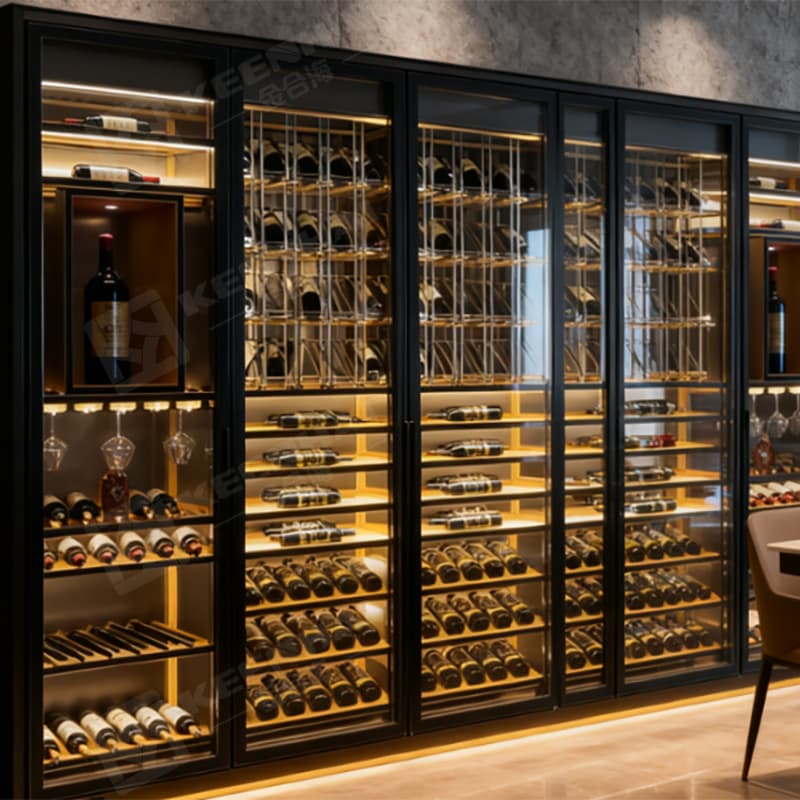
Choosing the right cooling system involves balancing capacity, noise, efficiency, and wine type requirements. For most homeowners seeking reliable performance, a medium compressor-based dual-zone cabinet offers the best combination of stability, flexibility, and long-term durability.
3. Select Materials and Cabinet Construction
Choosing the right materials and construction for a wine cabinet affects durability, temperature stability, and overall performance. The cabinet isn’t just storage—it’s an investment in maintaining wine quality for years.
3.1 Stainless Steel vs Wood vs Glass Options
Cabinet materials directly impact strength, aesthetics, and maintenance:
| Efni | Advantages | Drawbacks | Typical Use |
|---|---|---|---|
| Ryðfrítt stál | Durable, corrosion-resistant, easy to clean | Can feel industrial in home decor | Commercial use, long-term storage |
| Wood | Warm appearance, blends with interiors | Sensitive to humidity changes | Home kitchens, display areas |
| Glass | Elegant, showcases wine collection | Fragile, less insulation | Display cabinets, low-traffic areas |
A stainless steel constant temperature wine cabinet works well in high-traffic environments like restaurants or wine bars. It keeps the interior hygienic and withstands frequent door openings, while wooden cabinets create a more traditional look suitable for a home dining area. Glass-front cabinets combine visibility with style but require careful insulation to maintain stable temperatures.
3.2 Cabinet Insulation Quality
Good insulation prevents temperature fluctuations and reduces energy consumption. Look for cabinets with high-density polyurethane panels, typically 1–2 inches thick. This ensures that the cooling system doesn’t have to work overtime, keeping electricity costs lower.
Two identical cabinets can differ in internal temperature stability by up to 5°F if insulation quality varies. A well-insulated constant temperature wine cabinet keeps reds and whites perfectly stable even when placed near slightly warmer areas like a kitchen wall.
3.3 Door Types and Shelf Configurations
Door material and sealing affect performance and user convenience:
-
Solid vs Glass Doors: Solid doors improve insulation, while double-pane glass doors allow visibility without significantly compromising temperature stability.
-
Shelving: Adjustable wooden or stainless steel racks accommodate various bottle sizes and maximize space. Shelves with a slight tilt prevent corks from drying out.
-
Door Seals: Look for magnetic or gasket seals that prevent warm air infiltration, especially for larger cabinets storing hundreds of bottles.
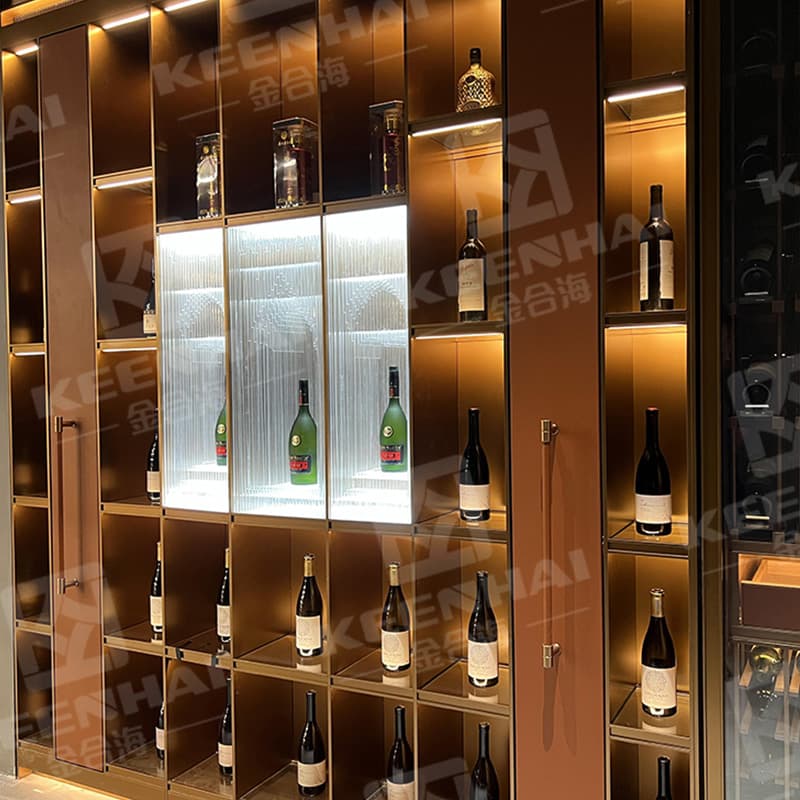
Many homeowners choose luxury constant temperature wine display cabinets with reinforced glass doors and customizable shelves to combine aesthetic appeal with precise temperature control. In commercial settings, fully stainless steel interiors paired with magnetic seals ensure long-term reliability and easy cleaning.
4. Evaluate Smart Features and Additional Controls
Modern constant temperature wine cabinets often include smart features and precise controls that help maintain wine quality and make management easier. These options are no longer just luxury—they directly improve performance, reduce energy waste, and protect investments in rare bottles.
4.1 Humidity Control and Sensors
Maintaining proper humidity (around 60–70%) prevents corks from drying and preserves wine aroma. High-end cabinets come with built-in hygrometers and humidity sensors, which automatically adjust moisture levels.
-
Sensors continuously monitor internal conditions.
-
Humidifiers or ventilation systems engage as needed to maintain target humidity.
-
Digital displays show real-time data so adjustments are easy.
For collectors with mixed red and white wines, humidity stability is as crucial as temperature control. A stainless steel constant temperature wine cellar often includes dual sensors and automated systems to maintain perfect conditions for long-term storage.
4.2 Remote Monitoring and App Integration
Smart wine cabinets increasingly allow remote monitoring via mobile apps:
-
Real-time alerts for temperature or humidity deviations
-
Historical data tracking to evaluate performance over weeks or months
-
Adjustable settings without physically touching the unit
This feature is especially useful in commercial environments or for homeowners who travel frequently. By linking the cabinet to a smartphone app, users can prevent costly mistakes before they affect wine quality.
Some luxury models also include push notifications for power outages, ensuring you can respond immediately to maintain stability. For dual-zone cabinets, apps allow independent temperature adjustments for reds and whites at any time, which keeps each bottle at its optimal condition.
4.3 Lighting, Display, and Aesthetic Features
Beyond temperature and humidity, aesthetics and accessibility matter:
-
LED lighting highlights bottles without generating heat that could disrupt storage.
-
Display shelving lets users showcase collections while keeping bottles properly tilted.
-
Touchscreen or digital panels integrate with lighting and temperature controls for a seamless user experience.
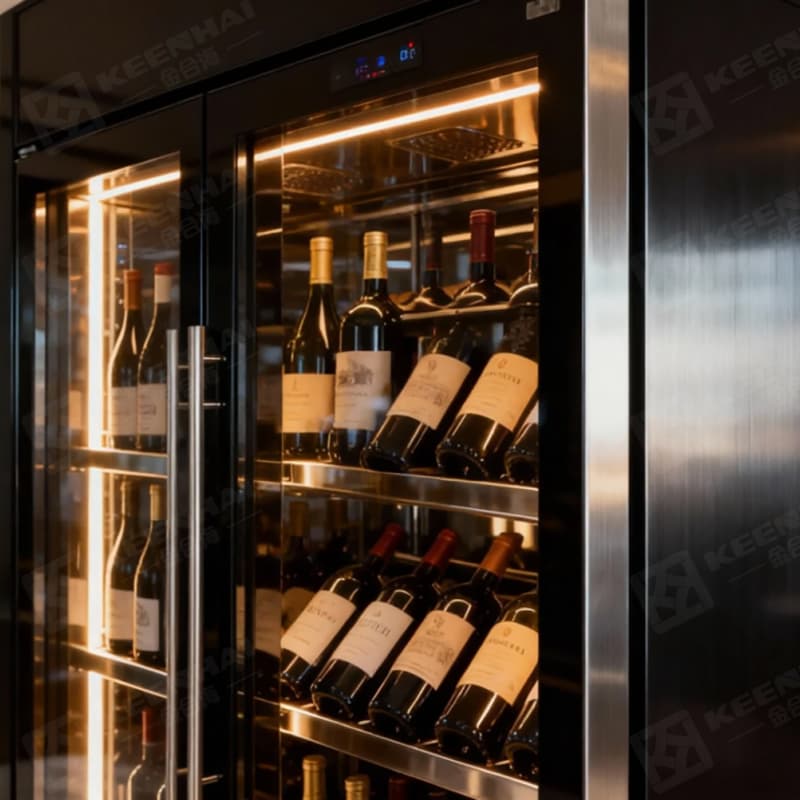
A luxury constant temperature wine display cabinet with glass doors and adjustable LED shelves can make a private wine room both functional and visually impressive. In restaurants or boutique hotels, lighting and display design also improve customer engagement while preserving quality.
5. Consider Installation, Space, and Ventilation
Proper installation is essential for a constant temperature wine cabinet to perform reliably. Even the best cooling system will fail if the cabinet isn’t positioned correctly, lacks airflow, or doesn’t meet electrical requirements. Planning the location, power setup, and ventilation ensures bottles stay in optimal condition.
5.1 Built-in vs Freestanding Placement
Cabinets are designed for either built-in eða freestanding setups. Each has specific space and airflow needs:
| Placement Type | Advantages | Limitations | Ideal Use |
|---|---|---|---|
| Built-in | Seamless integration with cabinetry, sleek look | Requires precise measurements, may need additional ventilation | Home kitchens, wine rooms |
| Freestanding | Flexible location, easier to move | Needs clearance around sides and back for airflow | Apartments, rental properties, small bars |
For built-in units, leave at least 2–3 inches of clearance on top and sides to allow heat to escape. Freestanding cabinets work well in corner spaces but must not be pushed flush against walls, which could reduce efficiency.
5.2 Ventilation Requirements and Airflow
Adequate ventilation prevents overheating and reduces energy consumption. Most cabinets need:
-
Top or rear vents left unobstructed for proper air circulation.
-
2–3 inches of clearance from walls or cabinetry.
-
Regular dusting of vent areas to maintain airflow efficiency.
Poor ventilation can cause compressors to work harder, leading to temperature fluctuations or increased electricity use. High-end models, such as a stainless steel constant temperature wine cellar, are often designed with built-in venting systems that maintain airflow even in tight spaces.
5.3 Electrical Setup and Power Needs
Understanding electrical requirements is critical before installation:
-
Verify voltage compatibility (110–120V for US residential, 220–240V in many other regions).
-
Ensure a dedicated circuit to avoid tripping breakers.
-
Check power consumption ratings: small home cabinets use around 100–150W, while larger commercial units can exceed 300W continuously.
For dual-zone or smart-equipped cabinets, power stability matters even more. Some models include built-in surge protection, preventing sudden voltage spikes from damaging cooling systems. Installing the cabinet on a reliable power source ensures long-term performance and reduces maintenance issues.