The average cost of a constant temperature wine cabinet in 2025 depends heavily on capacity and cooling technology. Small units for home kitchens typically start around $600–$1,200, while medium cabinets with dual-zone cooling range $1,500–$2,800. Large commercial units, especially stainless steel frames with smart sensors, can exceed $6,000. Buyers should also account for installation and maintenance costs to ensure the unit functions optimally. Choosing the right size and cooling system prevents wine spoilage and maximizes long-term value, making upfront planning a crucial step in the buying process.
1. Average Cost of a Constant Temperature Wine Cabinet in 2025
Most buyers want a clear number before committing to a constant-temperature wine cabinet, because the price gap in 2025 is wider than previous years. A realistic budget falls between $600 and $6,800, depending on size, cooling precision, materials, and whether the unit is going into a home bar or a commercial venue. When I help clients plan a custom bar or renovate a tasting area, I always tell them the same thing: the cabinet size and cooling stability decide 80% of the cost.
1.1 Price Range by Standard Sizes
Size drives the biggest price difference in 2025. A compact 18–32-bottle unit fits small apartments or kitchen corners, while tall full-height models appear more in villas, wine bars, or boutique hotels.
Here’s a straightforward breakdown:
| Size Category | Bottle Capacity | Typical 2025 Price | Where It’s Commonly Used |
|---|---|---|---|
| Small | 8–32 bottles | $600–$1,200 | Apartments, condos, offices |
| Medium | 40–120 bottles | $1,300–$2,800 | Homes, restaurants, showrooms |
| Large | 150+ bottles | $3,000–$6,800+ | Villas, hotel lounges, high-end bars |
In one rooftop restaurant renovation I worked on, we placed a medium-capacity cabinet behind the bar and sized it so bartenders could restock during peak hours without blocking the service aisle. That small operational detail mattered more to them than the bottle count.
1.2 Price Range by Cooling Performance
Cooling performance affects the price just as much as size. If someone only needs a simple compressor-based setup for short-term storage, they usually stay under $1,000. But when the cabinet must hold temperature steady for aging wine, prices climb fast.
2025 ranges you can actually expect:
-
Basic compressor cooling: $600–$1,000
-
Dual-zone cooling with humidity control: $1,500–$2,800
-
High-precision cooling for professional aging: $3,000–$6,800
When clients want the cabinet to integrate visually with a full wine-room layout, they often compare it with a stainless steel wine cellar solution. Not because they plan to build a full cellar immediately, but because they want the same durability and consistent temperature performance.
1.3 Price Range for Home vs Commercial Use
Homeowners usually spend less because they prioritize quiet operation and compact design. Restaurants and bars spend more because the cabinet needs stronger compressors, thicker insulation, and reinforced shelving.
Home Use (2025 pricing)
-
$600–$2,200
-
Common in kitchens, living rooms, wall-built bar spaces
-
Buyers care more about noise and size
Commercial Use (2025 pricing)
-
$1,800–$6,800+
-
Found in hotels, wine bars, resort lounges
-
Needs stronger cooling, heavier frames, and better airflow
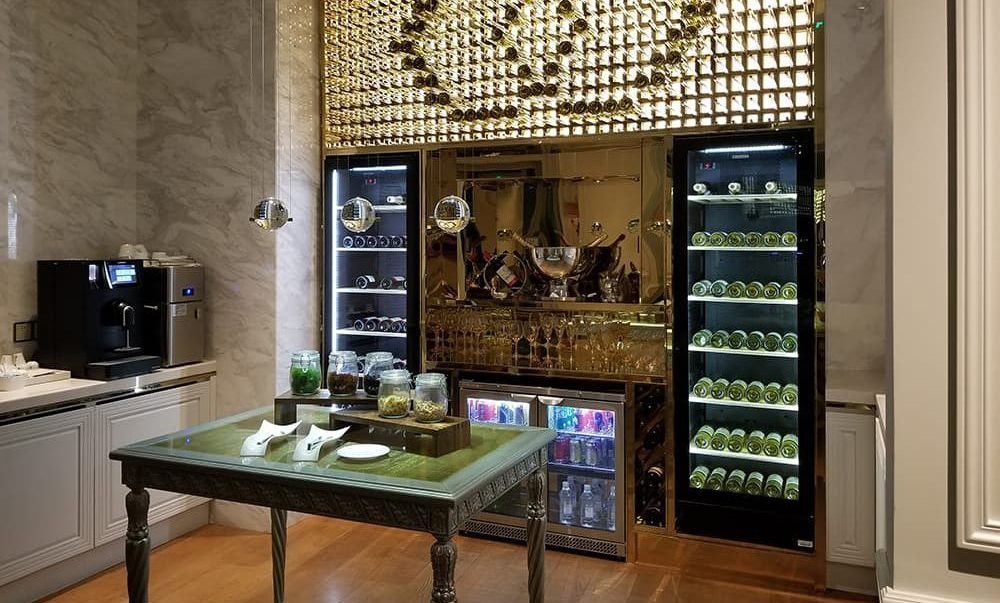
A recent bar project chose a stainless-steel frame instead of a wooden-trimmed model because the staff open the door dozens of times per hour. In more design-driven spaces—like private dining rooms or boutique hotel tasting lounges—clients sometimes prefer a luxury constant-temperature wine display cabinet to match the interior mood lighting and glass façades.
2. Key Factors That Influence Wine Cabinet Pricing
When planning a purchase, understanding what drives the cost of a wine cabinet is critical. In 2025, prices don’t just reflect the number of bottles a unit can hold—they also depend on technology, materials, and smart features. Knowing these factors helps you avoid overspending while getting the performance you need.
2.1 Capacity & Storage Technology
Capacity is the first big factor. Small units holding 8–32 bottles cost around $600–$1,200, while large 150+ bottle cabinets can exceed $6,000. Storage technology also plays a role: adjustable wooden racks, metal shelves, and sliding systems each carry different costs.
-
Wooden racks offer a classic look but may need more maintenance in humid environments.
-
Metal shelves are durable and easier to clean, perfect for commercial spaces.
-
Sliding and modular racks provide flexibility but increase the production cost by 10–15%.
Even if a constant temperature wine cabinet has the same bottle capacity, a unit with modular racks can cost $300–$500 more than one with standard fixed shelves.
2.2 Cooling System Type (Compressor vs Thermoelectric)
Cooling type dramatically affects price and performance:
-
Compressor systems are powerful, can maintain stable temperatures in larger units, and cost between $1,200–$6,800 depending on size and precision.
-
Thermoelectric systems are quieter, energy-efficient, and ideal for smaller spaces, usually priced $600–$1,500.
For restaurants or high-traffic wine bars, a compressor-based cabinet is essential to prevent temperature fluctuation. For home enthusiasts, thermoelectric units save electricity and maintain low noise.
If you want dual-zone cooling, expect to pay $500–$800 extra, as it requires two independent compressors or thermoelectric modules.
2.3 Materials, Finishes & Custom Design Options
The material choices strongly impact both aesthetics and cost:
-
Stainless steel frames: Durable, corrosion-resistant, ideal for heavy-duty use.
-
Glass doors: Tempered or double-pane, affect insulation and energy efficiency.
-
Wood trim or panels: Increase visual appeal but can raise price by 10–20%.
-
Custom finishes: Powder-coated colors, brushed metals, or luxury veneers can add another $200–$1,000 depending on size and complexity.
When clients need the unit to match a modern bar or tasting room, they often choose stainless steel cabinets with full-glass fronts. In fact, many commercial designers prefer units inspired by Vinkjeller i rustfritt stål standards, which combine durability and aesthetic quality. Bold choice: these materials can extend the lifespan of the cabinet by over 10 years.
2.4 Smart Features, Sensors & Humidity Control
Advanced features increasingly influence 2025 pricing:
-
Temperature sensors maintain precise readings to ±1°F.
-
Humidity controllers protect corks and prevent mold, costing an extra $200–$500.
-
Wi-Fi and app integration let you monitor and adjust settings remotely, which adds roughly $300–$600.
-
LED lighting and display panels enhance visual presentation but add minor cost increases of $100–$200.
In modern homes or boutique restaurants, these smart integrations are not just luxuries—they prevent costly wine spoilage and simplify daily operation. When describing these units to clients, I usually emphasize: “A smart cabinet pays for itself over time by protecting wine quality and reducing manual monitoring.”
Even if a constant temperature wine cabinet is already durable, pairing it with smart sensors and humidity control can easily push the price up $500–$1,000 depending on model size.
3. Cost Comparison by Cabinet Type
Choosing the right type of wine cabinet is crucial for both budget and functionality. In 2025, the three main types—built-in, freestanding, og luxury/customized units—have very different cost structures, installation requirements, and performance characteristics. Understanding the distinctions helps buyers make informed decisions.
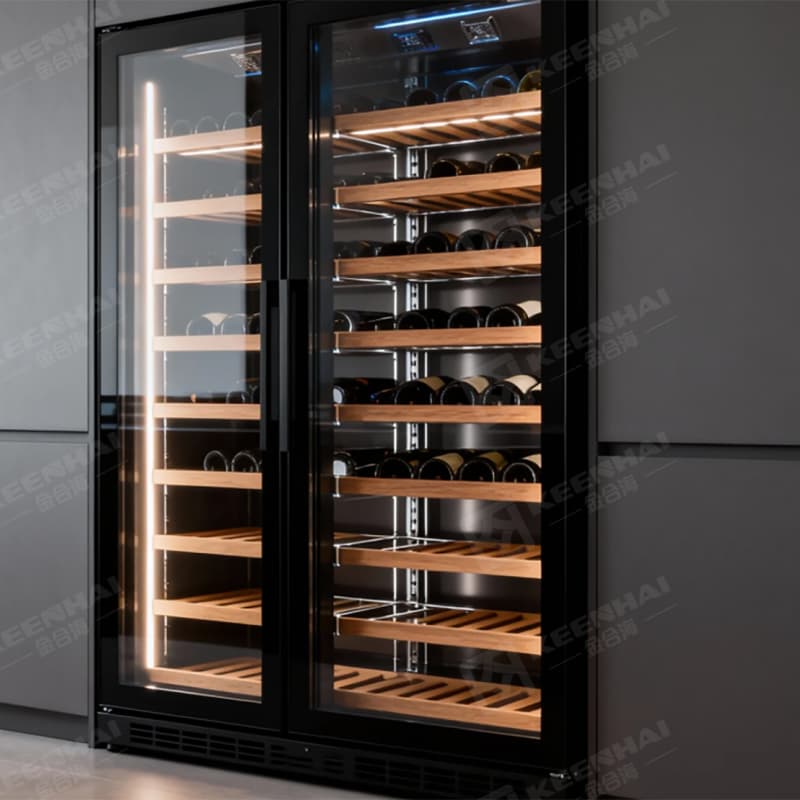
3.1 Built-in Constant Temperature Wine Cabinets
Built-in units are designed to seamlessly integrate into kitchens, bars, or wine rooms. They require precise measurements because even a small gap can compromise cooling efficiency. Prices range from $1,200 to $4,500 depending on capacity and finish.
Key considerations for built-in units:
-
Measure the opening carefully: Ensure at least 1–2 inches of ventilation space around the cabinet.
-
Check for proper insulation: Surrounding cabinetry can affect temperature stability.
-
Select appropriate ventilation type: Front-vented models allow flush installation; rear-vented units require additional clearance.
Built-in units typically use compressor-based cooling systems for stable temperature maintenance. A medium-sized built-in cabinet (40–120 bottles) often costs around $2,000–$2,800, and higher-end models with stainless steel framing and tempered glass doors can reach $4,500. These units perform best in permanent installations where aesthetics and space-saving are critical.
3.2 Freestanding Constant Temperature Wine Cabinets
Freestanding units offer flexibility—they can be placed anywhere with access to power and adequate ventilation. Price ranges in 2025 are $600–$3,500. Smaller units for home use start around $600–$1,200, while larger commercial-grade freestanding units can reach $3,500.
Advantages include:
-
Easy relocation: Perfect for temporary setups or seasonal use.
-
Simpler installation: Usually just plug in and set the temperature.
-
Versatility: Works in kitchens, wine rooms, offices, or bars.
Even if a freestanding unit is placed in a high-traffic area, a constant temperature wine cabinet with front-vented cooling and reinforced shelves can maintain steady conditions for up to 150 bottles. In this category, medium-to-large models often cost $2,000–$3,000 and are popular in boutique wine bars and residential entertainment areas.
3.3 Luxury & Fully Customized Wine Cabinets
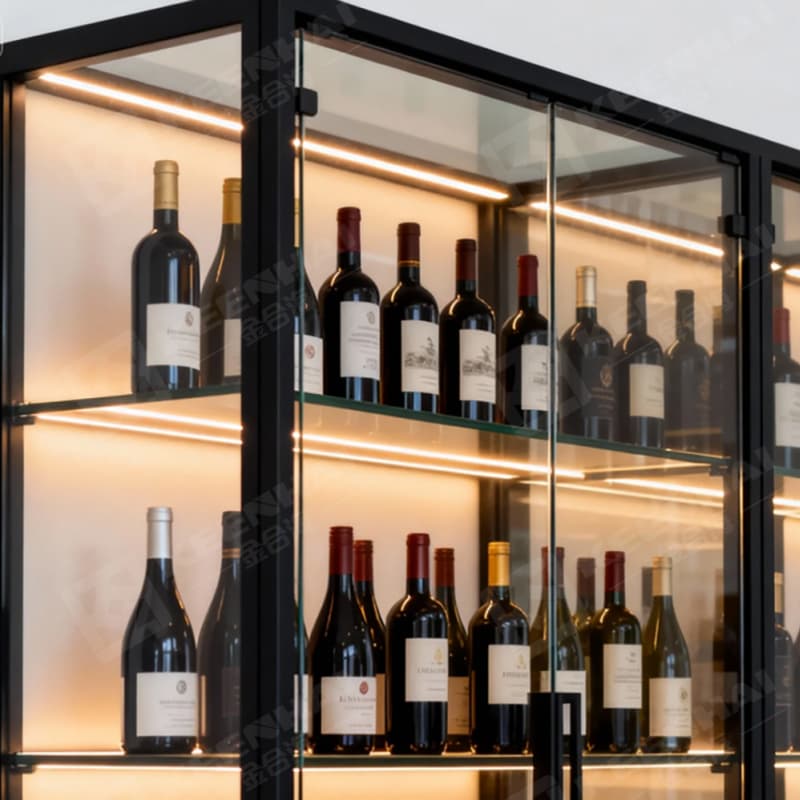
Luxury and fully customized cabinets target high-end buyers, boutique hotels, and premium restaurants. Prices start at $3,500 and can exceed $6,800, depending on design complexity, materials, and integrated technology.
Features commonly include:
-
Custom sizing: Designed to match wall dimensions or furniture layouts.
-
Premium materials: Stainless steel frames, glass fronts, exotic wood trims.
-
Integrated smart controls: Temperature sensors, humidity control, remote monitoring.
-
Lighting and display options: LED accent lighting, decorative shelves, and branded engravings.
These units are often installed in multiple steps:
-
Confirm wall dimensions and clearances.
-
Coordinate with electricians for power and optional smart integration.
-
Install cabinet frame and shelving modules.
-
Connect cooling system and calibrate sensors.
-
Test temperature stability across all zones.
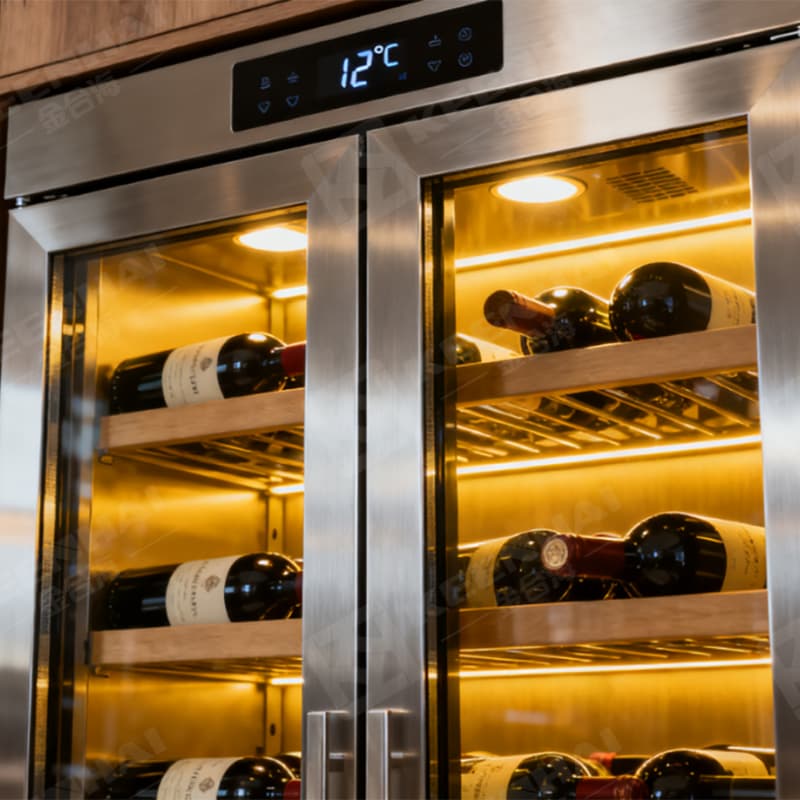
In high-end interiors, designers frequently compare luxury units with standard stainless steel wine cabinets to ensure durability and consistent temperature control. Boldly put, these cabinets not only store wine but also enhance the visual impact of tasting rooms and private collections.
4. Additional Costs to Consider
When budgeting for a wine cabinet, the purchase price is just the starting point. In 2025, additional costs can account for 15–25% of your total investment, especially for larger or high-end units. Ignoring these factors often leads to unexpected expenses and frustration.
4.1 Installation & Electrical Requirements
Installation is more than just “put it in place.” For built-in or high-capacity units, proper setup ensures cooling efficiency and safety.
-
Measure the space accurately: Verify width, depth, and ventilation clearance.
-
Check electrical requirements: Most medium-to-large units require 110–120V standard outlets; larger commercial models may need 220–240V circuits.
-
Professional installation: For built-in or luxury units, hiring a certified installer can cost $150–$500, depending on complexity.
-
Calibration: After installation, calibrate temperature sensors and humidity controls to maintain a stable environment.
Even for a standard constant temperature wine cabinet, ignoring proper installation can reduce cooling efficiency by 10–15%, which risks wine spoilage. Built-in units require extra care because surrounding cabinetry can trap heat, so follow the manufacturer’s venting recommendations strictly.
4.2 Shipping & Handling Fees
Shipping accounts for a significant portion of the overall cost, especially for large or heavy cabinets:
-
Small home units (under 50 lbs): $50–$150
-
Medium cabinets (50–150 lbs): $150–$400
-
Large commercial or luxury units: $400–$1,200
Some premium brands include white-glove delivery, which can add $200–$500 for unpacking, placement, and debris removal. If you’re buying a stainless steel wine cabinet for a hotel or restaurant, factor in these extra costs because the units are heavy and fragile.
4.3 Maintenance, Repairs & Long-Term Operating Costs
Running costs vary by cooling system, size, and usage intensity:
-
Electricity: Medium-sized cabinets consume 100–250 kWh per year, while large or dual-zone units can reach 400–500 kWh.
-
Routine cleaning: Glass fronts, racks, and fans require monthly cleaning to prevent dust and bacteria buildup.
-
Filter replacement: Compressor-based units often need filter changes every 6–12 months, averaging $20–$50 per filter.
-
Repairs: Minor compressor repairs or sensor replacements cost $150–$400, while major system failures may exceed $1,000.
Planning for these ongoing expenses ensures your wine collection stays safe without surprises. In high-traffic commercial setups, frequent monitoring and occasional professional servicing are recommended to maintain optimal performance over time.
5. Price Differences Across Brands and Regions
Understanding regional and brand-based price differences is key when planning your wine cabinet purchase. In 2025, the same unit can vary by 20–50% depending on the brand reputation, manufacturing region, and local taxes or import duties. Knowing these details helps buyers avoid overspending while getting a reliable, long-lasting cabinet.
5.1 High-End International Brands vs Affordable Brands
High-end brands offer premium materials, precise cooling systems, and advanced features. Affordable brands focus on basic functionality and simpler aesthetics. Below is a realistic comparison:
| Brand Type | Price Range (2025) | Typical Features | Warranty / Service |
|---|---|---|---|
| High-End International | $3,000–$6,800+ | Stainless steel frame, dual-zone cooling, smart sensors, custom finishes | 3–5 years, premium support |
| Affordable / Entry-Level | $600–$1,500 | Single-zone, basic shelves, standard cooling | 1–2 years, limited support |
For hotels and boutique bars, investing in a high-end stainless steel wine cabinet ensures consistent temperature control and long-term durability. Boldly put, the upfront cost often pays off in fewer repairs and better preservation of high-value wines.
5.2 Pricing Across US, Europe, Middle East & Asia
Regional pricing differences arise from manufacturing, shipping, tariffs, and labor costs:
-
US: $600–$6,800, with higher-end units typically shipped from Europe or Asia.
-
Europe: €700–€6,000, often slightly more expensive due to labor costs and VAT.
-
Middle East: $1,000–$6,800+, premium units carry import taxes, especially stainless steel framed cabinets.
-
Asia: $500–$5,500, with competitive pricing from local manufacturers and OEM production.
Shipping and customs add $100–$500 depending on region and cabinet size. For instance, a medium-sized dual-zone cabinet imported to the Middle East can cost 20–30% more than a locally sourced unit.
5.3 OEM / Custom Manufacturing Cost Breakdown
OEM or fully customized cabinets allow buyers to tailor the cabinet to exact space, design, and functional needs. Pricing components include:
-
Base cabinet production: $1,000–$3,000 depending on materials.
-
Custom shelving & racks: $200–$600, depending on wood or metal type.
-
Advanced cooling & sensors: $300–$1,000 for dual-zone, humidity control, or smart integration.
-
Finishing & optional features: $200–$1,200 for veneers, glass doors, or decorative trims.
-
Shipping & installation: $100–$500 depending on size and location.
For luxury hotel installations, designers often choose stainless steel or premium custom units to combine durability, precise temperature control, and aesthetic appeal. Even a medium-sized customized unit can reach $4,500–$6,000 in total cost, reflecting both material quality and advanced cooling technology.