Stainless steel elevator doors excel in durability and low maintenance. They resist dents, scratches, and corrosion, making them ideal for high-traffic commercial spaces. Glass doors provide transparency and modern aesthetics, but they require more frequent cleaning and are prone to chips or cracks. For buildings prioritizing long-term performance and predictable costs, stainless steel usually outperforms glass, especially in service or freight elevator areas.
1. Material Characteristics
1.1 Stainless Steel Elevator Door Core Properties
When you walk into a busy commercial building during peak hours, the first thing you notice is how the elevator doors handle constant traffic. A well-built stainless steel elevator door deals with dents, pressure, moisture, disinfectants, and nonstop opening cycles without losing structural integrity. The material’s rigidity keeps the panels stable even when people lean on the door or tap it impatiently while waiting.
In large transportation hubs—airports, subway stations, bus terminals—the maintenance teams usually have a short list of criteria:
-
The surface must tolerate daily cleaning with harsh chemicals.
-
The door skins must stay flat even if carts or luggage hit them.
-
The finish needs to look professional at all times, especially in public-facing zones.
Stainless steel performs consistently in these scenarios because engineers trust its strength more than composite or aluminum alternatives. The combination of high tensile strength and corrosion resistance turns it into the go-to material for heavy-duty elevator systems.
1.2 Glass Door Core Properties
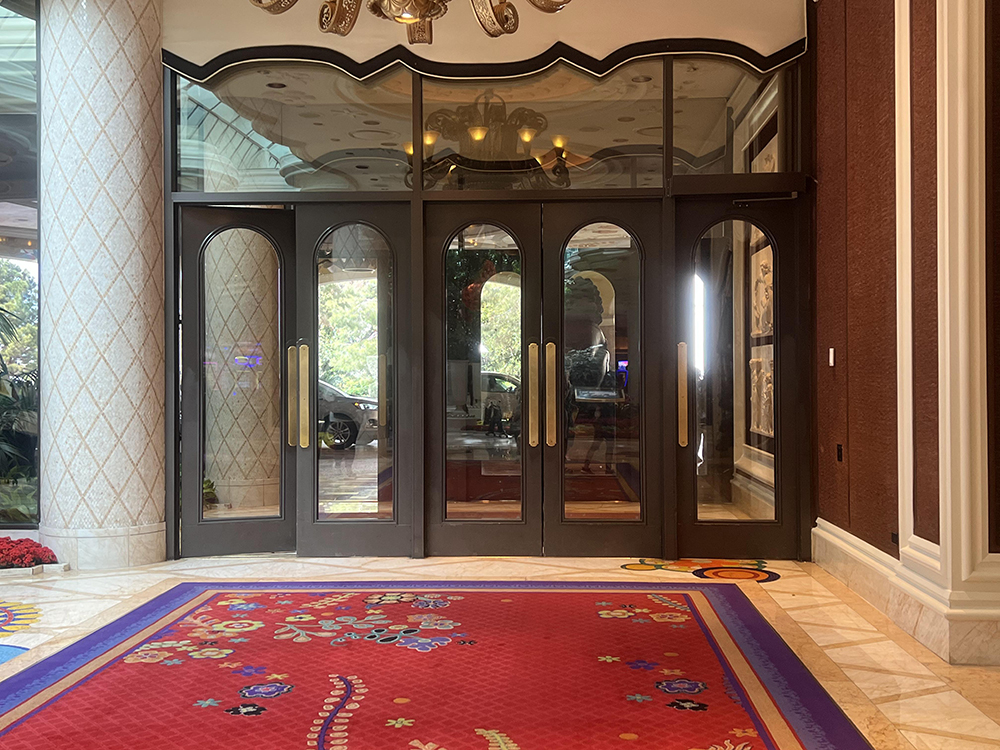
Glass doors create a completely different atmosphere. Step into a boutique hotel or a luxury residential tower and you immediately notice the openness and brightness created by a clear or tinted glass elevator door. Architects often pick glass when the project aims for a more hospitality-driven experience.
However, the engineering considerations behind a glass elevator door involve much more than aesthetics. The design team usually relies on laminated or tempered glass to increase strength and avoid shattering risks. This type of door works especially well when developers want transparency between the lobby and the elevator car.
Some entrance areas pair the elevator with a glass entrance door at the lobby to keep the design language consistent. This combination makes older buildings feel fresher and more modern without large structural changes.
High-end apartments, boutique offices, and design-forward hotels are the most common environments where glass elevator doors shine because the material elevates the entire visual experience.
1.3 How Material Differences Impact Performance
The performance gap between stainless steel and glass becomes clearer when you break down the material behavior in real-world situations. Below is the single comparison table for this section:
| Performance Factor | Stainless Steel Elevator Door | Glass Elevator Door |
|---|---|---|
| Structural Strength | Very high; ideal for heavy traffic | Strength depends on laminated/tempered structure |
| Surface Durability | Resists dents and scratches | Prone to fingerprints; needs gentle care |
| Visual Effect | Professional, industrial, clean | Open, bright, modern |
| Privacy Control | Naturally opaque | Requires frosting, coating, or gradient glass |
| Best Use Cases | Hospitals, malls, airports, offices | Hotels, residences, boutique commercial spaces |
In real projects, the material choice often comes down to practical priorities.
If a developer wants maximum durability, stainless steel wins without debate. But when the goal is atmosphere, transparency, or premium visual impact, glass becomes the preferred direction.
Material differences shape not only the look of the space but also the long-term maintenance budget and the end-user experience. A commercial building with heavy traffic demands strong metal panels, while a hospitality venue thrives with the openness and visual warmth of glass.
2. Durability and Lifespan Comparison
2.1 Resistance to Dents, Scratches, and Corrosion
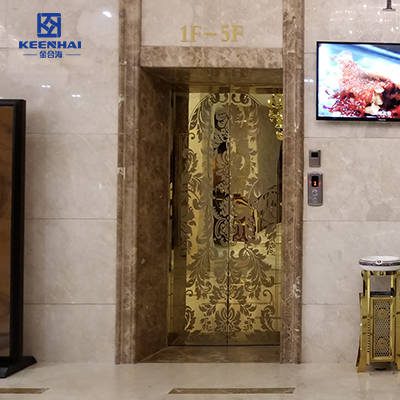
Stainless steel elevator doors create a noticeably tougher surface layer because the alloy forms a uniform chromium-rich barrier that blocks moisture, cleaning chemicals, and fingerprints. Glass doors look premium, but the surface tension of tempered glass makes it more likely to chip at the corners when subjected to sharp impact. For elevator cabins serving hotels, airports, and malls, the difference becomes obvious after only 6–12 months of daily use.
Stainless steel doors also allow quick surface refinishing. When facilities teams notice swirl marks or shallow scratches,他们 usually follow three steps to restore the finish:
-
Clean the metal surface with alcohol-based cleaner to remove oil film.
-
Use a fine-grit abrasive pad and follow the original polishing direction to smooth scratches.
-
Apply a stainless steel protective film to reinforce the brushed pattern and delay the next refinishing cycle.
Glass doors don’t offer the same flexibility. Even minor scratches create visible light distortion, forcing building owners to replace entire panels instead of repairing localized damage. Because of this, stainless steel remains the preferred choice for high-traffic vertical transportation routes, especially where carts, luggage, or service trolleys frequently hit the door surface.
2.2 Structural Strength and Load-Bearing Differences
Stainless steel elevator doors deliver higher impact absorption, especially with 304 or 316 grades that maintain tensile strength above 515 MPa. This strength allows metal doors to stay stable even when building operators install heavier panel skins, such as PVD-coated stainless steel or reinforced backing plates. When crew members adjust door tracks or replace rollers, the door leaf maintains rigidity and avoids torsion that affects opening speed.
Glass doors follow a different structural logic. They rely on thick tempered glass, usually 10–12 mm, to keep the panel from flexing. Although tempered glass resists bending, it reacts poorly to edge stress concentration, meaning a small corner impact can propagate cracks across the panel. In busy office towers or public buildings, this risk forces maintenance teams to perform more frequent inspections and replace entire panels when micro-fractures appear.
When elevators transport service carts or freight items, technicians usually follow these steps before approving the door type:
-
Measure the impact zone height where trolleys usually collide (typically 300–900 mm above the floor).
-
Evaluate the expected load transfer based on door leaf thickness, support frame design, and track material.
-
Select reinforcement plates or backing sheets if the door faces increased daily stress.
In these conditions, స్టెయిన్లెస్ స్టీల్ delivers more predictable structural stability and longer operational life.
2.3 Long-Term Wear in High-Traffic Environments
Stainless steel elevator doors maintain their appearance for 8–15 years with only scheduled refinishing and lubrication, especially when facilities teams follow a monthly cleaning cycle. The metal surface forms a protective oxide layer that continually regenerates, so even after thousands of open–close cycles, the panel keeps a consistent brushed or mirrored texture.
In high-traffic commercial environments, the wear pattern becomes predictable:
-
స్టెయిన్లెస్ స్టీల్ develops shallow swirl marks but keeps structural strength.
-
Glass shows fingerprints, fine scratches, and corner chips that accumulate faster.
Maintenance teams often choose stainless steel for areas with 3,000–10,000 daily elevator cycles, because the metal doesn’t create visual distortion or require panel replacement as frequently. For properties aiming to reduce lifecycle costs, stainless steel offers the most stable performance across large elevator groups, especially when combined with PVD-protective coatings that improve hardness and reduce smudge accumulation.
3. Aesthetic and Design Flexibility
3.1 Style Options for Stainless Steel Elevator Doors
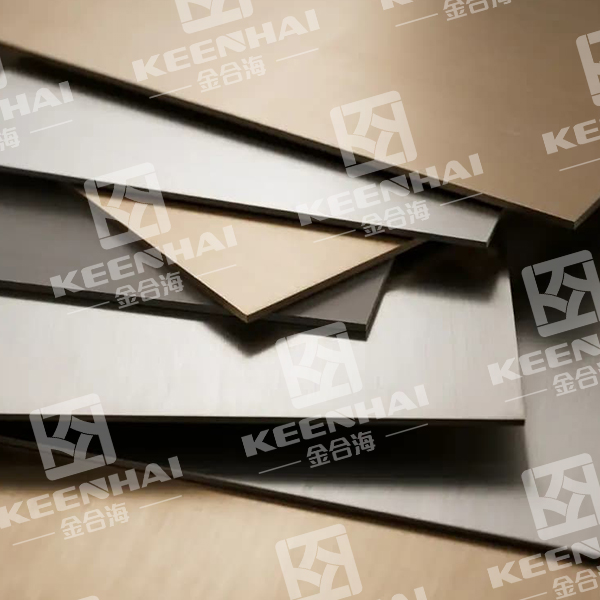
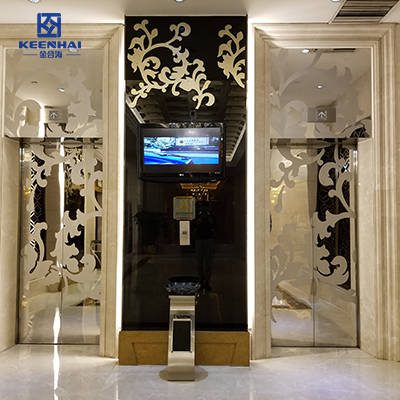
Stainless steel elevator doors offer an impressive range of design possibilities. Different surface treatments allow architects and interior designers to adjust the look according to the project’s style. Brushed, mirror-polished, hairline, and vibration finishes each create unique light reflections, making the doors stand out in lobbies of commercial complexes, hotels, or corporate headquarters.
For high-end projects, PVD-colored stainless steel adds another layer of flexibility. Popular colors like gold, rose gold, champagne, black titanium, and bronze combine durability with a premium aesthetic, helping the elevator doors integrate seamlessly into modern luxury interiors.
Design teams often follow these steps to achieve a precise finish:
-
Select the base alloy, usually 304 or 316 stainless steel, to ensure consistent color and structural strength.
-
Choose the finishing direction and texture, for example, a subtle brushed look versus a highly reflective mirror surface.
-
Apply additional patterns or coatings, such as PVD or laser-etched designs, to incorporate branding, geometric patterns, or custom motifs.
These options make stainless steel doors versatile, balancing durability with visual sophistication, especially in spaces where elevator doors play a central role in interior design.
3.2 Style Options for Glass Elevator Doors
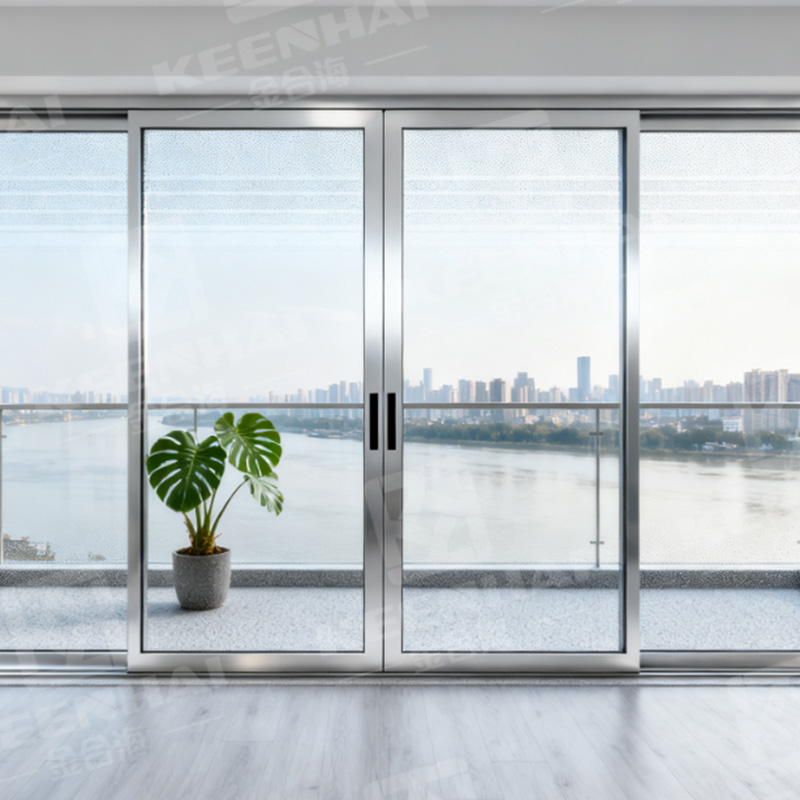
Glass elevator doors focus on transparency, openness, and visual lightness. Designers often select clear tempered glass, frosted panels, or tinted glass depending on privacy requirements and aesthetic goals. For instance, in luxury apartments or boutique hotels, frosted patterns can provide privacy while still allowing light to flow through, whereas fully clear glass emphasizes a modern, airy feeling.
Architects often combine glass panels with sleek frames, usually stainless steel or aluminum, to maintain structural integrity and align with the building’s visual language. Laminated or tempered glass ensures durability without sacrificing style, allowing designers to create floor-to-ceiling glass elevator doors that appear almost invisible from a distance.
Incorporating elements such as custom etched patterns, gradients, or semi-transparent films adds individuality to each project. These touches let high-end commercial spaces and residential interiors achieve a sophisticated balance between openness and privacy.
3.3 Visual Impact on Commercial vs Residential Spaces
The choice between stainless steel and glass significantly affects the atmosphere of a space. In commercial environments such as corporate offices, airports, or hospitals, stainless steel doors convey professionalism, strength, and cleanliness. Their reflective surfaces can also enhance lighting in lobbies, helping busy areas feel brighter without additional fixtures.
For residential or boutique commercial spaces, glass doors often dominate. Glass elevator doors create a perception of openness, making smaller lobbies feel larger and more inviting. Designers frequently pair glass doors with accent lighting or colored frames to emphasize the aesthetic centerpiece of the building entrance.
In mixed-use projects, combining stainless steel elevator doors for service or freight elevators with glass elevator doors for passenger access allows architects to balance functionality and visual appeal:
-
Stainless steel doors handle durability-heavy zones with high traffic.
-
Glass doors enhance the aesthetic experience in visitor-facing areas.
-
Lighting, reflections, and finishes can be coordinated across both materials to maintain a cohesive design.
This strategic use of material ensures that elevators contribute both to the operational reliability and the overall visual statement of the building.
4. Maintenance Requirements
4.1 Daily Cleaning Needs
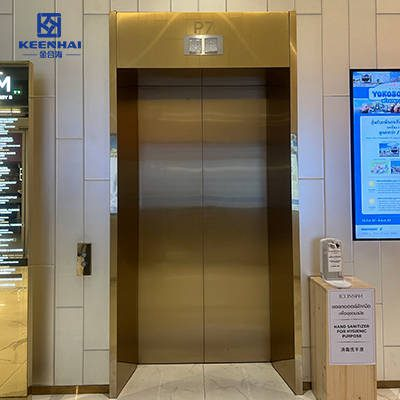
Stainless steel elevator doors require minimal but consistent daily care to maintain their finish. High-traffic buildings often schedule cleaning once or twice a day depending on elevator usage. The steps typically include:
-
Wipe the door surface with a microfiber cloth dampened with a mild detergent solution.
-
Rinse and dry thoroughly to avoid water spots on mirror or brushed finishes.
-
Spot-treat fingerprints or smudges with a specialized stainless steel cleaner for high-shine or PVD-coated surfaces.
In comparison, glass elevator doors need slightly more attention. Clear glass shows fingerprints, smudges, and dust almost immediately, requiring the use of streak-free glass cleaners multiple times per day in commercial environments like hotels or corporate lobbies. Frosted or tinted glass reduces visible marks but still benefits from daily wipe-downs to maintain clarity and consistency.
For buildings with mixed materials, maintenance teams often sequence cleaning to optimize efficiency:
-
Stainless steel doors first, removing dust and smudges.
-
Glass doors second, ensuring streak-free finish.
-
Frames, handles, and tracks last to avoid contamination.
4.2 Long-Term Maintenance Cost Differences
Over a 10-year horizon, stainless steel elevator doors tend to be more cost-effective despite higher upfront investment. Their durability and resistance to dents, corrosion, and chemical damage reduce replacement and refinishing needs. For PVD-coated stainless steel finishes, maintenance cycles often extend to every 12–18 months for touch-ups or polish reapplication.
Glass elevator doors, however, incur recurring costs due to:
-
Panel replacements caused by chips, cracks, or edge damage.
-
Increased labor for frequent cleaning, especially in high-traffic environments.
-
Optional protective films or coatings to extend lifespan.
| Factor | Stainless Steel Elevator Door | Glass Elevator Door |
|---|---|---|
| Daily cleaning frequency | 1–2 times/day | 2–3 times/day |
| Refinishing / maintenance | Every 12–18 months | 2–4 years (panel replacement) |
| Average 10-year cost | Lower (stable, predictable) | Higher (panel and labor intensive) |
| Vulnerability to damage | Minor scratches, easy to touch up | Chips, cracks, permanent marks |
This cost comparison makes స్టెయిన్లెస్ స్టీల్ doors particularly appealing for high-volume commercial buildings and service elevators, while glass doors often remain a premium aesthetic choice with higher lifecycle costs.
4.3 Surface Protection and Finish Retention
To maximize the lifespan of stainless steel elevator doors, facilities teams apply protective measures beyond daily cleaning:
-
PVD పూతలు or brushed finishes reduce visible fingerprints and maintain sheen.
-
Lubricate rollers and tracks every 6–12 months to prevent misalignment and reduce door wear.
-
Periodic deep cleaning using mild abrasives restores surface uniformity without removing the protective layer.
For glass elevator doors, maintaining clarity and surface quality often involves:
-
Applying anti-fingerprint or hydrophobic coatings to reduce smudges and water marks.
-
Checking laminated or tempered layers annually to ensure no delamination or micro-cracks develop.
-
Promptly replacing any damaged panels to prevent accidents and visual degradation.
In real-world buildings, combining stainless steel doors for high-traffic service elevators with glass doors for aesthetic passenger areas allows maintenance teams to balance appearance with long-term durability, while minimizing labor and replacement costs.
5. Installation and Cost Breakdown
5.1 Initial Installation Complexity
Installing stainless steel elevator doors requires careful alignment and precise measurement to ensure smooth operation. Fabricators and installers usually follow these steps:
-
Measure the shaft and opening accurately, including tolerances for thermal expansion and track alignment.
-
Pre-assemble the door frame and panels in a controlled workshop environment to verify dimensions and finish quality.
-
Install the door leaf and rollers, ensuring uniform contact with guide rails.
-
Adjust sensors and safety switches to guarantee smooth opening and closing without friction or binding.
-
Test the complete system under load to confirm performance under real traffic conditions.
Glass elevator doors, by comparison, require extreme care during handling. Tempered glass panels are heavy but brittle, so installers often use suction mounts and protective padding to prevent chips or cracks. Aligning the glass within a metal frame adds additional complexity, particularly in projects with curved or custom-shaped openings.
In large-scale projects, stainless steel doors usually allow faster installation because installers can rely on rigid panels that don’t need secondary reinforcement for structural stability.
5.2 Upfront Cost Comparison
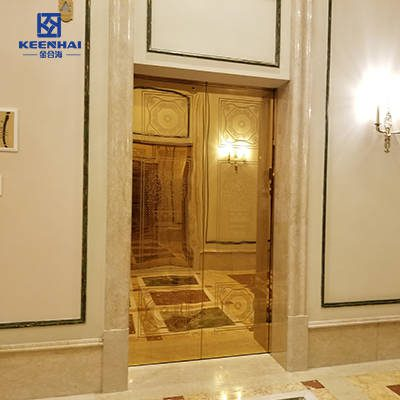
Upfront cost depends on materials, customization, and labor. Stainless steel elevator doors typically range from $3,500 to $6,500 per door for standard commercial configurations. PVD finishes, decorative patterns, or thicker alloy grades can increase costs to $7,000–$10,000.
Glass elevator doors often have a higher initial cost for the same footprint:
-
Laminated or tempered glass panels add $1,000–$3,000 per panel depending on thickness and coatings.
-
Custom etching, frosting, or tinting increases labor and fabrication time.
-
Reinforced frames, usually stainless steel, are required to support glass safely.
Despite the higher upfront cost, many developers choose glass doors for premium lobbies because the aesthetic impact can justify the investment. However, for service areas or high-traffic zones, stainless steel doors deliver a lower-cost, high-durability solution.
5.3 Hidden Costs and Long-Term Expenses
Beyond the initial price, long-term costs vary significantly between stainless steel and glass doors:
-
Maintenance and replacement – Stainless steel rarely requires full-panel replacement, while glass doors may need panel swaps after accidental impacts.
-
Finishing retention – PVD or brushed stainless steel finishes need minimal refinishing, usually every 12–18 months. Glass surfaces require daily cleaning and occasional coating reapplication.
-
Repair logistics – Handling broken glass involves higher labor and safety precautions, increasing operational downtime.
-
Insurance and liability – In high-traffic commercial buildings, damaged glass panels can trigger higher liability claims, indirectly adding to the total cost of ownership.
In projects where operators pair stainless steel doors with glass passenger doors, they often see optimized lifecycle costs: strong, low-maintenance metal doors for service areas and visually striking glass doors in lobbies, striking a balance between aesthetic impact and financial efficiency.