You should pay what aligns with professional fabrication, not retail shelving.
For most projects, a qualified stainless steel wine cellar supplier charges from the mid four figures to low six figures, depending on scale. That price typically includes engineered racking, proper load-bearing design, and compatibility with commercial-grade cooling systems, which directly affects long-term reliability.
1. Base Price Ranges Offered by Stainless Steel Wine Cellar Suppliers
Before breaking pricing down into entry-level, mid-range, and high-end tiers, it is important to clarify what “base price” actually means in the context of stainless steel wine cellar projects. For most suppliers, base pricing reflects the fabrication and material cost of the core storage structure, excluding optional architectural features such as glass enclosures, climate systems, decorative lighting, or advanced automation.
In real projects, suppliers calculate base price primarily from four measurable factors: material grade, steel thickness, fabrication method, and project scale. A compact residential stainless steel wine cellar system built for a private basement will follow a very different pricing logic than a multi-zone installation designed for a hotel lobby or upscale wine bar. This is why two projects with similar bottle capacity can still fall into entirely different price brackets.
To make these differences clearer, the table below outlines how suppliers typically position their base pricing across the three main tiers:
| Supplier Tier | Typical Base Price Range | Primary Use Case | Fabrication Characteristics |
|---|---|---|---|
| Entry-Level | USD 5,000–8,000 | Small residential storage | Standard modules, fixed dimensions |
| Mid-Range | USD 8,000–20,000 | Premium homes, retail wine rooms | Semi-custom layouts, improved finishes |
| High-End | USD 20,000+ | Luxury residential & commercial | Fully custom engineering, architectural integration |
These ranges appear consistently across North American, European, and Asian suppliers, especially when stainless steel replaces wood or aluminum as the main structural material. Once this baseline framework is clear, the logic behind each tier becomes much easier to evaluate.
1.1 Entry-Level Supplier Pricing for Standard Configurations
Entry-level pricing focuses on standardized stainless steel wine storage systems with minimal design variation. Suppliers in this category rely on repeatable rack dimensions, fixed mounting systems, and straightforward fabrication workflows. The stainless steel used is usually 304-grade, with a brushed or satin finish that balances durability and cost.
These systems commonly appear in private residences where homeowners want reliable, low-maintenance storage without turning the cellar into a visual centerpiece. Typical projects include under-stair wine rooms, compact basement installations, or temperature-controlled closets. Because the layout remains predictable, suppliers can control costs by limiting custom welds, curved elements, or mixed materials.
From a buyer’s perspective, entry-level pricing offers clarity and predictability. What it does not offer is design flexibility. Once clients request custom bottle angles, floating layouts, or integrated display lighting, the project naturally moves out of this tier.
1.2 Mid-Range Supplier Pricing for Semi-Custom Solutions
Mid-range pricing represents the point where cost efficiency and visual impact intersect. Suppliers at this level still use modular principles, but they modify dimensions, spacing, and structural elements to match the room’s geometry and storage goals. Many residential showpiece projects fall squarely into this category, especially when homeowners want the wine cellar to function as both storage and interior design.
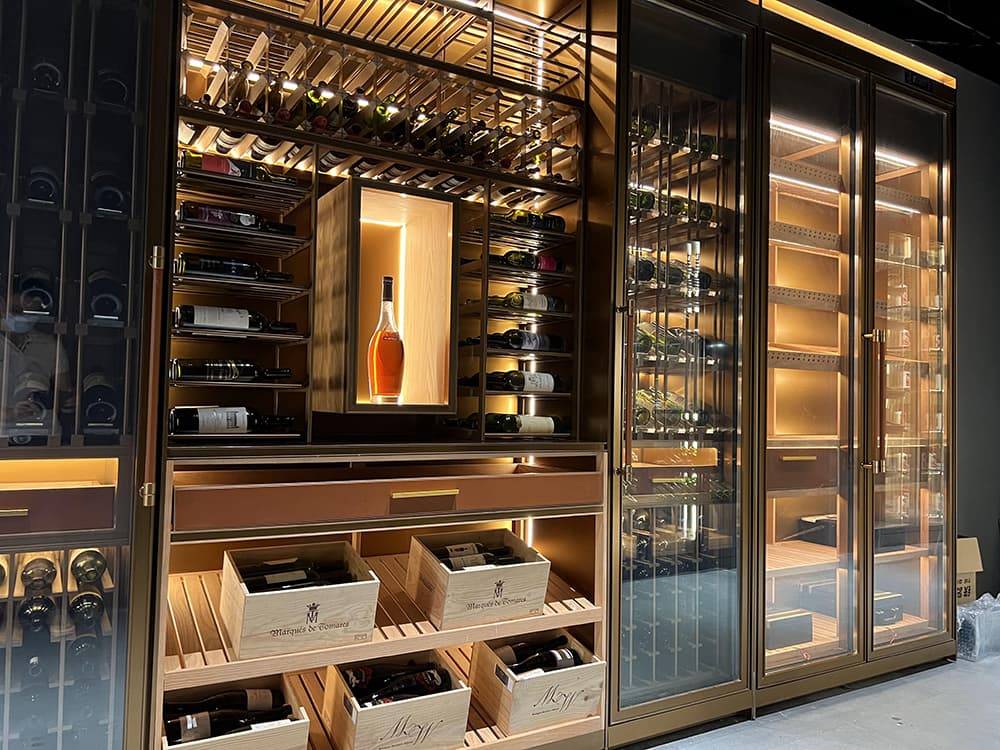
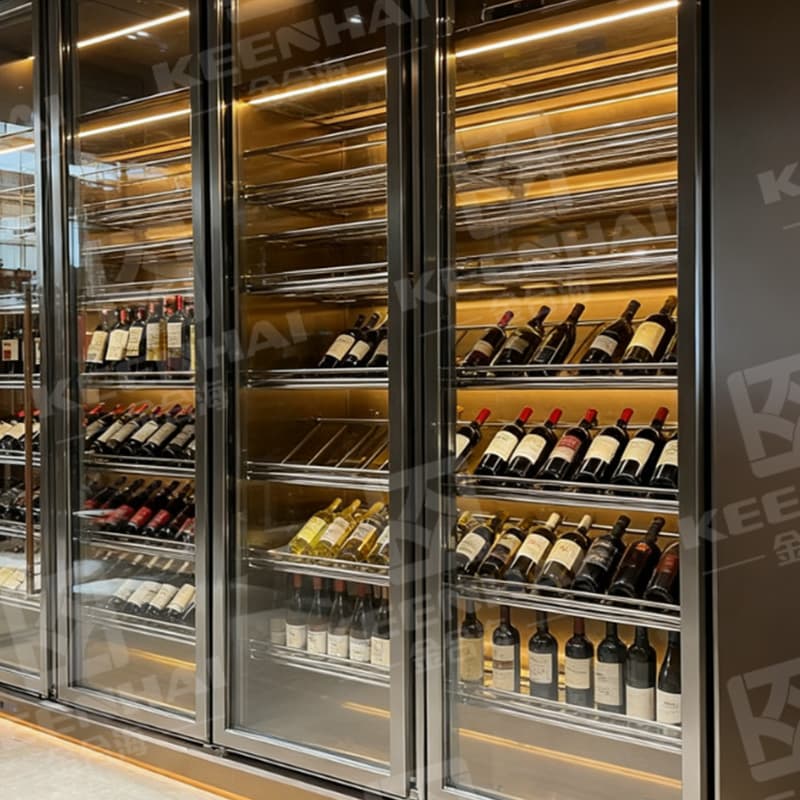
In practical terms, mid-range suppliers often adjust rack depth to accommodate magnums, vary bottle orientation for display rows, or reinforce framing for floor-to-ceiling layouts. This tier also covers many retail and hospitality projects, where durability and appearance carry equal weight. Semi-custom stainless steel wine storage frequently appears behind glass walls in restaurants, wine shops, and private clubs, where visibility matters as much as capacity.
While pricing increases compared to entry-level systems, buyers gain meaningful control over layout logic and long-term usability, making this tier the most common choice for serious collectors.
1.3 High-End Supplier Pricing for Fully Custom Projects
High-end pricing applies when suppliers move beyond modular logic and treat the wine cellar as an architectural structure rather than a storage product. In this tier, every dimension, weld, and connection point responds to a specific design intent. Suppliers often collaborate directly with architects and interior designers to integrate stainless steel wine storage into staircases, feature walls, or double-height spaces.
These projects frequently appear in luxury residences, flagship retail locations, and hospitality venues where the wine cellar becomes a defining visual element. Costs increase not simply because of size, but because of precision. Custom load calculations, concealed anchoring systems, curved stainless steel components, and specialized finishes all require skilled labor and extended fabrication time.
At this level, base pricing reflects engineering discipline and execution quality rather than material volume alone. Buyers choose this tier when long-term performance, brand perception, and architectural impact outweigh upfront cost considerations.
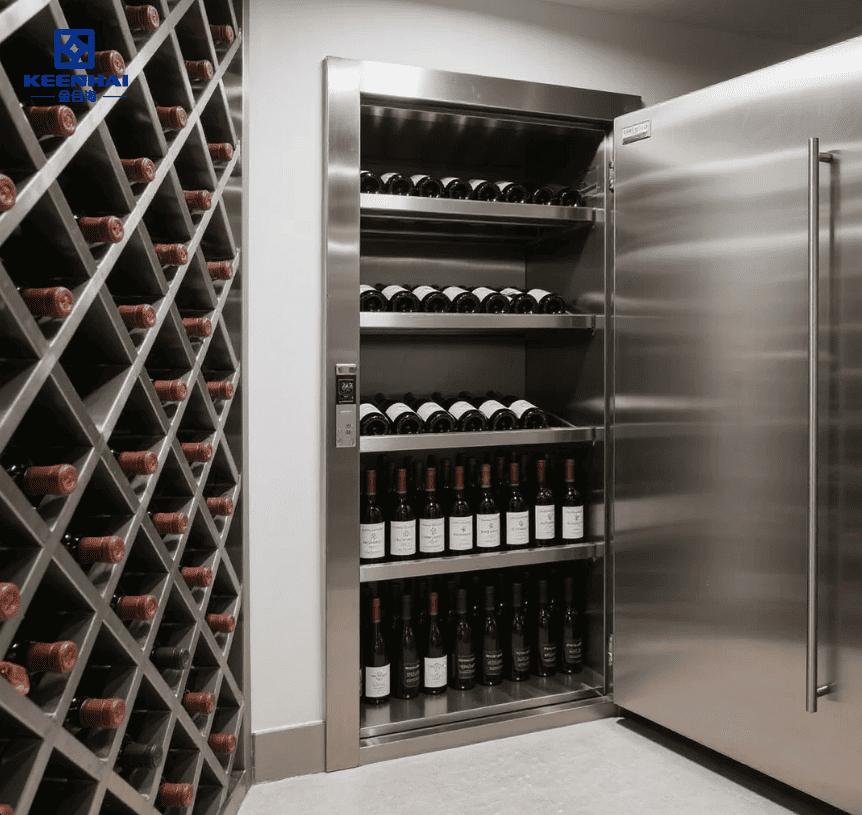
2. Key Cost Components Included in Supplier Quotes
When suppliers price a stainless steel wine cellar project, the quote is not a single number pulled from a catalog. It is a stacked cost structure, built from materials, engineering effort, and system integration. Understanding these components helps you quickly identify whether a quote is realistic, under-scoped, or padded with unnecessary margins.
2.1 Material Grades, Finishes, and Structural Specifications
Material selection usually accounts for 35–50% of the total supplier quote, and small specification changes can shift the price significantly. Most professional suppliers rely on 304 or 316 stainless steel, but the cost difference is not trivial. For example, 316-grade material typically adds 12–20% due to its higher nickel and molybdenum content, especially for coastal or high-humidity cellars.
Finish choices also matter more than many buyers expect. A brushed satin surface costs less than mirror or PVD-coated finishes, while fingerprint-resistant or micro-bead textures increase both material waste and polishing labor. Structural thickness plays a role as well: upgrading panels from 1.0 mm to 1.5 mm can improve rigidity for large-span installations but adds measurable material weight and fabrication time.
In residential basements or high-end hospitality projects, suppliers often recommend complete stainless steel wine cellar systems with reinforced framing rather than decorative-only skins, as these maintain alignment under long-term humidity and temperature cycling.
2.2 Fabrication Complexity and Custom Engineering Work
Fabrication and engineering usually represent 25–40% of the quoted price, and this is where suppliers separate standard work from true customization. Straight runs of modular frames remain cost-efficient, while curved walls, angled corners, or mixed materials trigger custom jigs, CNC programming, and repeated fit checks.
Typical cost drivers include:
-
Tolerance control below ±1.5 mm, required for seamless glass integration
-
Custom rack geometry to support non-standard bottle sizes or display angles
-
Hidden fastening systems designed to avoid visible weld lines
For example, a commercial tasting room with a curved stainless display wall can require three times the shop hours of a rectangular layout, even if the total surface area remains similar. This is also where suppliers with in-house engineering teams outperform resellers, as fewer revisions reduce wasted labor and delays.
2.3 Climate Control, Insulation, and Integration Requirements
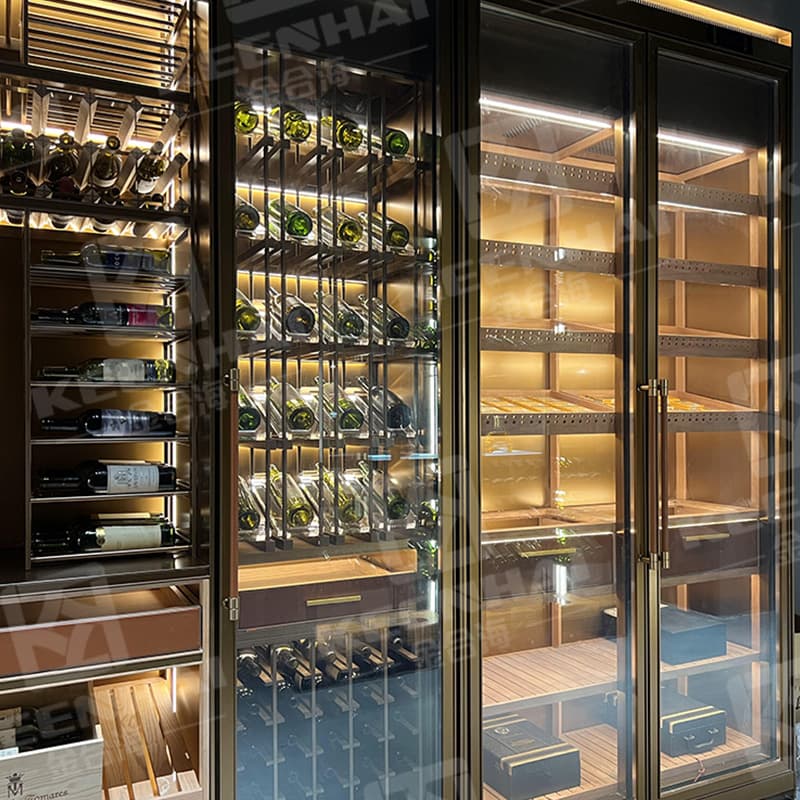
Environmental systems often contribute 15–25% of total costs, yet they directly affect long-term performance. A proper stainless steel wine cellar quote usually includes allowances for insulation thickness, vapor barriers, and HVAC coordination—not just decorative metalwork.
Integration complexity increases when suppliers must coordinate with:
-
Split or ducted cooling units
-
Low-voltage lighting channels concealed within metal profiles
-
Glass doors with magnetic seals and thermal breaks
In mixed-use buildings, installers often follow a defined sequence:
-
Frame anchoring and vapor barrier placement
-
Insulation fitting and condensation testing
-
Metal structure installation and final climate calibration
Skipping or underpricing these steps leads to condensation issues, label damage, and corrosion at fastener points. Suppliers who clearly itemize these requirements usually deliver more stable, long-term results than those offering “all-in” pricing with no technical breakdown.
3. Supplier Type and Its Impact on What You Should Pay
Supplier type directly shapes what you pay, how flexible the project becomes, and where hidden costs appear later. Many buyers focus on headline pricing, but the supplier model often explains a 30–70% price gap for projects that look similar on paper.
3.1 Mass Manufacturers vs Custom Stainless Steel Fabricators
Mass manufacturers usually offer lower entry pricing because they rely on standardized modules, fixed dimensions, and pre-defined finishes. These suppliers work well for simple layouts, such as straight-wall residential installations under 500 bottles. However, once ceiling height, wall angles, or load-bearing requirements change, pricing rises fast due to forced modifications.
Custom fabricators price differently. They engineer around space constraints from the start, which reduces downstream changes. For complex projects—hotel basements, private collectors’ rooms, or architectural showpieces—a fully engineered stainless steel wine cellar often delivers better cost control over the full build cycle, even if the initial quote looks higher.
Key difference: manufacturers sell products; fabricators solve spatial and structural problems.
3.2 Domestic Suppliers vs Overseas Production Partners
Domestic suppliers typically charge more per square meter, but they reduce coordination risk. Shorter lead times, local compliance knowledge, and easier site communication matter most when installation windows are tight or inspections are strict.
Overseas production partners, especially factory-based exporters, often reduce fabrication costs by 20–40%, particularly for metal-intensive structures and large-format stainless steel wine cabinets. The trade-off shifts to logistics, import timing, and documentation accuracy. Buyers who succeed with overseas sourcing usually lock specifications early and confirm packaging, tolerance, and finish samples before production.
For large-volume or repeat projects, overseas factories often deliver better long-term value when managed correctly.
3.3 Factory-Direct Pricing vs Distributor or Reseller Markups
The pricing structure changes dramatically depending on how many layers sit between you and the factory. Distributors add margin for coordination, warehousing, and local service—often 15–35% above factory-direct pricing. This model suits buyers who want minimal involvement and local accountability.
Factory-direct sourcing removes those layers. The process usually follows:
-
Direct technical confirmation with the production team
-
Detailed shop drawings and finish samples
-
Batch fabrication and consolidated shipment
When buyers work directly with established manufacturers such as pvdstainlesssteel, they often gain more control over material choices, rack geometry, and finish consistency without paying reseller premiums. This approach favors informed buyers who prioritize specification accuracy over convenience.
4. Project Scale, Capacity, and Price Expectations
Project scale sets the baseline for pricing more than any single design detail. Once capacity thresholds change, suppliers adjust not only material volume but also engineering logic, load calculations, and climate system configuration. That is why price jumps are rarely linear when you move from residential to commercial-grade wine storage.
4.1 Small Residential Wine Cellars and Private Collections
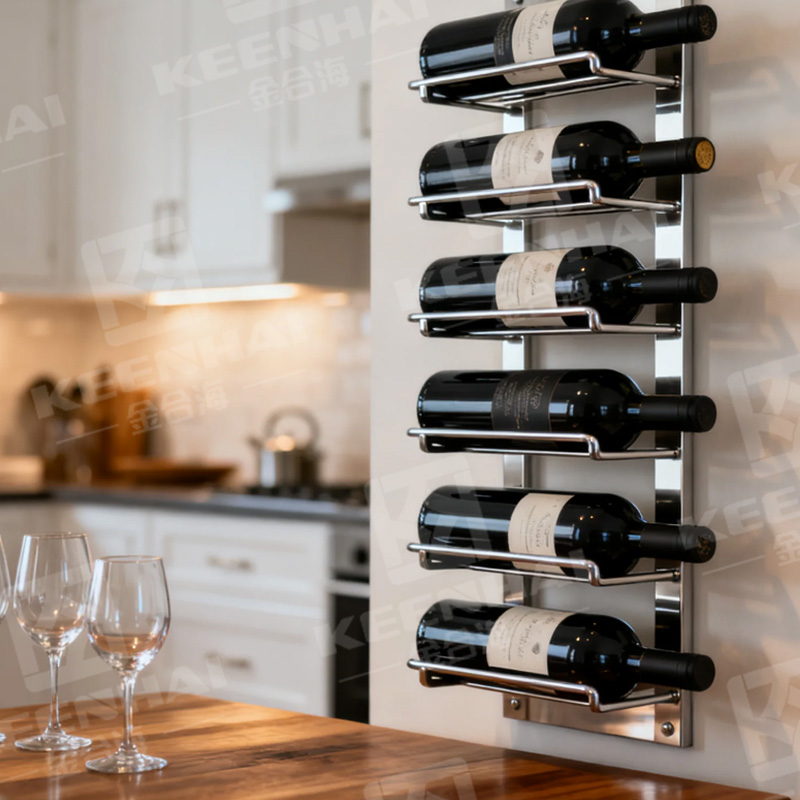
Small residential projects usually target 100–500 bottles and focus on space efficiency rather than architectural impact. Most suppliers rely on modular framing, wall-mounted racking, and simplified airflow layouts. In this range, buyers often choose compact stainless steel wine cabinets or partial cellar builds integrated into basements, dining rooms, or converted closets.
Costs remain relatively controlled because:
-
Structural loads stay low and rarely require floor reinforcement
-
Climate control relies on single-zone cooling units
-
Installation finishes within 1–3 days under normal site conditions
This tier works best for homeowners prioritizing durability and clean aesthetics without heavy customization.
4.2 Medium Commercial or Hospitality Wine Storage Projects
Mid-scale projects typically cover 500–2,000 bottles and appear in restaurants, wine bars, private clubs, and boutique hospitality spaces. At this level, pricing rises because suppliers must coordinate layout symmetry, public-facing finishes, and consistent temperature zones across larger wall spans.
Suppliers often shift from off-the-shelf racks to semi-engineered systems, combining display-focused zones with dense storage areas. Installation complexity increases due to:
-
Multi-wall alignment and anchoring tolerances
-
Integrated lighting and glass enclosure coordination
-
Split-zone cooling or humidity balancing
This is the range where supplier experience directly affects cost stability, especially when timelines intersect with interior fit-out schedules.
4.3 Large-Scale or Hotel-Grade Stainless Steel Wine Cellars
Large projects exceed 2,000 bottles and often serve hotels, luxury residences, or commercial collectors. Here, a fully engineered stainless steel wine cellar becomes a structural feature rather than a storage add-on. Suppliers price these projects based on engineering hours, material thickness, and long-term operational performance.
Typical characteristics include:
-
Load-bearing floor calculations and seismic anchoring
-
Multi-zone climate control with redundancy
-
Custom rack geometry optimized for inventory rotation
These projects demand early coordination with architects and MEP teams, but they also deliver the lowest cost per bottle over time.
| Project Scale | Typical Capacity | Cost Behavior | Main Cost Drivers |
|---|---|---|---|
| Residential | < 500 bottles | Linear, predictable | Modular racks, basic cooling |
| Commercial / Hospitality | 500–2,000 bottles | Step-up pricing | Layout complexity, finishes |
| Hotel / Large-Scale | > 2,000 bottles | Engineered pricing | Structural load, climate systems |
The key takeaway: pricing escalates with engineering responsibility, not just bottle count. Buyers who understand this avoid under-budgeting when moving into commercial or hotel-grade projects.
In practice, experienced buyers often compare several suppliers before moving forward. Manufacturers such as pvdstainlesssteel, which focus on factory-direct stainless steel wine cellar fabrication, are typically evaluated not only on price, but on engineering depth, material standards, and delivery consistency across projects.