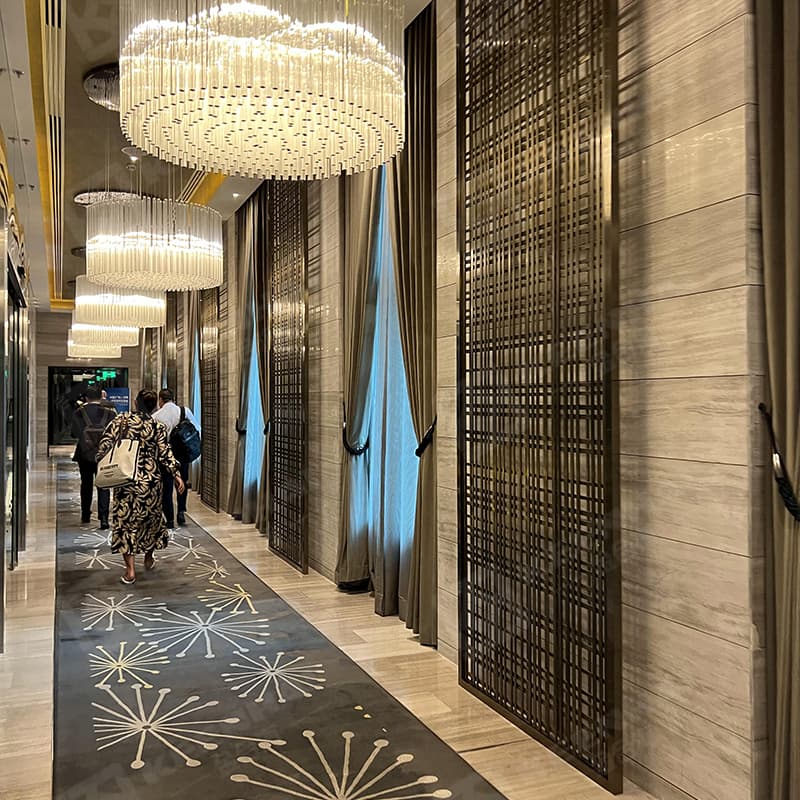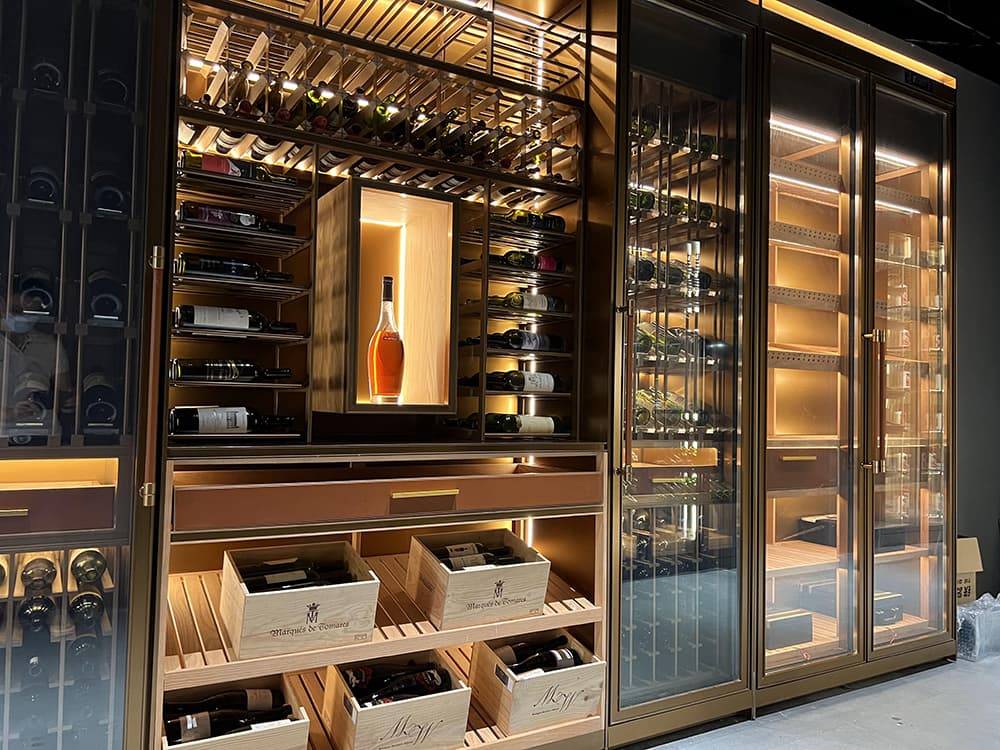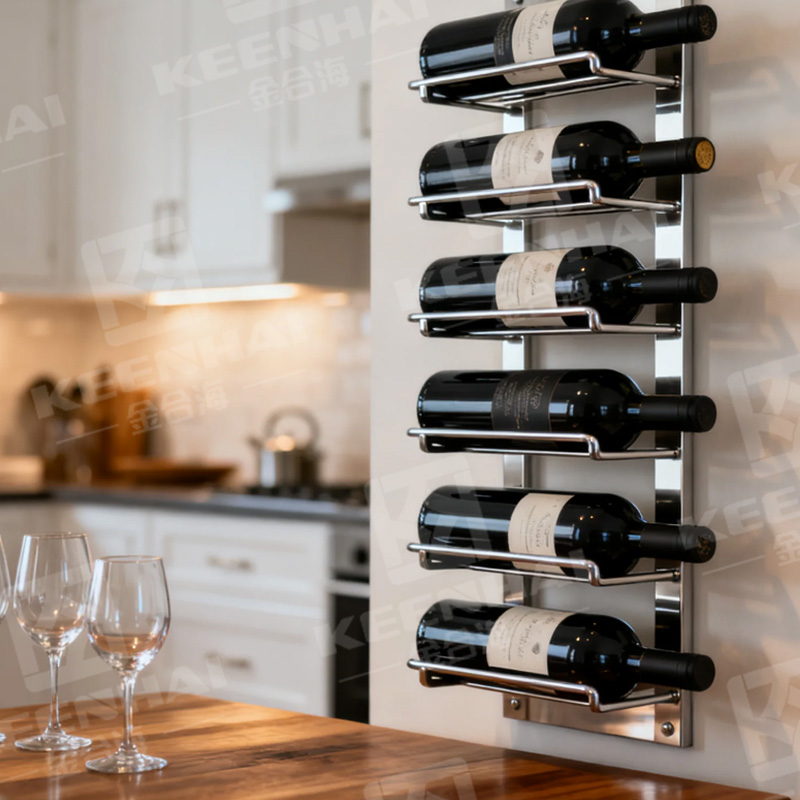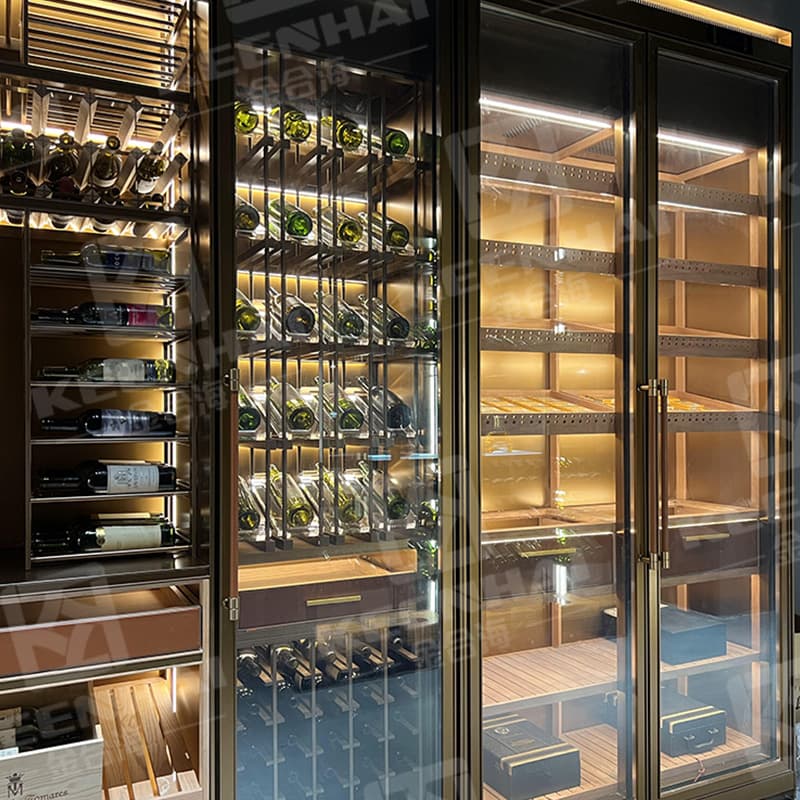
Stainless Steel Wine Cabinets pricing for bulk orders depends on several variables, including cabinet size, grade of steel, surface finish, and cooling system configuration. Larger cabinets with advanced features like multi-zone temperature control or custom layouts will naturally have higher per-unit costs, whereas ordering multiple units of standardized models reduces the price per cabinet without compromising quality.
1. Key Factors That Influence Bulk Pricing
Bulk pricing for commercial wine storage is driven by engineering reality, material science, and production logic, not by arbitrary discounts. In real hospitality and commercial projects—such as hotel wine walls, restaurant display corridors, or private club storage rooms—pricing shifts as soon as specifications move away from standardized modules. Understanding these variables upfront prevents cost overruns and redesign delays later in the project.
1.1 Cabinet Size, Capacity, and Structural Complexity
Cabinet size affects far more than external dimensions. As cabinet height, depth, and bottle count increase, internal load distribution becomes a structural issue rather than a cosmetic one. A fully loaded stainless steel cabinet holding 300–500 bottles carries several hundred kilograms of static load, which forces manufacturers to redesign internal frames, weld points, and base supports.
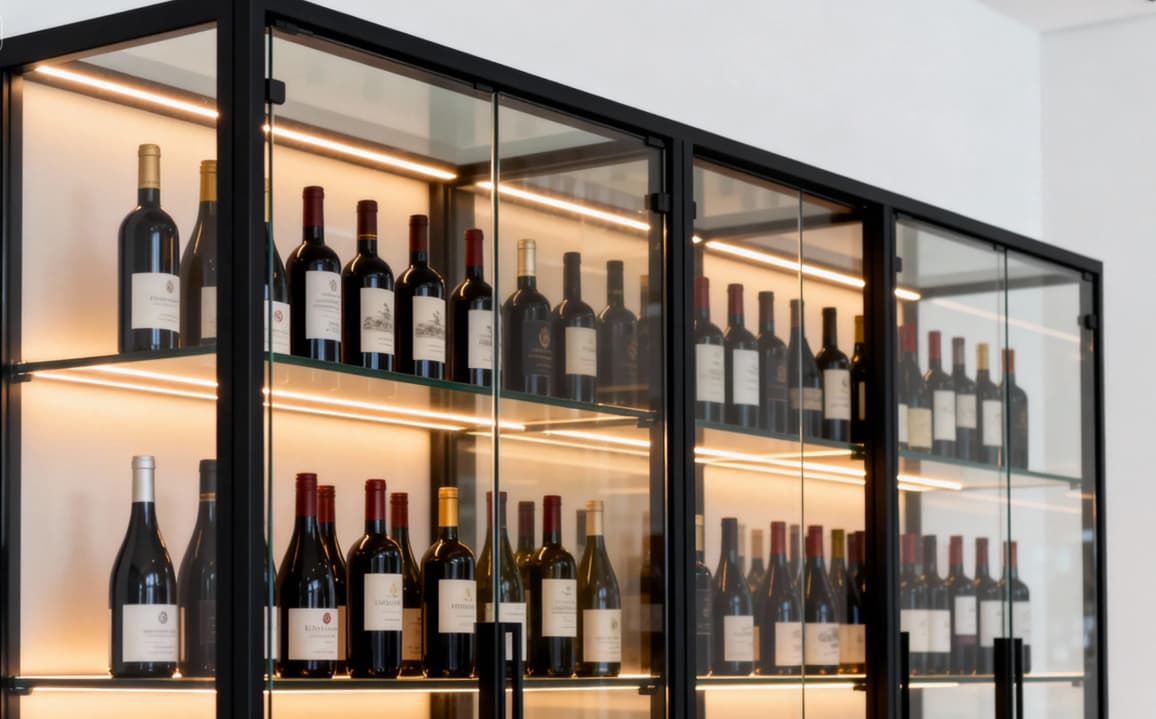
In large hospitality builds, designers often specify continuous wine walls rather than standalone units. These projects commonly rely on vinske vitrine od nehrđajućeg čelika engineered as modular sections that align visually but carry load independently, reducing long-term deformation and door misalignment. You can see this type of modular construction logic reflected in professional-grade systems such as vinske vitrine od nehrđajućeg čelika, where frame thickness and internal reinforcement vary based on cabinet height and bottle density.
Structural complexity also increases when projects require:
-
Floor-to-ceiling installations with concealed anchoring
-
Extra-wide cabinet spans without vertical breaks
-
Integration with architectural columns or uneven wall geometry
Each of these requirements adds fabrication time and tighter quality control, which explains why bulk pricing does not scale linearly with volume.
1.2 Stainless Steel Grades and Surface Finishes
Material selection directly influences both manufacturing cost and lifecycle performance. Commercial buyers prioritize corrosion resistance, weld stability, and surface durability, especially in environments with fluctuating humidity or heavy guest traffic.
Higher-grade stainless steel improves resistance to oxidation and micro-pitting, which becomes critical in enclosed storage rooms or near-bar installations where moisture and cleaning chemicals are common. Surface finishes further affect pricing because they dictate polishing time, inspection standards, and rejection rates during production.
| Material or Finish Type | Typical Commercial Use | Pricing Impact |
|---|---|---|
| 304 Stainless Steel | Indoor restaurants, wine lounges | Stable baseline cost |
| 316 Stainless Steel | Coastal hotels, humid cellars | Higher material cost, longer service life |
| Brushed Finish | High-touch display areas | Moderate labor increase |
| Mirror Finish | Luxury retail or hotel showcases | High labor and QC cost |
| PVD-premazana završna obrada | Brand-driven interior designs | Premium pricing, batch consistency required |
In large-scale projects, finish consistency across dozens of cabinets matters more than appearance alone. Even minor tone variation becomes obvious once units align side by side, which is why manufacturers price bulk orders differently when strict finish matching is required.
1.3 Cooling Systems and Temperature Zone Configuration
Cooling design represents one of the most underestimated cost variables in bulk orders. A basic single-zone cabinet storing wine at stable ambient-adjacent temperatures requires far less engineering than a multi-zone system serving mixed collections.
Commercial environments often demand:
-
Independent temperature zones for red, white, and sparkling wines
-
Dedicated airflow paths to avoid temperature bleed
-
Redundant cooling components for uninterrupted operation
Each additional zone increases sensor density, control board complexity, and installation time. In larger projects, cabinets frequently connect into a unified stainless steel wine cellar environment rather than operating as isolated units. Once systems scale to this level, pricing reflects system coordination, airflow planning, and long-term stability, not just cabinet count. Integrated solutions typically follow layouts similar to stainless steel wine cellar systems, where multiple cabinets share controlled environmental logic.
Energy efficiency further affects bulk pricing decisions. High-efficiency compressors and low-vibration cooling modules raise initial unit costs but significantly reduce operating expenses over years of continuous use—an important consideration for hotels and restaurants running storage systems 24/7.
2. Price Differences Between Standard and Custom Orders
Price gaps between standard and custom orders do not come from branding or marketing language. They come from tooling logic, production rhythm, and how many decisions must be locked before fabrication starts. In bulk procurement, understanding where costs stabilize—and where they escalate—directly impacts budget control and delivery timelines.
2.1 Cost Range of Standard Stainless Steel Wine Cabinets
Standard units exist because they solve the most common commercial scenarios with minimal engineering friction. Standard stainless steel wine cabinets typically follow fixed depths, preset bottle spacing, and proven airflow paths. Manufacturers amortize tooling, jigs, and testing across repeated production runs, which keeps unit pricing predictable in bulk orders.
In real hospitality projects—such as restaurant chains or boutique hotels using identical back-bar layouts—standard cabinets usually fall into a stable cost band because:
-
Sheet cutting patterns repeat with minimal waste
-
Frame welding sequences stay unchanged
-
Cooling modules slot into pre-tested cavities
This production consistency explains why large-volume orders of stainless steel wine cabinets often show less than 10–15% price fluctuation per unit once quantity thresholds are met. Installation also moves faster, since contractors already understand anchoring points, ventilation clearance, and service access.
2.2 Custom Dimensions, Layouts, and Design Premiums
Customization introduces cost not because of aesthetics alone, but because it interrupts production flow. Once cabinet width, depth, or height deviates from standard tooling, manufacturers must redesign internal load paths, door balance, and airflow behavior.
Common cost drivers include:
-
Non-standard bottle angles or mixed bottle sizes
-
Irregular cabinet depths to align with architectural columns
-
Seamless corner transitions or wraparound wine walls
At this point, pricing reflects engineering hours, prototype validation, and tighter tolerances, not material volume. Even a small change—such as increasing cabinet depth by 40–60 mm—can require recalculating shelf deflection and compressor placement.
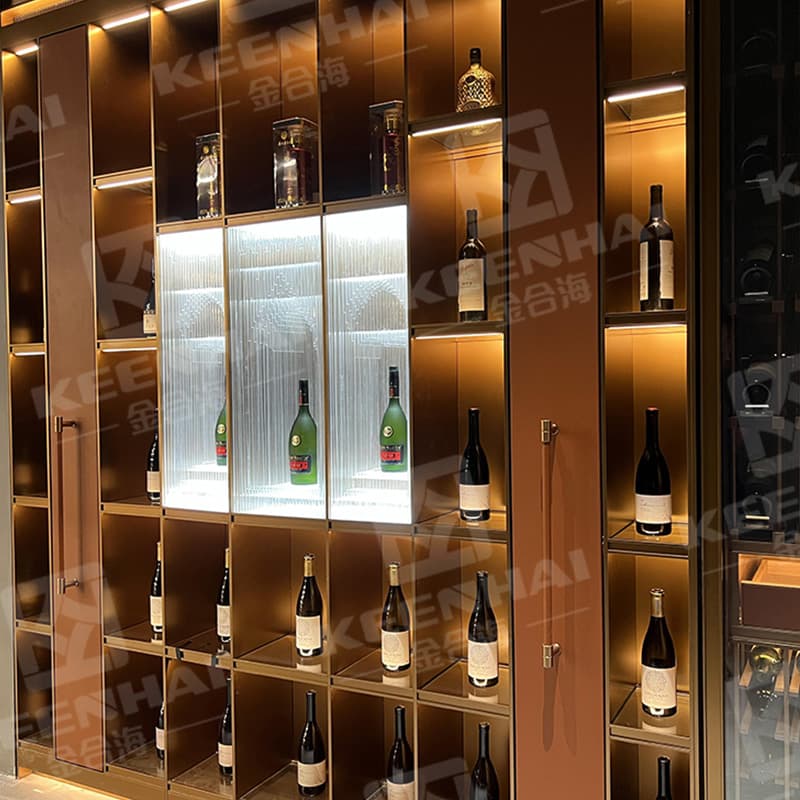
Design-heavy projects often combine cabinets with integrated rack sections or mixed storage-density zones. When these configurations move beyond off-the-shelf logic, pricing climbs faster than buyers expect—not because steel costs more, but because error margins shrink.
2.3 When Customization Lowers Long-Term Cost
Customization does not always mean higher total spend. In space-constrained or high-value environments, tailored designs often reduce long-term cost even if upfront pricing rises.
Consider a luxury hotel wine lounge with a narrow structural bay:
-
A standard cabinet leaves unused depth and forces visual breaks
-
Custom-fit cabinets maximize bottle count per linear meter
-
Fewer cabinets reduce cooling redundancy and maintenance points
Over a 5–8 year operational horizon, this approach lowers:
-
Energy consumption per bottle
-
Maintenance downtime
-
Replacement risk caused by overloading standard frames
In large-scale projects, architects frequently specify custom stainless steel wine cabinets not to pursue aesthetics, but to eliminate inefficiencies that compound over time. When cabinet geometry aligns perfectly with the building envelope, installation labor drops, airflow improves, and visual continuity enhances perceived value—benefits that standard units cannot always deliver.
3. Bulk Order Quantity and Unit Price Breakdown
Bulk pricing does not follow a simple “more units = cheaper” rule. Manufacturers calculate unit cost based on how efficiently an order fits into existing production cycles, material nesting plans, and logistics batches. Understanding these mechanics helps buyers negotiate realistically instead of chasing arbitrary quantity targets.
3.1 Typical MOQ Requirements for Commercial Orders
For commercial projects, MOQ usually reflects the minimum quantity needed to justify setup, programming, and batch procurement. In most factories, this threshold aligns with material coil usage, welding fixture setup, and cooling module batching, not sales preference.
In practice:
-
Small hospitality projects often start at 5–10 units per model to unlock commercial pricing
-
Chain restaurants and hotels typically meet MOQ through repeated layouts
-
Large developers consolidate multiple sites into a single production window
When sourcing vinske vitrine od nehrđajućeg čelika for restaurants, hotels, or wine lounges, MOQ flexibility improves if cabinet dimensions, finishes, and internal layouts remain consistent. Uniform specifications reduce setup resets, which directly lowers per-unit cost even at moderate volumes.
3.2 Unit Price Changes at Different Order Volumes
Unit pricing drops in steps, not lines. Each step corresponds to a production efficiency milestone—material yield, labor batching, or logistics consolidation. Below is a typical pricing logic seen in commercial manufacturing:
| Order Volume (Units) | Production Efficiency Driver | Typical Unit Price Impact |
|---|---|---|
| 5–10 | Basic setup recovery | Baseline commercial price |
| 20–30 | Optimized material nesting | 8–12% reduction |
| 50+ | Continuous fabrication run | 15–25% reduction |
The biggest savings usually appear between the first and second tier, not at extreme volumes. Beyond a certain point, steel cost stabilizes and labor becomes the dominant factor, which explains why prices plateau instead of dropping indefinitely.
Buyers who align order volume with factory batch logic consistently outperform those who only push for higher quantities.
3.3 Cost Efficiency of Mixed Models in One Bulk Order
Mixed-model orders often deliver better cost control than single-model bulk purchases—when executed correctly. The key lies in shared structural logic, not identical appearance.
For example, a project may combine:
-
Tall display cabinets for public areas
-
Compact under-counter units for service zones
-
Matching finishes and cooling systems across all models
When internal frames, door systems, and cooling modules stay consistent, factories can run mixed models in one batch without resetting tooling. This approach allows buyers to balance display needs and storage density without paying full customization premiums.
In real-world commercial builds—such as wine-focused restaurants or hotel cellar rooms—this strategy improves space utilization while keeping unit pricing close to single-model bulk levels. The savings come from shared components, not visual uniformity.
4. Manufacturing, Labor, and Production Cost Components
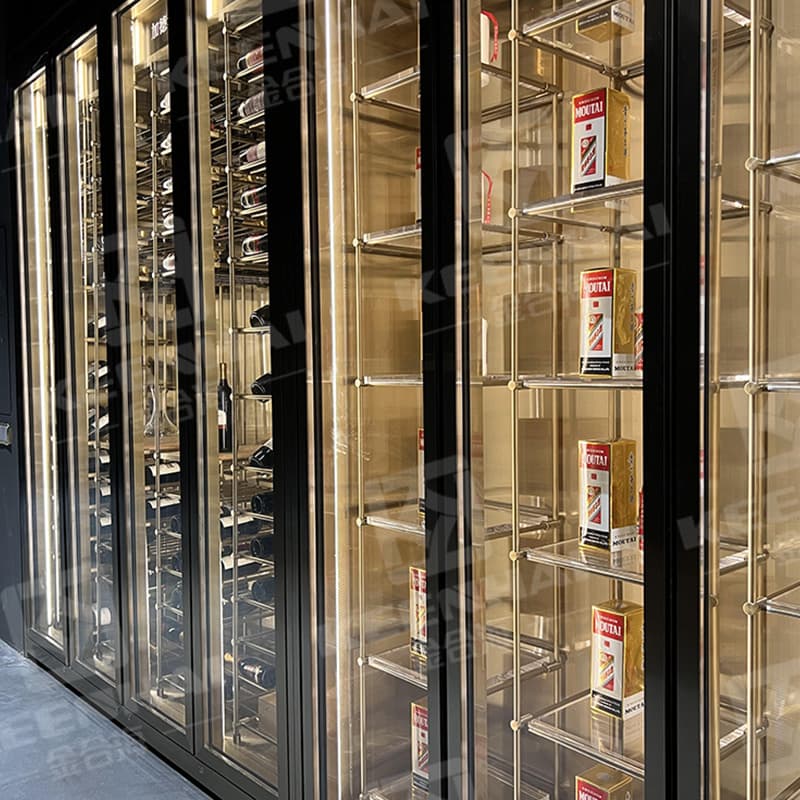
Understanding bulk pricing requires dissecting how factories allocate costs across materials, labor, and production processes. Commercial stainless steel wine cabinets are not just steel and screws; each component—including structural frames, insulation, cooling modules, and finishing—contributes to the final unit cost.
4.1 Material Cost vs. Fabrication and Assembly Cost
Material costs often dominate initial calculations, especially for high-grade stainless steel. However, fabrication and assembly can match or exceed raw material expense depending on complexity. Consider:
-
Material Selection: 304 vs. 316 stainless steel impacts corrosion resistance and cost per square foot.
-
Panel Thickness and Sheet Size: Thicker panels improve durability but increase both material and cutting costs.
-
Insulation and Cooling Modules: Integrated units, especially multi-zone cabinets, elevate fabrication complexity.
In practice, a single commercial unit may spend 30–40% on raw materials i 35–45% on labor-intensive assembly and integration, with the remainder covering overhead, QC, and logistics.
4.2 Welding, Finishing, and Quality Control Impact on Pricing
Precision welding, surface finishing, and inspection protocols directly affect both unit cost and product reliability. Steps often include:
-
Cutting, bending, and fitting each steel sheet precisely to design specifications
-
TIG welding for structural integrity, ensuring cabinets withstand high humidity and repeated handling
-
Surface finishing—polished, brushed, or PVD coating—requiring multiple passes to achieve uniform aesthetics
-
Rigorous QC inspections, including leak tests, cooling performance verification, and alignment checks
Every additional step improves durability but adds labor hours. For example, an upgraded stainless steel wine rack cabinet with intricate joinery or mixed finishes can increase production cost by 12–18% over standard units. Properly executed QC also prevents costly returns and maintains brand reputation.
4.3 Factory Location and Production Scale Considerations
Geography and scale influence unit pricing significantly. Large-scale factories benefit from:
-
Bulk raw material purchasing discounts
-
Optimized labor specialization and workflow
-
Efficient logistics hubs for global shipping
Conversely, factories in high-wage regions or with limited production capacity pass higher costs to buyers. This is why commercial wine cabinet stainless steel sourced from optimized locations often achieves a better price-performance ratio than locally small-batch production.
When planning bulk orders, consider both the factory’s production scale and location logistics—a centrally located, high-capacity manufacturer reduces shipping costs, minimizes delays, and often delivers a more predictable pricing structure.Navigating the pricing of Stainless Steel Wine Cabinets for bulk orders requires a comprehensive understanding of material quality, cabinet size, customization level, and logistical factors. By analyzing unit costs relative to order volume, factoring in surface finishes, cooling configurations, and shipping considerations, buyers can make informed decisions that maximize long-term value. Carefully planning bulk purchases not only reduces per-unit expenses but also ensures consistency, durability, and a premium presentation for commercial projects.