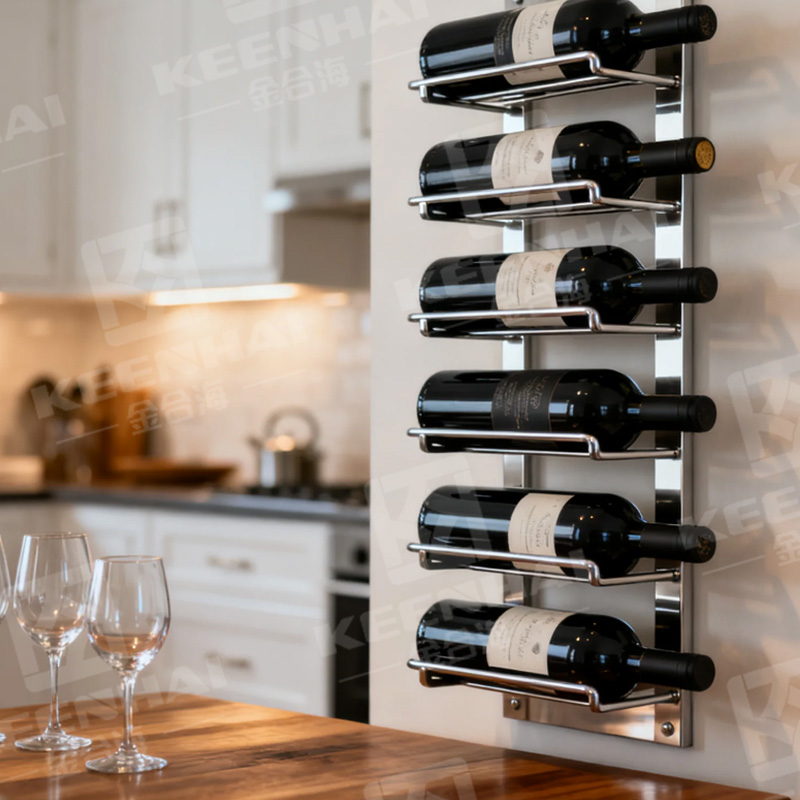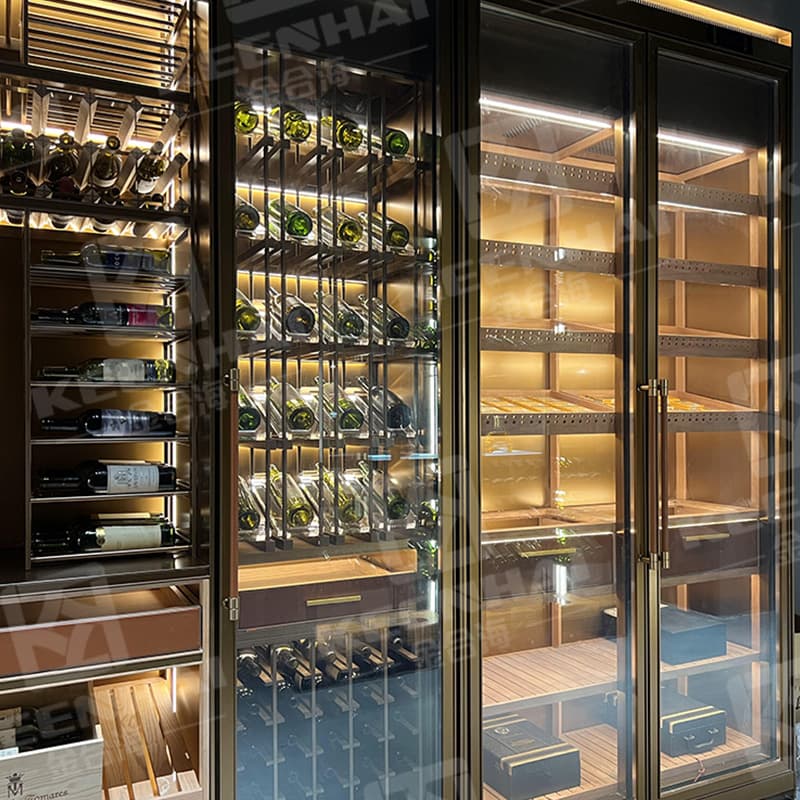
Selecting a reliable supplier for your Stainless Steel Wine Cellar requires verifying experience, material quality, and customization options. Look for proven projects, detailed fabrication methods, and climate control integration. A professional supplier ensures your cellar is built to exact specifications, maximizes bottle capacity, and maintains optimal storage conditions, making it a long-term, investment-ready solution for residential or commercial projects.
1. Choosing the Right Stainless Steel Wine Cellar Supplier
Selecting the right supplier for a Vinkælder i rustfrit stål is critical for any project, whether you’re designing a high-end hotel wine room or a private home cellar. The right partner ensures timely delivery, precise customization, and durable, visually appealing results. Making an informed choice upfront saves time, cost, and frustration later. For projects with unique space layouts or demanding storage requirements, the supplier’s experience can make all the difference.
1.1 Supplier Types: Manufacturer vs Distributor vs Custom Fabricator
Not all suppliers are the same, and understanding their strengths helps match your project’s needs:
-
Manufacturer: Produces wine cellars directly, controlling materials, finishes, and production quality. This type works best for projects requiring consistent quality across multiple units. For example, a manufacturer supplied modular stainless steel wine racks for a luxury hotel, allowing exact alignment with pre-existing storage layouts.
-
Distributor: Offers ready-made products from multiple manufacturers. They can deliver faster but have limited customization options. Distributors are ideal for smaller projects or when standard sizes suffice.
-
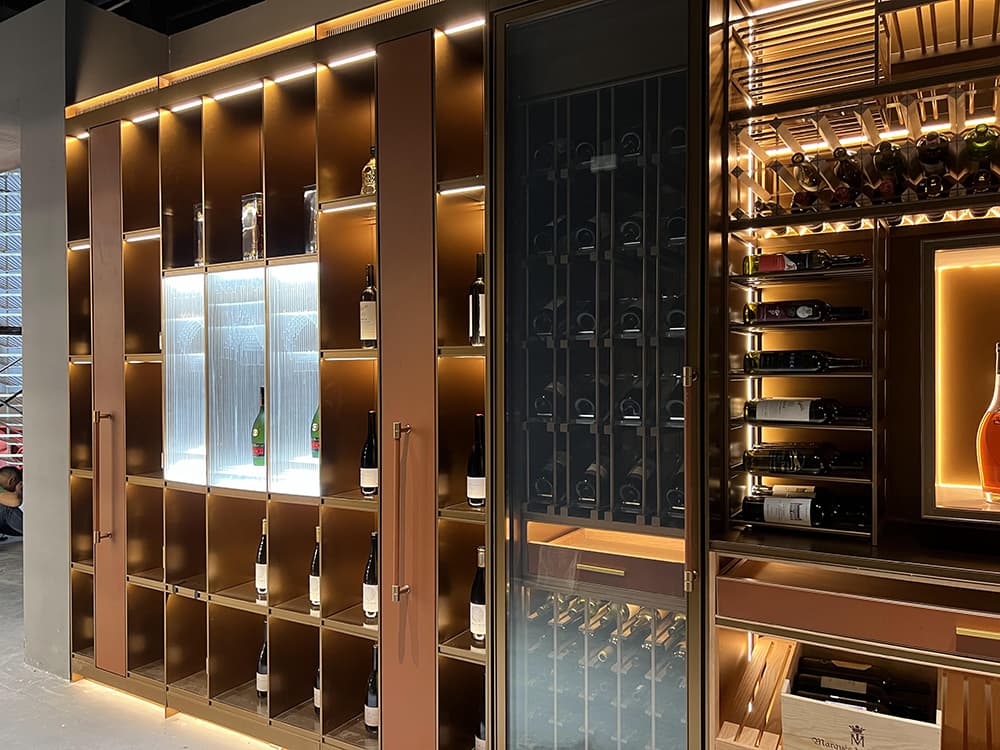
Custom Fabricator: Focuses on fully tailored designs. They can produce Stainless Steel Wine Rack Cabinets that perfectly fit unusual room dimensions or aesthetic demands. A boutique hotel recently installed a custom cabinet that blended seamlessly with the interior while accommodating over 500 bottles, demonstrating how a skilled fabricator can turn a vision into reality.
Comparison Table of Supplier Types:
| Supplier Type | Customization | Lead Time | Cost Range | Best Use Case |
|---|---|---|---|---|
| Manufacturer | Medium–High | 4–12 weeks | Moderate | Large-scale or repeat projects |
| Distributor | Lav | 1–4 weeks | Low–Moderate | Standard projects, small-scale |
| Custom Fabricator | Høj | 6–16 weeks | Høj | Unique, high-end or boutique design |
This table helps project managers quickly see the trade-offs between flexibility, cost, and timeline.
1.2 Key Factors to Evaluate: Experience, Capacity, and Certifications
When evaluating a potential supplier, focus on the following critical factors:
-
Experience: Look for suppliers with a proven record of completing similar projects. For instance, a supplier who has delivered multiple hotel and restaurant wine rooms understands the nuances of both design and logistics.
-
Capacity: Confirm the supplier can meet your volume and complexity needs. Large projects may require several interconnected wine racks and cabinets with integrated climate control zones.
-
Certifications and Quality Standards: Make sure the supplier adheres to recognized standards such as ISO 9001 for quality management and uses food-grade stainless steel suitable for wine storage. Suppliers with verified certifications significantly reduce the risk of subpar materials or assembly errors.
-
Portfolio Review: Request images or virtual walkthroughs of completed projects. Seeing an actual Vinreolskab i rustfrit stål installed in a real restaurant or hotel basement provides tangible insight into craftsmanship and finish quality.
By combining these checks, you can shortlist suppliers who not only meet technical requirements but also understand the practical realities of executing high-quality wine cellar projects.
1.3 How to Verify Supplier Reliability and References
After narrowing down your options, ensure your chosen supplier is reliable and capable of delivering on promises:
-
Contact References: Speak to previous clients about delivery timelines, adherence to specifications, and responsiveness during construction.
-
Inspect Samples or Mockups: Request a sample wine rack or cabinet to confirm material quality, surface finish, and structural strength.
-
Site Visits: If feasible, visit the supplier’s workshop or completed installations. Observing an operational wine cellar demonstrates their quality control processes and assembly precision. For instance, visiting a completed luxury wine room using pvd rustfrit stål products helps verify both craftsmanship and durability firsthand.
-
Review Contracts and Warranties: Ensure clear terms regarding installation, maintenance, and warranty coverage to protect your investment. A reliable supplier will provide detailed agreements and back their products with robust service commitments.
Following these steps helps you select a supplier who can confidently execute your wine cellar project with minimal risk and maximum quality.
2. Customization Options for Project Requirements
Every wine cellar project has unique needs, and understanding customization options is key to achieving both functionality and aesthetic appeal. Whether you’re planning a private home collection or a large commercial installation, tailoring your design ensures optimal storage, accessibility, and visual integration. Effective customization begins with evaluating your project’s specific requirements and aligning them with material, size, and design choices.
2.1 Standard vs Fully Custom Stainless Steel Wine Cellars
When choosing between pre-designed models and fully custom solutions, consider your project’s complexity and budget.
-
Standard Cellars: Typically come in modular units with preset dimensions, finishes, and storage layouts. They are ideal for small-scale projects or when room dimensions are standard. A 500-bottle modular system can often be installed in under a week, with pre-finished surfaces requiring minimal maintenance.
-
Fully Custom Cellars: Allow you to tailor every detail—rack orientation, shelf spacing, integrated cooling zones, and surface finishes. For instance, a luxury hotel recently installed a custom stainless steel wine cellar with a curved wall layout, adjustable racks for vertical and horizontal storage, and climate zones precisely calibrated for different wine types.
Fully custom solutions may take 6–12 weeks for design, fabrication, and installation, but they ensure the cellar maximizes both space and storage efficiency.
2.2 Material Grades, Finishes, and Durability Considerations
Selecting the right stainless steel grade and finish is crucial for longevity and appearance:
-
Grades: Commonly used grades are 304 (resistant to corrosion, suitable for most indoor applications) and 316 (enhanced corrosion resistance, ideal for humid or coastal environments).
-
Finishes: Options include brushed, mirror-polished, or matte, each affecting aesthetics and maintenance. Mirror-polished finishes offer a luxurious look but require frequent cleaning, while brushed or matte surfaces are more forgiving in high-traffic areas.
-
Durability Factors: Ensure weld quality, joint reinforcement, and proper surface treatments. Poor-quality welding can reduce structural integrity, leading to warped racks or compromised shelving.
For commercial projects, it’s common to combine grades and finishes—304 for primary racks and 316 for external panels exposed to higher humidity. This combination balances cost, longevity, and aesthetic appeal.
2.3 Size, Layout, and Storage Capacity Customization
Optimizing the cellar layout maximizes bottle storage while maintaining accessibility:
-
Measure Room Dimensions: Capture wall lengths, ceiling height, and door clearance to ensure the cellar fits precisely.
-
Determine Storage Needs: Calculate the total number of bottles, factoring in both regular and large-format bottles. For example, a 600-bottle collection may require 4–6 modular racks with adjustable shelves.
-
Plan Rack Layout: Decide whether vertical, horizontal, or mixed orientations best suit your collection. Include space for display areas or tasting zones if required.
-
Integrate Climate Control and Access: Position cooling units, humidity control, and lighting to optimize storage conditions. Strategic airflow placement ensures uniform temperature across the cellar.
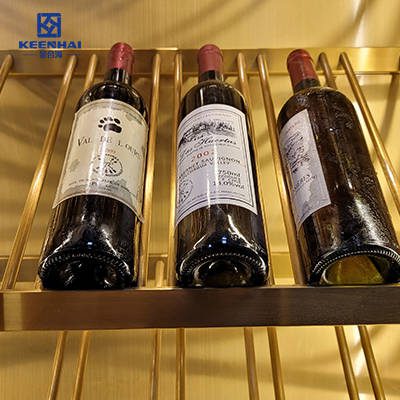
In a recent residential project, the client installed a custom layout with mixed vinreoler i rustfrit stål, adjustable for standard and magnum bottles, while leaving room for a tasting island in the center. This approach maximized both storage and usability without compromising the room’s design.
3. Cost and Pricing Considerations
Understanding the cost of a Vinkælder i rustfrit stål is critical for project budgeting. Prices vary significantly based on materials, customization, supplier experience, and installation complexity. Being proactive in evaluating costs helps avoid surprises and ensures you allocate resources efficiently. For large-scale projects like boutique hotels or commercial wine rooms, even a 5% miscalculation can translate into thousands of dollars in extra expenses, so detailed cost assessment is essential.
3.1 Factors Affecting Stainless Steel Wine Cellar Pricing
Several variables directly influence pricing:
-
Material Grade and Finish: High-grade stainless steel (e.g., 316) costs more than 304, and mirror-polished finishes increase labor and maintenance considerations.
-
Size and Capacity: Larger cellars with multiple racks or high bottle capacity require more material, labor, and cooling infrastructure.
-
Customization Level: Fully custom layouts, curved walls, or integrated display racks demand additional design and fabrication time.
-
Climate Control Requirements: Advanced refrigeration or humidity systems can add 15–25% to total costs.
-
Supplier Location and Logistics: Shipping and installation for international suppliers may significantly affect the overall budget.
A recent high-end residential project integrated a custom layout with adjustable vinreoler i rustfrit stål, balancing cost and functionality while achieving a visually seamless installation.
3.2 Comparing Supplier Quotes Effectively
When evaluating multiple quotes, comparing apples to apples is crucial:
-
Break Down Line Items: Request separate pricing for materials, fabrication, delivery, and installation.
-
Verify Specifications: Ensure each quote reflects the same steel grade, finish, and rack configuration.
-
Consider Lead Time and Warranty: A lower-priced quote may result in longer production times or limited warranty coverage, which increases risk.
-
Evaluate Added Services: Some suppliers include installation, climate system integration, and maintenance in their pricing.
By following this process, you can clearly identify the best value supplier. For example, comparing two quotes for a commercial project showed a 12% cost difference due to superior material grade in one option, justifying the higher upfront price.
3.3 Cost-Saving Tips Without Compromising Quality
Smart strategies can reduce expenses while maintaining durability and aesthetics:
-
Prioritize Core Features: Focus budget on high-impact areas like main racks, structural integrity, and climate control, while using standard finishes for secondary components.
-
Modular Approaches: Pre-fabricated sections can be combined with custom units to balance flexibility and cost.
-
Bulk Material Orders: Consolidate purchases of stainless steel panels or rack components to take advantage of volume discounts.
-
Staged Installation: If timing allows, installing the cellar in phases can reduce labor costs without sacrificing quality.
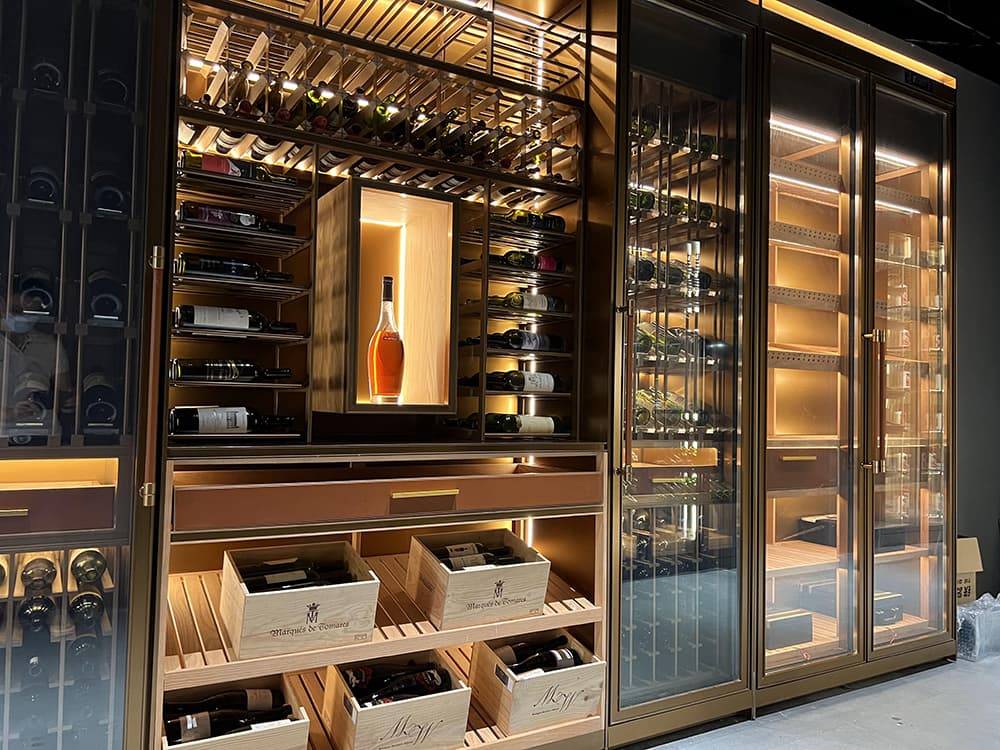
A luxury villa project applied a mixed approach, using modular racks for standard bottles and a small number of fully customized stainless steel wine racks for rare vintages, achieving significant cost efficiency without compromising design integrity.
4. Ordering and Project Management
Managing the ordering process and overseeing project execution ensures your Vinkælder i rustfrit stål arrives on time, fits perfectly, and functions as intended. From lead times to installation, coordinating all elements minimizes delays and guarantees that the final installation meets design expectations. A well-organized plan transforms complex projects into smooth, predictable operations.
4.1 Lead Times and Production Schedules
Lead times vary depending on supplier type, customization level, and material availability:
-
Standard Cellars: Typically require 2–4 weeks for production, with minimal design modifications.
-
Custom Designs: Can extend to 8–12 weeks due to detailed fabrication, finishing, and quality checks.
-
Large-Scale Projects: Hotels or commercial wine rooms may need 12–16 weeks, including pre-assembly and testing of climate-controlled racks.
It is critical to align your project timeline with the supplier’s production schedule. Confirm key milestones such as design approval, material procurement, fabrication, and pre-delivery inspection. For example, a boutique hotel coordinated 3 suppliers to ensure that custom vinreoler i rustfrit stål and cooling systems were delivered in sequence, avoiding installation delays and ensuring a seamless workflow.
4.2 Shipping, Delivery, and Installation Options
Efficient logistics are crucial for preserving material integrity and preventing installation issues:
-
Packaging and Transport: Stainless steel panels and racks should be shipped in protective crates with padding to avoid scratches and dents.
-
Delivery Coordination: Align delivery dates with on-site readiness to minimize storage time and reduce handling risks.
-
Installation Process: Most projects follow these steps:
-
Assemble racks and cabinets in sequence.
-
Integrate cooling units and verify airflow.
-
Adjust shelves and ensure proper leveling.
-
Conduct final inspection and testing for structural integrity and climate performance.
-
For large-scale installations, suppliers may provide on-site assembly teams. Using pvd rustfrit stål for such projects ensures that trained professionals handle both delivery and installation, minimizing risk and guaranteeing precision.
4.3 Supplier Support During Project Execution
Reliable supplier support is critical to keep the project on track:
-
Communication Channels: Confirm the availability of project managers and technical specialists who can address questions in real-time.
-
Issue Resolution: A responsive supplier can handle unexpected challenges such as on-site adjustments, last-minute design changes, or shipping discrepancies.
-
Documentation and Training: Suppliers often provide installation manuals, maintenance guides, and staff training for ongoing operations.
In a recent residential project, constant communication with the supplier allowed quick adjustments to a curved wall layout, resulting in perfectly aligned racks and a functional tasting area. Using a supplier with robust support ensures smooth execution from order placement to final walkthrough.
Choosing the right supplier for your Vinkælder i rustfrit stål ensures your project meets design, storage, and durability goals without surprises. By carefully evaluating manufacturer experience, material quality, customization capabilities, and on-time delivery, you can secure a cellar that fits your space perfectly, supports optimal wine storage, and lasts for decades. Suppliers like pvd rustfrit stål demonstrate how integrating high-grade stainless steel, climate control, and custom racks into a cohesive project guarantees a professional, turnkey solution for both residential and commercial wine collections.