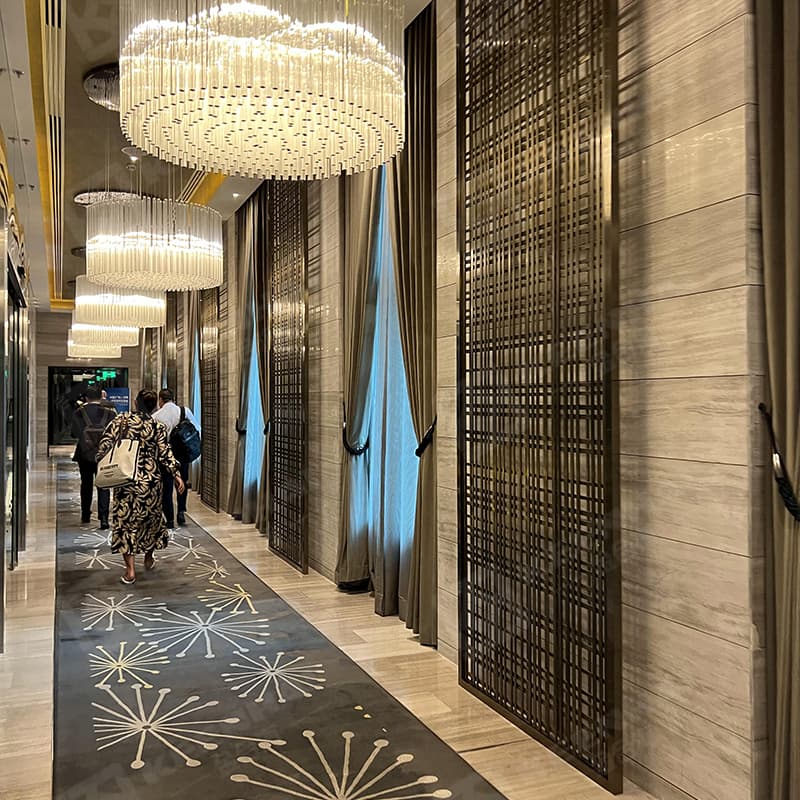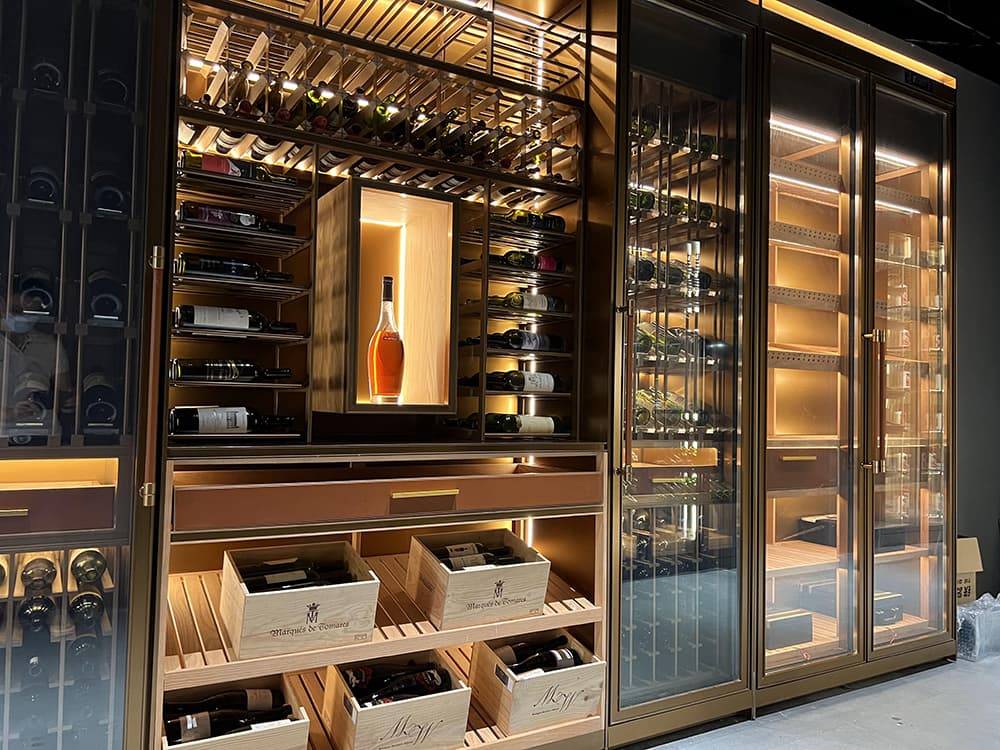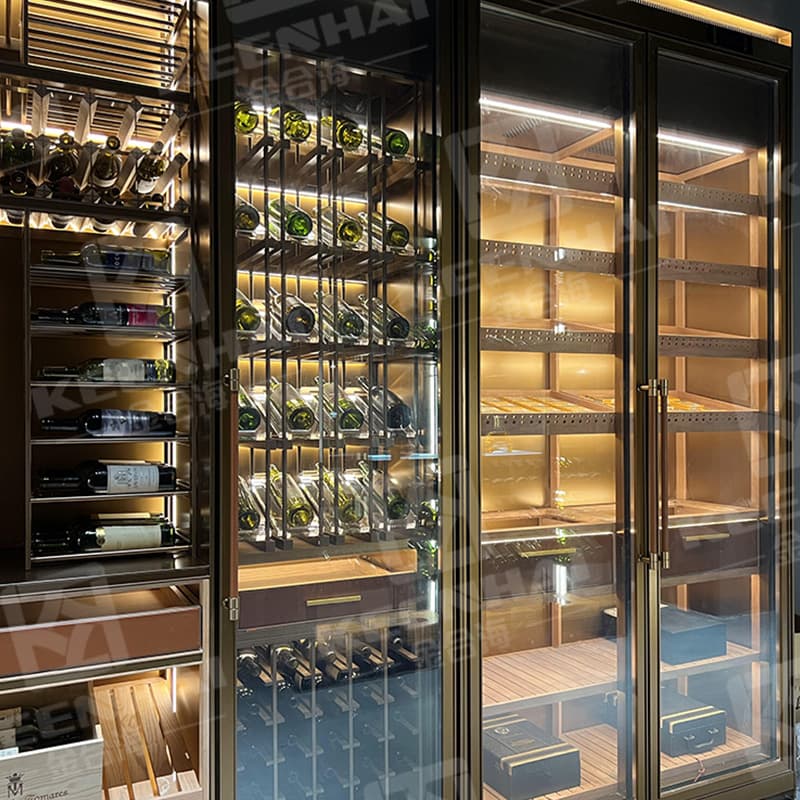
PVD stainless steel cladding ist ein Hochleistungswerkstoff, bei dem eine dünne Metallschicht auf atomarer Ebene mit Edelstahl verbunden wird. Dieser Prozess verbessert Härte, Korrosionsbeständigkeit und Farbstabilität. Ideal für commercial facades, columns, and elevator interiors, es behält seine leuchtende Oberfläche über ein Jahrzehnt lang und erfordert nur minimale Wartung. Designer bevorzugen es wegen seiner langlebigen Ästhetik und strukturellen Zuverlässigkeit.
1.Definition and Basic Concept
1.2What “PVD” Means in Stainless Steel
Wenn wir darüber reden PVD, wir sprechen über Physikalische Gasphasenabscheidung — a vacuum-based technology that bonds a thin metallic layer onto stainless steel. Unlike spray coatings or electroplating, this process doesn’t rely on chemicals or paint. Instead, it works at the atomic level. Inside a sealed vacuum chamber, metals like titanium or zirconium are vaporized, and those vapor particles are drawn toward the steel surface. As they condense, they create a dense, hard film that’s just a few microns thick yet incredibly durable.
Architekten lieben diese Technologie, weil sie ihnen kreative Kontrolle ohne Leistungseinbußen ermöglicht. Zum Beispiel die PVD-coated stainless cladding panels used in modern airports or hotel lobbies don’t fade or peel, even after years of UV exposure and cleaning cycles. That’s because the PVD layer becomes part of the metal — not just something sitting on top of it. The finish stays consistent whether it’s brushed, mirror-polished, or patterned.
Der Prozess lässt sich in drei präzisen Phasen zusammenfassen:
-
Surface Preparation – The stainless steel is cleaned with plasma to remove every trace of oil and dust.
-
Metallverdampfung – Target metals are heated until they vaporize inside the chamber.
-
Abscheidung und Bindung – Der Dampf setzt sich ab und verschmilzt mit der Stahloberfläche, wodurch eine feste Metallschicht entsteht.
So geht’s moderne architektonische Edelstahlplatten get their signature gold, bronze, or champagne tones — not from paint, but from real metal compounds physically bonded to the surface. The color doesn’t fade, and the metal underneath keeps its full corrosion resistance.
Designer kombinieren diese Technik oft mit stainless steel sheets when creating Außenwandfassaden or elevator interiors, weil es Ästhetik und Leistung in einer Lösung vereint.
1.3 Unterschied zwischen Verkleidung und Beschichtung
Die Begriffe „Verkleidung“ und „Beschichtung“ werden oft verwechselt, aber das ist nicht dasselbe. Verkleidung geht es darum, ein Material zum Schutz und aus optischen Gründen mit einer weiteren Schicht zu überziehen. Coating, on the other hand, usually means applying a film or chemical finish to the surface. The difference is subtle but important — cladding fügt Struktur hinzu, while coating verleiht Finish.
Here’s how they compare in real-world use:
| Besonderheit | Coating | Verkleidung |
|---|---|---|
| Material Thickness | 0.05–0.1 mm | 0,3–1,0 mm |
| Bonding Method | Farbe, Chemie oder Galvanik | Physical Attachment or PVD Bonding |
| Haltbarkeit | Moderate | High — Ideal for Exterior Panels |
| Visuelle Tiefe | Flat Finish | Metallische Tiefe und Reflexion |
| Wartungsbedarf | Regelmäßige Reinigung | Geringer Wartungsaufwand |
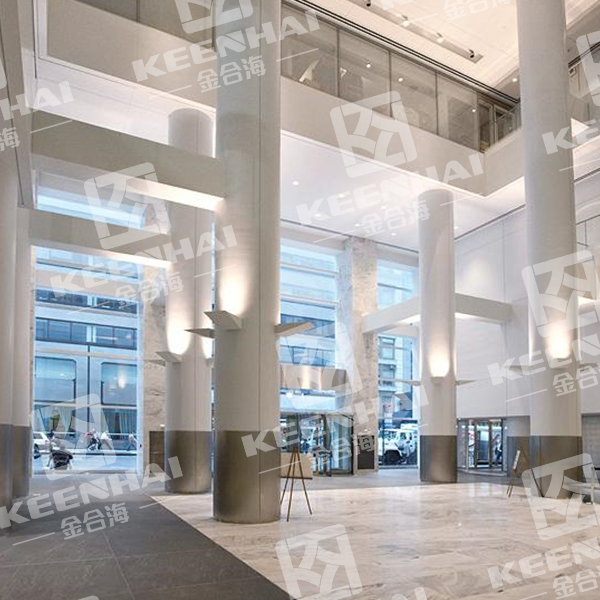
In Gewerbegebäuden, stainless steel cladding is commonly used for Säulen, Fassaden und Wandsysteme, while coatings are more for interior decorative parts. For instance, the Edelstahl-Außenwand panels you see in shopping malls or airports are made with cladding, not coating. That’s why they retain their shine after years of exposure to rain and humidity.
Kurz gesagt: Eine Verkleidung verleiht dem Material Haltbarkeit, während eine Beschichtung lediglich eine Oberflächenschicht hinzufügt. Sobald Sie den Unterschied aus der Nähe gesehen haben – die Tiefe, Reflexion und Fülle von echtem PVD stainless steel cladding — you immediately understand why architects rely on it for modern structures.
2. Herstellungsprozess der PVD-Beschichtung
2.1 Schritte der physikalischen Gasphasenabscheidung (PVD)
The Physikalische Gasphasenabscheidung (PVD) Das Verfahren ist eine hochpräzise Beschichtungstechnologie, die sowohl das Aussehen als auch die Leistung von Edelstahl verbessert. Es wird in einem vacuum chamber, typischerweise zwischen 5×10⁻⁴ to 5×10⁻⁶ Torr, which eliminates contamination and allows the coating material to bond perfectly to the steel surface. The temperature inside usually ranges from 200 °C bis 500 °C, depending on the substrate and the desired finish.
Das vollständige Verfahren umfasst mehrere detaillierte Schritte:
-
Surface Pre-Treatment – The stainless steel is first polished and cleaned using Argonplasma. This step removes all microscopic oil, oxide, and dust. Even a 0,1 µm Verunreinigung can cause bonding failure, so precision here is critical.
-
Heizen und Staubsaugen – Die gereinigte Edelstahlplatte wird in einen Vakuumofen gelegt, wo Luft und Feuchtigkeit abgesaugt werden. Die Metalloberfläche erreicht ca. 400 °C um eine ordnungsgemäße Haftung zu gewährleisten.
-
Metal Target Vaporization – Titan-, Zirkonium- oder Chrom-„Targets“ werden mit hochenergetischen Ionen bombardiert. Diese Atome verdampfen augenblicklich und bilden eine metallische Plasmawolke.
-
Deposition Phase – Die verdampften Atome kondensieren auf der Edelstahloberfläche und bilden eine dense, 0.3–0.5 µm PVD layer. The color outcome (gold, bronze, black, or rose) depends on the metal type and gas composition (nitrogen, argon, or oxygen).
-
Abkühlen und Fertigstellen – Once the coating is complete, the panels are cooled under vacuum to prevent oxidation. The result is a surface that’s drei- bis fünfmal härter than untreated stainless steel.
So geht Premium PVD stainless steel cladding erreicht seine tiefe metallische Oberfläche und unübertroffene Haltbarkeit. Sie finden es in gewerblichen Gebäuden, wie zum Beispiel airport columns, hotel lobbies, and retail facades, wo sowohl optische Attraktivität als auch Korrosionsbeständigkeit gleichermaßen wichtig sind.
For large-scale applications, manufacturers often combine the PVD coating process with precision-cut stainless steel sheets bevor sie zu architektonischen Paneelen oder Aufzugstüren verarbeitet werden. Dieser Ansatz stellt sicher, dass jedes Stück auch bei großen Flächen einen einheitlichen Farbton und eine einheitliche Leistung aufweist.
2.2 How PVD Bonds with Stainless Steel Surfaces
The bonding between the PVD layer and the stainless steel base isn’t just physical—it’s atomic. The process forms a metallische Bindung, meaning the coating atoms literally share electrons with the stainless substrate. This type of fusion gives PVD cladding its signature Kratz- und Verschleißfestigkeit, mit Härtewerten bis 2,000–2,400 HV on the Vickers scale (compared to ~200 HV for standard stainless).
Während der Abscheidung wird die rostfreie Oberfläche durch ein Hochspannungsfeld ionisiert, das die verdampften Metallatome anzieht. Diese Atome treffen mit Geschwindigkeiten von über 1 km/s, betten sich ein und bilden eine kristalline Mikrostruktur. Das Ergebnis ist ein uniform, pore-free coating that doesn’t peel, crack, or flake—even after years of outdoor exposure.
So schneidet PVD im Vergleich zu einer herkömmlichen chemischen Beschichtung ab:
| Property | Chemical Coating | PVD-Beschichtungssystem |
|---|---|---|
| Bonding Strength (MPa) | 15–25 | >100 |
| Schichtdicke (µm) | 2–5 | 0.3–0.5 |
| Härte (Vickers HV) | 200–300 | 2000–2400 |
| Adhäsionstyp | Mechanical | Metallic Bonding |
| Farbstabilität | Moderate | Excellent (10+ years) |
Da die Filmstruktur metallisch ist, dehnt sie sich bei Temperaturschwankungen mit dem Grundstahl aus und zieht sich zusammen, ohne zu reißen. Deshalb Edelstahl-Außenwand Mit diesem Verfahren hergestellte Platten funktionieren einwandfrei in feuchten Küstenstädten oder hochgelegenen Gebäuden.
For architectural projects, brands like pvdstainlesssteel ist auf die Herstellung individueller Oberflächen spezialisiert – von hochglanzpoliertem Gold für Luxushotels bis hin zu mattem Bronze für minimalistische Bürofassaden. Die Kontrolle über Abscheidungsrate, Gasfluss und Ionenenergie gewährleistet bei jeder Charge gleichbleibende Farb-, Textur- und Haftungsqualität.
In essence, PVD bonding transforms stainless steel from a functional material into a design statement — combining molecular-level strength with timeless aesthetics that simply can’t be replicated by paint or electroplating.
3. Material Composition and Surface Finishes
When it comes to PVD stainless steel cladding, the material composition and finish determine not only its appearance but also its performance and longevity. The selection of base metal, coating material, and surface treatment directly affects corrosion resistance, reflectivity, and color stability — key factors in architectural and commercial applications.
3.1 Types of Stainless Steel Used for Cladding
Most PVD cladding panels are fabricated using austenitic stainless steels, primarily 304 Und 316 grades.
-
Grade 304 (18% chromium, 8% nickel) is the standard choice for interior walls, ceilings, and elevator trims due to its good corrosion resistance and smooth surface for uniform coating adhesion.
-
Güteklasse 316, containing 2–3% molybdenum, provides superior resistance to salt and acid corrosion, making it ideal for coastal buildings, facades, and outdoor columns.
For high-impact environments such as airports or commercial towers, thicker gauges (1.2–2.0 mm) are often used to prevent denting, while thin claddings (0.6–0.8 mm) suffice for decorative indoor panels. The steel’s surface finish before coating—typically mirror No.8, satin No.4, oder hairline HL—also influences how evenly the PVD layer bonds and how light reflects off the final product.
In terms of mechanical properties, 304 stainless steel cladding has a typical tensile strength of 520–720 MPa Und elongation of 45–50%, providing flexibility during bending and fabrication. Edelstahl 316, meanwhile, performs slightly stronger with 515–760 MPa tensile strength and higher resistance to chloride pitting. These numbers translate into better structural stability and reduced risk of cracking under outdoor thermal stress.
3.2 Available Colors and Texture Options
The PVD coating process allows stainless steel to mimic natural metals and achieve custom aesthetics that traditional painting or electroplating cannot match. Typical color options include:
| Finish Type | Common Colors | Reflectivity | Application Use |
|---|---|---|---|
| Mirror | Gold, Silver, Rose Gold | High (85–95%) | Lobby walls, elevator interiors |
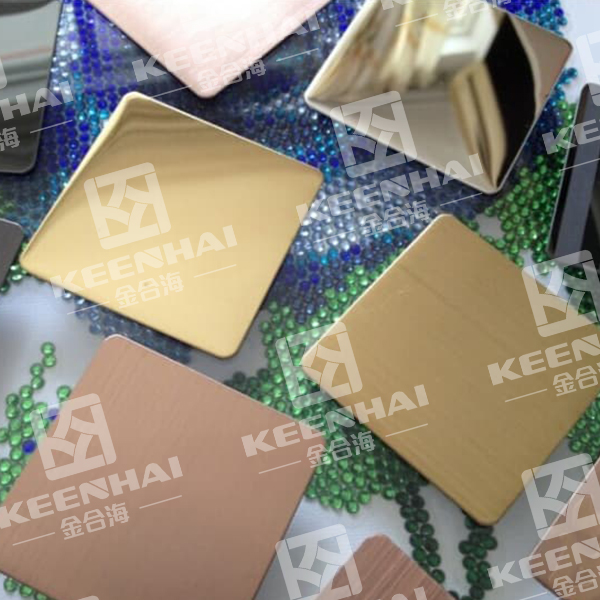
| Hairline | Bronze, Black, Champagne | Moderate (60–70%) | Exterior panels, columns |
| Etched | Custom patterns, Dual-tone | Variable | Decorative facades, signage |
| Bead-Blasted | Titanium Gray, Dark Bronze | Low (40–55%) | Industrial or matte-style architecture |
Each finish requires a specific base preparation — for instance, mirror-polished surfaces yield vivid, high-gloss colors, while hairline finishes produce a softer, brushed tone.
In high-end projects, designers often combine finishes — for example, hairline bronze borders with mirror gold center panels — to create depth and visual contrast. Some manufacturers also offer anti-fingerprint or self-cleaning coatings, which reduce maintenance frequency by up to 40% compared to uncoated claddings.
Finally, color consistency depends on chamber temperature (180–500°C) Und deposition time, both of which influence the atomic layer thickness. Thicker coatings (above 0.5 μm) offer richer tones and enhanced durability but cost slightly more due to extended vacuum cycles.
4. Key Benefits of PVD Stainless Steel Cladding
4.1 Durability and Corrosion Resistance
One of the main reasons architects choose PVD-coated stainless cladding panels is unmatched durability. Unlike painted surfaces or powder-coated metals, PVD layers are bonded at the atomic level, making them 3–5 times harder than standard stainless steel surfaces. In commercial projects such as airport columns, hotel lobbies, and high-traffic shopping mall facades, this hardness translates into scratch resistance, dent prevention, and long-term structural integrity.
Corrosion resistance is another major advantage. PVD layers protect against:
-
Chloride attack in coastal environments, which normally accelerates pitting.
-
Acid rain exposure, common in urban areas.
-
UV degradation, ensuring color stability even after years of sun exposure.
For example, Edelstahl-Außenwand panels coated with PVD in seaside commercial towers show virtually zero signs of oxidation after 10+ years, while conventional stainless coatings often require regular maintenance or replacement.
Here’s a simple performance comparison for context:
| Property | Standard Stainless Steel | PVD Stainless Steel Cladding |
|---|---|---|
| Härte (Vickers HV) | 200–250 | 2000–2400 |
| Korrosionsbeständigkeit | Moderate | High – chloride & acid resistant |
| Scratch Resistance | Low–Medium | High |
| UV/Fade Resistance | Niedrig | Excellent (10+ years) |
| Maintenance Frequency | 12–24 months | 5–7 years |
This is why architects rely on moderne architektonische Edelstahlplatten for high-traffic or exposed locations — the long-term performance saves both repair costs and downtime.
4.2 Aesthetic and Maintenance Advantages
Beyond durability, PVD stainless steel cladding offers ästhetische Flexibilität that traditional coatings can’t match. It provides consistent, vibrant metallic colors such as bronze, champagne, black, or rose gold, which remain stable over time. The finish can be mirror-polished, hairline, or patterned, allowing designers to create eye-catching hotel lobbies, elevator interiors, or commercial façade systems that feel premium and modern.
Maintenance is remarkably simple compared with other decorative metals. For instance:
-
Daily cleaning is usually limited to soft microfiber wiping — harsh chemicals are unnecessary.
-
Fingerprint and smudge resistance is built into the coating itself, reducing visual wear in high-touch areas.
-
Langlebigkeit: The PVD layer stays vibrant for more than a decade, even in outdoor climates.
Some projects combine stainless steel sheets with PVD panels to cover large façades seamlessly. This not only ensures uniform appearance but also minimizes joints and potential water infiltration points, which further improves the building’s durability.
In short, the combination of color richness, low-maintenance upkeep, and consistent visual appeal is why designers continue to choose PVD cladding for both interior and exterior architectural projects. It’s a long-term investment in performance and aesthetics, rather than just a surface treatment.
5. Applications in Architecture and Interior Design
5.1 Building Facades and Columns
PVD stainless steel cladding has become a top choice for commercial and public building facades. Its atomic-level bonding gives panels high corrosion resistance and color stability, which is critical for exterior surfaces exposed to sun, rain, and urban pollution.
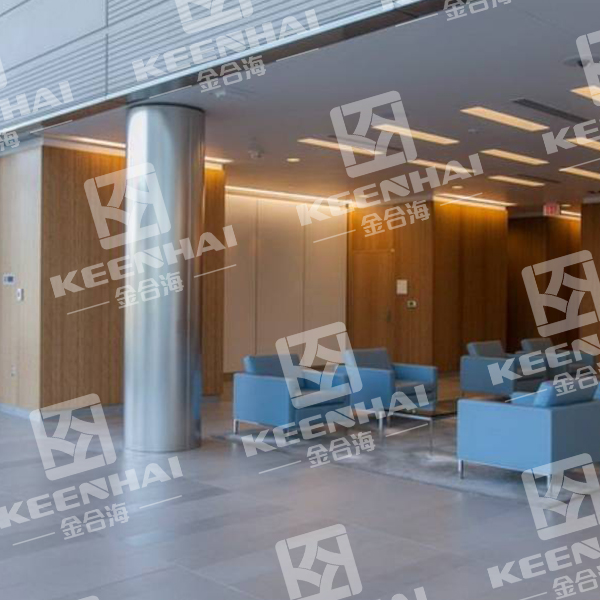
Architects often use stainless steel column cladding panels to cover structural supports in airports, hotels, and shopping centers. The panels are typically 0.8–1.2 mm thick, cut precisely to match column dimensions, and mirror or hairline finishes are selected depending on aesthetic needs.
In coastal buildings, Grade 316 stainless steel sheets are combined with PVD layers to resist chloride-induced corrosion, which dramatically increases the façade’s lifespan. For instance, a seaside hotel used bronze PVD cladding on exterior columns, maintaining color and gloss for over 10 years with minimal maintenance.
Key advantages for façades and columns include:
-
Uniform metallic finish across large surfaces, even for multi-story buildings.
-
Scratch and dent resistance, reducing repair frequency in high-traffic zones.
-
Seamless integration with glass, concrete, and stone elements.
This makes PVD panels ideal for modern architectural façades that demand both longevity and a premium visual impact.
5.2 Elevators, Wall Panels, and Decorative Uses
Inside buildings, PVD-coated stainless steel cladding transforms ordinary spaces into luxurious, functional environments. Elevator interiors, wall panels, and decorative trims benefit from both durability and style.
For elevators, designers select mirror-polished or hairline finishes, ensuring the surfaces resist fingerprints and scuffs in high-use areas. Large office complexes and luxury hotels often install Edelstahl-Außenwand panels for interior accent walls, combining aesthetics with geringer Wartungsaufwand.
Decorative uses extend to:
-
Reception desk panels and wall accents in hotel lobbies.
-
Retail display backdrops where reflective surfaces enhance product visibility.
-
Architectural art installations, where PVD’s color options allow for bronze, champagne, or rose-gold hues that stay vivid for years.
Combining stainless steel sheets with PVD-coated panels ensures uniform coverage and eliminates unsightly gaps, even for custom-shaped walls. Projects like airport lounges and upscale shopping arcades often deploy these panels, achieving a consistent, high-end look with minimal long-term upkeep.
Zusamenfassend, PVD stainless steel cladding combines strength, corrosion resistance, and lasting visual appeal. From airport columns to hotel lobbies, this technology transforms ordinary stainless steel into a premium architectural material. With precise atomic bonding and a variety of finishes, it’s a long-term solution that delivers both performance and style without heavy maintenance.