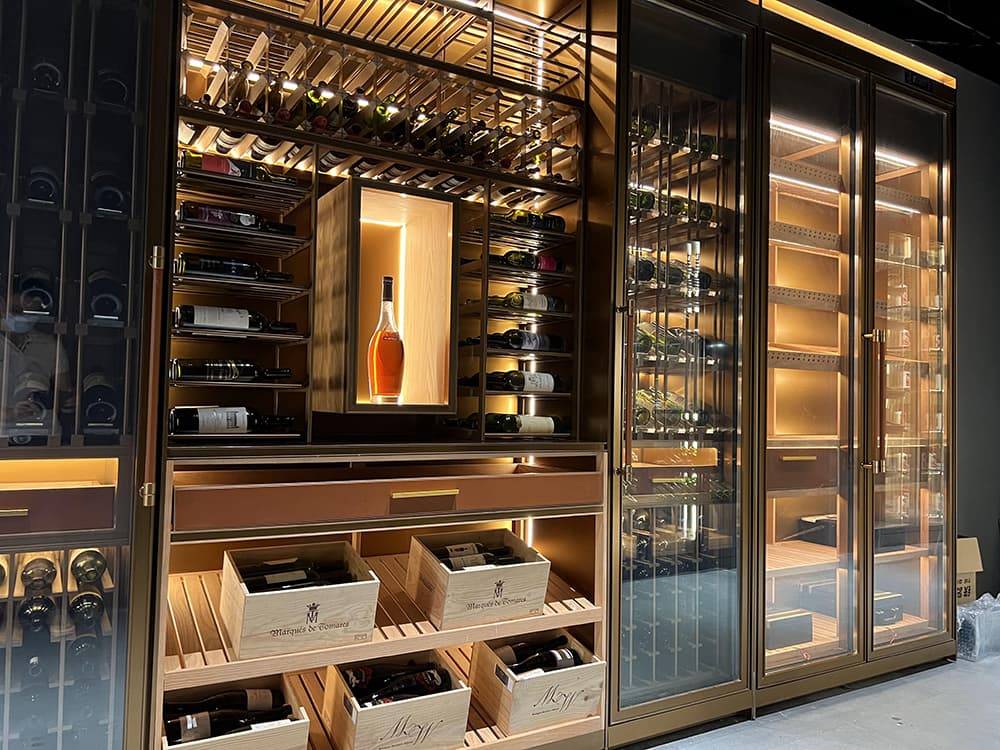
A commercial stainless steel wine cellar’s cost depends on size, material grade, and customization. Typically, large-scale installations start around $800–$1,500 per square foot, including modular shelving, integrated climate control, and premium surface finishes. Businesses investing in multi-zone climate systems and fully custom racks can expect higher upfront costs, but these features guarantee long-term durability and optimal wine preservation.
1. Base Cost Factors for Commercial Stainless Steel Wine Cellars
When planning a commercial stainless steel wine cellar, understanding the base cost factors is crucial for accurate budgeting. Unlike residential setups, commercial projects often involve larger bottle capacities, higher traffic considerations, and stricter structural requirements. Several elements directly affect the initial investment, and grasping them ensures a smooth project from design to installation.
1.1 Cost per Square Foot for Large-Scale Installations
The cost per square foot for commercial wine cellars depends largely on the scale and complexity of the installation. Large-scale projects, such as hotel wine rooms or high-end restaurant cellars, generally range from $900 to $2,700 per square foot, including materials, basic assembly, and climate integration. Factors that influence this rate include:
-
Space configuration – Irregular layouts, mezzanines, or multi-level cellars require more custom fabrication.
-
Material specifications – Higher-grade stainless steel or corrosion-resistant alloys increase the per-square-foot cost.
-
Access and delivery – Narrow stairways or remote floors can necessitate additional handling or hoisting equipment.
For instance, a 500 sq ft hotel cellar with custom shelving and integrated LED lighting can reach $1.2M–$1.5M, while a simpler 300 sq ft modular setup in a boutique restaurant may cost around $400,000–$550,000. Integrating stainless steel wine cabinets or modular racks further enhances both storage efficiency and visual appeal without dramatically increasing labor costs.
1.2 Typical Range Based on Bottle Capacity
Bottle capacity directly correlates with cost because larger cellars require more material, structural support, and climate zoning. Typical commercial configurations include:
| Bottle Capacity | Approximate Base Cost | Recommended Stainless Type | Example Use |
|---|---|---|---|
| 300–500 bottles | $350,000–$600,000 | 304 Stainless Steel | Small restaurants, boutique wine bars |
| 500–1,000 bottles | $600,000–$1,000,000 | 316 Stainless Steel | Hotels, upscale restaurants |
| 1,000+ bottles | $1,000,000+ | 316L or custom alloy | Large commercial wineries, luxury resorts |
Practical example: A high-capacity 1,200-bottle cellar installed in a hotel basement required:
-
Custom-fabricated stainless steel panels for walls and flooring.
-
Multi-zone climate systems to maintain precise temperature and humidity.
-
Integrated stainless steel wine rack cabinets and modular shelving for flexible display.
This project’s final cost reached $1.35M, illustrating how bottle count, structural needs, and material selection collectively influence the base investment. Understanding these cost factors early helps commercial clients plan effectively, avoid unexpected expenses, and ensure the cellar meets both operational and aesthetic goals.
2. Material and Finish Considerations
Selecting the right materials and finishes is one of the most critical factors in determining the cost of a commercial stainless steel wine cellar. The choices directly impact durability, maintenance, visual appeal, and long-term value. Commercial clients often face trade-offs between upfront costs and long-term performance, so understanding grades and surface treatments is essential.
2.1 Stainless Steel Grades and Their Cost Implications
Not all stainless steel is created equal. Commercial projects typically use 304, 316, or 316L stainless steel, each offering different resistance to corrosion, strength, and aesthetic quality. Grade selection affects both material costs and fabrication complexity.
| Stainless Steel Grade | Résistance à la corrosion | Typical Commercial Use | Cost Factor (USD per sq ft) |
|---|---|---|---|
| 304 | Moderate | Standard wine racks and cabinets | $800–$1,200 |
| 316 | High, marine-grade | Large display walls, humid environments | $1,200–$1,800 |
| 316L | Ultra-high, low carbon | High-end hotels or wine resorts | $1,500–$2,500 |
Key points for commercial projects:
-
304 stainless steel is suitable for interior cellars with moderate humidity and standard usage.
-
316 or 316L is essential in coastal or high-humidity regions, preventing corrosion and discoloration over time.
-
Using premium grades in high-traffic areas ensures that racks, cabinets, and panels maintain integrity for decades without frequent maintenance.
A 750-bottle commercial wine cellar integrated stainless steel wine racks using 316L grade for coastal humidity resistance. This choice increased material cost by 20% but significantly reduced long-term maintenance.
2.2 Surface Finishes and Aesthetic Upgrades
Surface finishes not only enhance appearance but also influence cleaning requirements, scratch resistance, and overall perception of quality. Common commercial finishes include:
-
Brushed or Satin Finish – Provides a modern, subtle texture that minimizes fingerprints and visible scratches.
-
Mirror Polish – Offers high visual impact for luxury spaces but requires meticulous maintenance.
-
Powder-Coated or Colored Stainless Steel – Allows brand-aligned aesthetics for hospitality projects, including logo integration or accent colors.
Cost implications:
-
Brushed finishes add minimal cost over raw stainless steel, while mirror-polished or powder-coated panels can increase per-square-foot pricing by $200–$400, depending on size and complexity.
-
Integrating custom finishes with modular or stainless steel wine cabinets allows designers to combine function and high-end visual appeal efficiently.
Commercial clients often:
-
Select durable grades like 316L for structural elements.
-
Reserve premium finishes for visible display zones.
-
Use standard finishes for back-of-house racks or utility areas.
This approach optimizes budget while maintaining a consistent luxury feel throughout the cellar. Thoughtful planning at the material and finish stage directly prevents future repair costs and ensures long-lasting performance in demanding commercial environments.
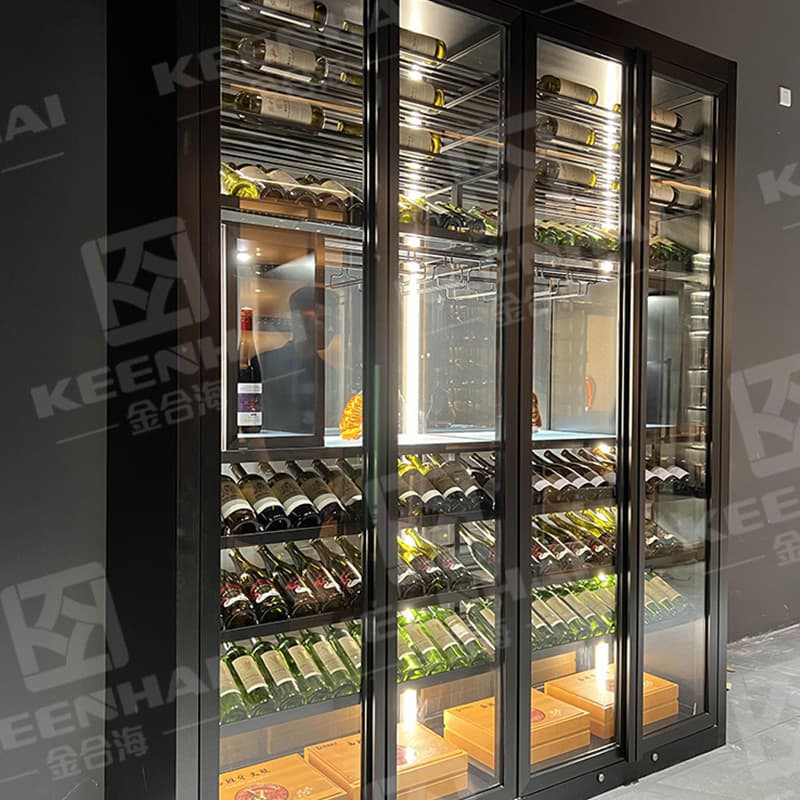
3. Customization and Functional Features
Commercial stainless steel wine cellars often demand tailored designs and advanced features to maximize storage efficiency, display appeal, and environmental control. Understanding how customization impacts both functionality and cost helps clients make informed decisions without overspending.
3.1 Integrated Shelving and Modular Storage Options
Shelving design is a critical cost driver in commercial projects. Modular systems allow flexibility while maintaining structural integrity, and fully custom shelves offer maximum utilization of irregular spaces. Typical considerations include:
-
Rack type and spacing – Adjustable shelves accommodate various bottle sizes and allow future expansion.
-
Material and finish – High-grade stainless steel or coated racks provide durability and low maintenance.
-
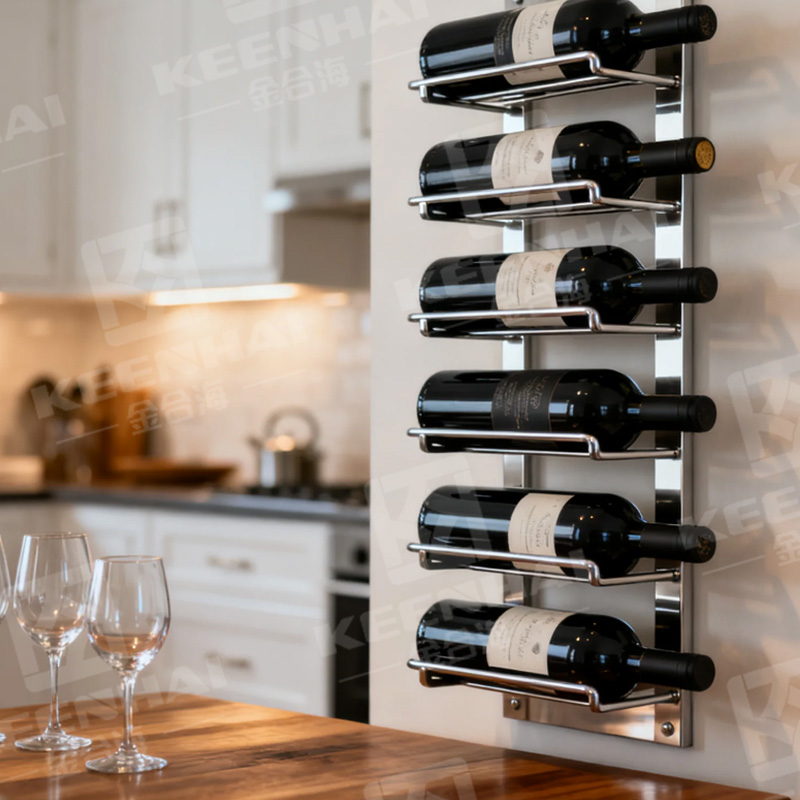
Integration with cabinets and display units – Combining stainless steel wine cabinets or stainless steel wine rack cabinets ensures seamless aesthetics and efficient workflow.
Cost impact: Modular storage can reduce labor and fabrication expenses by 15–25% compared to fully custom shelving. Meanwhile, fully custom racks for high-visibility areas may increase costs but create a high-end visual statement that attracts clientele in hospitality or luxury retail environments.
3.2 Climate Control, Humidity Systems, and Lighting
Maintaining optimal temperature and humidity is non-negotiable for commercial wine storage. Integrated systems not only protect inventory but also influence energy efficiency and long-term operational costs. Key elements include:
-
Climate zones – Divide the cellar into separate temperature areas to store reds, whites, and sparkling wines at ideal conditions.
-
Humidity control – Maintain 50–70% relative humidity using precision humidifiers or integrated HVAC units.
-
Lighting – Use low-heat LED fixtures to highlight premium bottles without raising ambient temperature.
Installation steps for a commercial cellar climate system typically follow:
-
Conduct a site survey to assess airflow, insulation, and power requirements.
-
Design zoned climate control systems with dedicated sensors for each section.
-
Install humidifiers and temperature monitors, ensuring unobstructed air circulation.
-
Integrate LED lighting with dimmers and display-focused accent lighting.
-
Test the system under full load conditions to confirm stability and efficiency.
In a 1,000-bottle commercial wine cellar for a boutique hotel, combining modular stainless steel racks with multi-zone climate and humidity systems increased upfront cost by 18%, but it prevented spoilage risks and optimized energy usage, making the investment worthwhile. Proper planning at this stage ensures the cellar remains both functional and visually impressive for years to come.
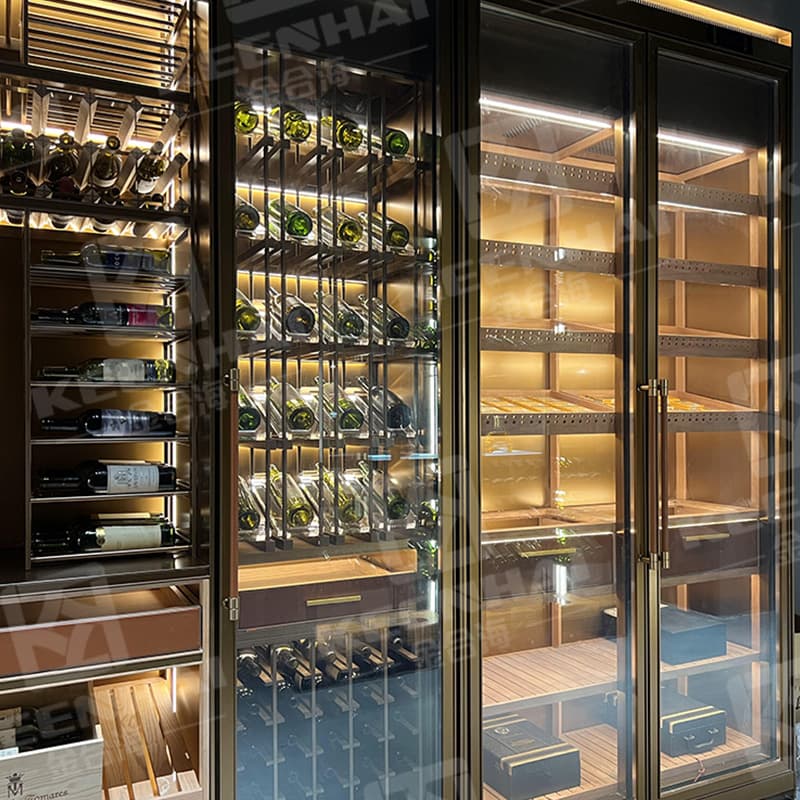
4. Installation and Labor Costs for Commercial Projects
Commercial stainless steel wine cellars demand professional installation to ensure safety, functionality, and durability. Unlike residential setups, labor for large-scale projects accounts for a significant portion of the overall budget. Understanding on-site assembly, structural requirements, and project-specific constraints helps clients accurately forecast expenses and avoid costly delays.
4.1 On-Site Assembly and Structural Requirements
Installation complexity varies depending on cellar size, configuration, and structural elements. Key considerations include:
-
Structural reinforcement – Floors and walls may require reinforcement to support the weight of heavy stainless steel racks and large bottle inventories.
-
Modular vs fully custom assembly – Modular systems simplify installation, reducing labor hours by 20–30%, whereas fully custom setups require precise measurements, welding, and adjustment.
-
Special equipment – Lifts, scaffolding, and hoists may be necessary for multi-level cellars or rooftop installations.
Example scenario: A 1,200-bottle commercial wine cellar in a hotel basement involved:
-
Installing reinforced flooring to handle over 3,000 lbs of racks and wine.
-
Assembling custom stainless steel racks and integrated cabinets on-site.
-
Conducting a multi-step verification process to ensure structural alignment and load distribution.
In this project, labor and structural preparation contributed approximately 25–35% of the total budget, highlighting the importance of early planning. Integrating stainless steel wine rack cabinets on-site not only optimized space but also streamlined the assembly process.
4.2 Lead Time, Access Constraints, and Project Scope
Several logistical factors directly affect installation cost:
-
Lead time – Custom-fabricated stainless steel components often require 6–12 weeks from order to delivery. Projects with tight schedules may incur expedited shipping or labor surcharges.
-
Site access – Narrow corridors, elevators, or stairs can necessitate disassembly, specialized handling, or temporary removal of obstacles.
-
Scope complexity – Multi-zone climate systems, integrated lighting, and modular displays increase both labor hours and project supervision needs.
Practical approach for commercial clients:
-
Schedule pre-installation surveys to evaluate access, power, and HVAC requirements.
-
Develop a step-by-step installation plan, including unpacking, assembly, calibration of climate systems, and final inspection.
-
Factor in contingency labor hours for unexpected adjustments, especially in historical buildings or areas with restricted access.
For example, a luxury restaurant project required a phased assembly due to limited kitchen access. By planning in stages and assigning specialized crews for each section, the project minimized downtime and avoided damage to both the cellar and surrounding facilities. These factors can add 15–25% to installation costs, making thorough planning essential for commercial clients seeking predictable budgets.
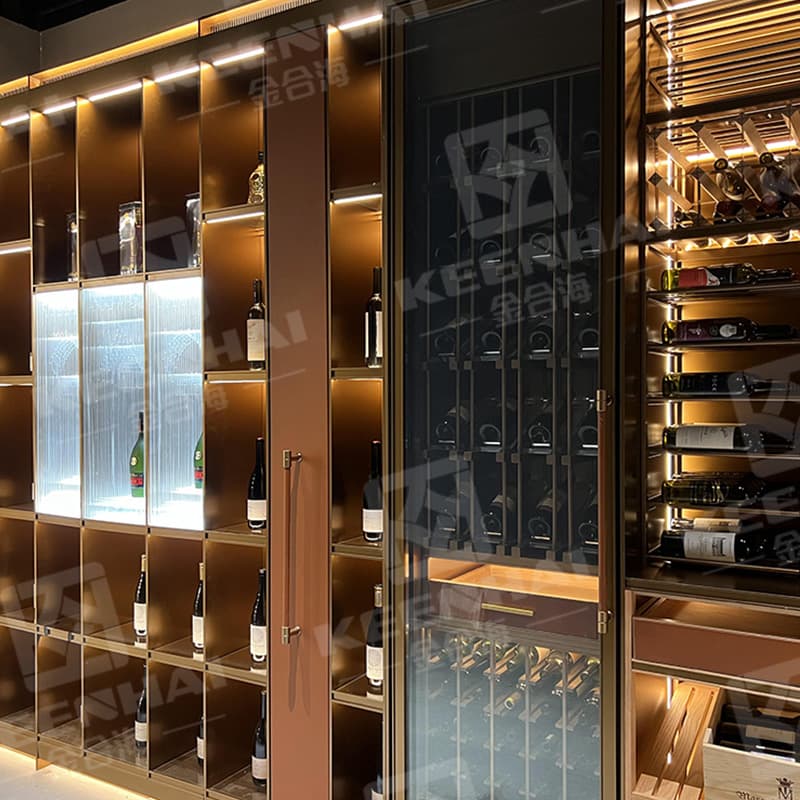
5. Comparison with Alternative Materials
When planning a commercial wine cellar, understanding how stainless steel stacks up against other materials helps clients make cost-effective and durable choices. Material selection impacts both upfront investment and long-term maintenance, so a clear comparison is essential.
5.1 Stainless Steel vs Wood Wine Cellars
Wood wine cellars offer classic aesthetics and warmth but come with notable trade-offs compared to stainless steel. Key differentiators include:
| Fonctionnalité | Cave à vin en acier inoxydable | Wood Wine Cellar |
|---|---|---|
| Durabilité | Corrosion-resistant, low maintenance | Susceptible to warping, moisture, and pests |
| Cleaning & Maintenance | Easy wipe-down, long-lasting finish | Requires regular polishing and pest control |
| Initial Cost | Moderate to high ($800–$2,500 per sq ft depending on grade and finish) | Variable, generally lower upfront ($500–$1,500 per sq ft) |
| Valeur à long terme | Retains structural integrity and appearance | May require refurbishing every 5–10 years |
Practical insight: Commercial spaces like hotels or restaurants often prefer stainless steel wine cabinets because they minimize maintenance efforts while providing a modern, sleek look that withstands high humidity and heavy traffic.
5.2 Stainless Steel vs Glass-Focused Commercial Cellars
Glass-dominant wine cellars deliver striking visual appeal, but the material introduces cost and operational challenges. Comparing stainless steel with glass-focused designs:
| Fonctionnalité | Cave à vin en acier inoxydable | Glass-Focused Wine Cellar |
|---|---|---|
| Structural Strength | High, supports heavy modular racks | Requires reinforced framing, higher breakage risk |
| Climate Control | Excellent integration with HVAC and humidity systems | Glass can compromise insulation; additional climate adjustments needed |
| Visual Impact | Sleek industrial-modern look | Offers full visibility but may show fingerprints and smudges |
| Maintenance | Low-maintenance, durable surface | Requires frequent cleaning and careful handling |
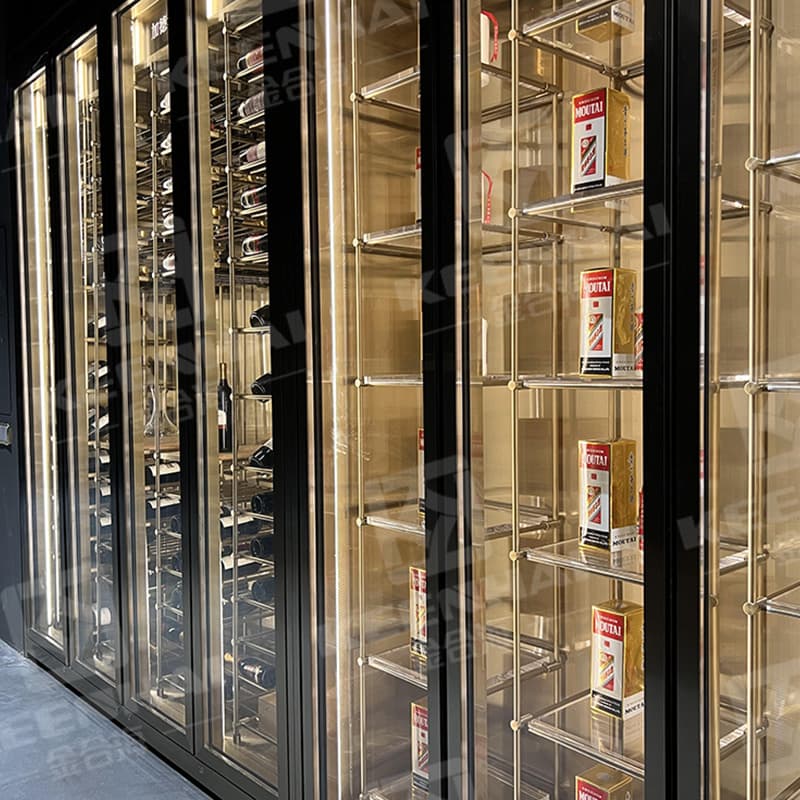
A boutique winery upgraded to stainless steel wine racks behind tempered glass panels. This hybrid approach balanced strength, durability, and display appeal, while keeping labor and maintenance manageable.
By weighing these material differences, commercial clients can forecast both initial and ongoing costs, ensuring the cellar meets operational needs and aesthetic goals simultaneously.
Designing and budgeting a commercial stainless steel wine cellar requires careful consideration of base costs, material choices, customization features, and installation logistics. By analyzing factors such as modular shelving, climate control systems, and structural requirements, businesses can make informed investment decisions that balance durability, aesthetics, and operational efficiency. Proper planning upfront ensures the cellar not only supports large bottle inventories but also maintains its value and functionality for years to come.