Comparing stainless steel wine cellar manufacturers in 2026 requires analyzing design flexibility, material quality, and delivery reliability. Custom fabricators consistently outperform mass producers in accommodating complex hotel layouts, while OEM suppliers may offer lower prices but limited adaptability. Vendors with verified hospitality experience, strong quality controls, and modular solutions ensure smooth installation and long-term performance, making them the safest option for commercial wine storage projects in luxury environments.
1. Manufacturer Types and Business Models
When comparing stainless steel wine cellar manufacturers for hotel and commercial projects, the business model matters as much as the product itself. Different manufacturer types bring very different strengths—and risks—once a project moves from drawings to installation. In real hotel environments, where timelines, coordination, and long-term maintenance directly affect revenue, choosing the wrong manufacturer type often causes delays, rework, or performance issues.
In practice, hotel developers usually encounter three main manufacturer models: large-scale industrial producers, custom fabricators, and OEM/ODM suppliers focused on hospitality projects. Each model handles design flexibility, production control, and post-installation support very differently, which directly impacts the success of a hotel-grade stainless steel wine cellar system in daily operation.
| Manufacturer Type | Strengths | Common Risks | Best Fit Scenarios |
|---|---|---|---|
| Large-Scale Industrial Manufacturers | High output, stable pricing, standardized quality | Limited customization, slow design revisions | Chain hotels with uniform layouts |
| Custom Fabricators | Design flexibility, site-specific solutions | Capacity limits, longer lead times | Boutique hotels, luxury resorts |
| OEM / ODM Hospitality Suppliers | Balance of scale and customization | Requires strong project management | Mid-to-high-end hotel projects |
Hotels that ignore these differences often face higher lifecycle costs, even if initial pricing looks attractive.
1.1 Large-Scale Industrial Manufacturers
Large-scale manufacturers focus on standardized production and volume efficiency. They typically work best for repetitive layouts, such as chain hotels where wine storage dimensions, bottle counts, and finishes remain consistent across locations. These factories rely on fixed molds, predefined rack systems, and limited finish options, which helps control cost but restricts design freedom.
In real projects, problems arise when hotels attempt to force unique lobby displays or irregular cellar footprints into a rigid production system. Design changes often trigger long revision cycles, and even small dimension adjustments can require full re-approval. From experience, this manufacturer type tends to “flip” projects that need fast on-site coordination or late-stage design refinements.
1.2 Custom Fabricators and Project-Based Producers
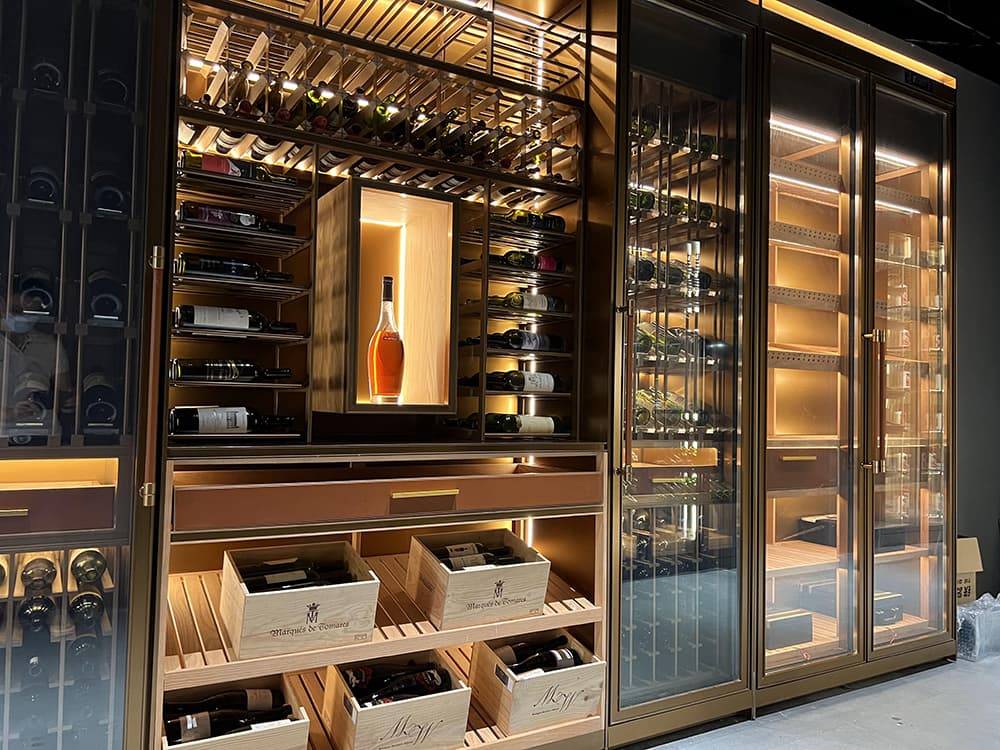
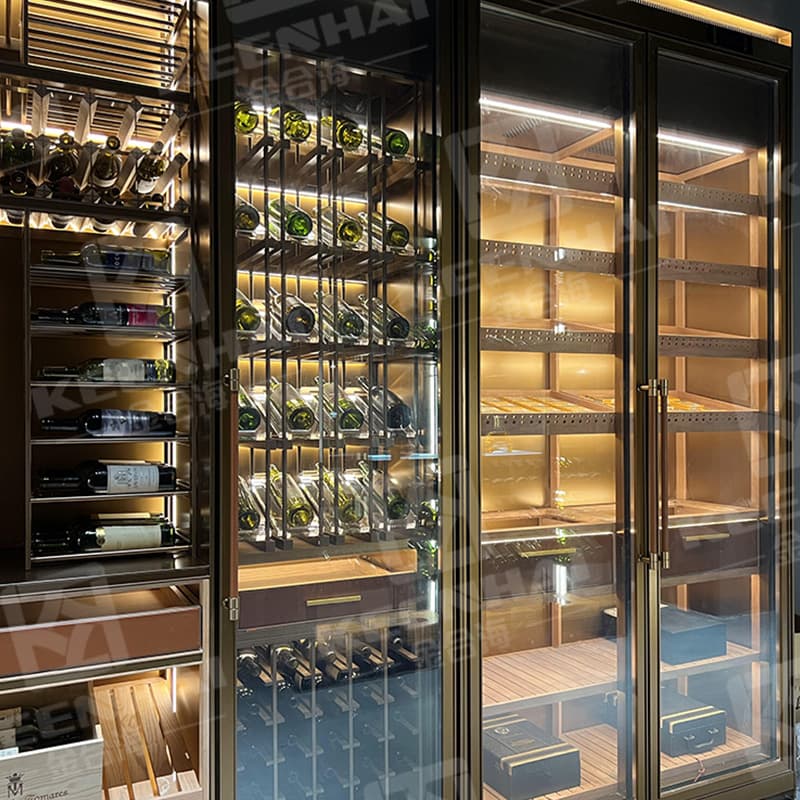
Custom fabricators specialize in site-driven solutions, making them a strong fit for hotels that treat wine storage as part of the interior architecture. These suppliers excel at integrating lighting, glass enclosures, and irregular layouts into a cohesive design, especially for feature areas such as lobby wine displays or tasting lounges.
For example, in boutique hotels and high-end resorts, designers often require precise alignment between structural columns, ceiling systems, and a custom-built stainless steel wine cellar that supports both storage and visual impact. In such cases, project-based producers usually outperform large factories in execution accuracy. However, capacity matters: fabricators with limited workshop scale struggle when projects exceed a few hundred square meters or require phased deliveries.
Custom fabricators excel at creating project-specific wine storage solutions tailored for hotels, restaurants, and luxury residences. For instance, choosing reputable hospitality-focused manufacturers like pvdstainlesssteel ensures that each स्टेनलेस स्टील वाइन सेलर meets strict size, finish, and functional requirements, while maintaining consistent quality across batches. These manufacturers often provide 1. detailed layout plans, 2. modular rack configurations, और 3. on-site consultation, which large industrial producers may not offer.
1.3 OEM / ODM Suppliers for Hospitality and Commercial Projects
OEM and ODM suppliers occupy the middle ground, especially common in Asian manufacturing ecosystems. They combine standardized production lines with configurable modules, making them well-suited for hotels that want predictable quality without sacrificing all customization. Many hospitality-focused OEM suppliers produce complete solutions, including racks, frames, and integrated स्टेनलेस स्टील वाइन कैबिनेट, under private labels.
In practice, this model reduces risk when hotels need consistency across multiple properties while still adapting to different floor plans. The key difference lies in project management maturity. OEM suppliers with hospitality experience typically follow a clear workflow:
-
Review architectural drawings and bottle capacity targets
-
Adapt modular rack systems to site constraints
-
Pre-assemble critical sections for fit verification
-
Deliver labeled components for fast on-site installation
Manufacturers that skip these steps often shift coordination pressure onto contractors, which increases installation errors and maintenance complaints after opening.

2. Product Capabilities and Technical Specifications
For hotel and commercial projects, product capability matters more than catalog variety. A supplier’s real strength shows up in material selection discipline, structural engineering logic, and how well the system integrates with building services. A hotel-grade wine storage solution must balance load performance, environmental stability, and long-term serviceability, not just visual appeal. In practice, many projects fail not because of design, but because technical specifications were simplified too early during procurement. This section breaks down the core technical capabilities that actually differentiate manufacturers in real-world installations.
2.1 Stainless Steel Grades, Thickness, and Structural Standards
Material choice directly affects lifespan, safety, and maintenance cost. In most hospitality environments, 304 stainless steel performs adequately for climate-controlled interiors, while 316 becomes necessary in coastal hotels or high-humidity zones. Thickness typically ranges from 1.2 mm to 2.5 mm, depending on rack span and bottle density. Thinner material may look fine initially but often leads to torsional flex over time.
For a commercial-grade installation like a कस्टम स्टेनलेस स्टील वाइन सेलर, structural standards matter as much as finish quality. Load calculations usually assume 1.2–1.5 kg per standard bottle, multiplied across vertical stacks. Manufacturers that follow EN or ASTM structural references tend to deliver more consistent results across large hotel projects.
For hotel projects, custom fabricators usually outperform mass manufacturers in material thickness control and joint reinforcement, especially when ceiling height exceeds 3 meters or layouts involve cantilevered displays.
2.2 Rack Systems, Load Capacity, and Modular Flexibility
Rack architecture determines whether a system scales smoothly or becomes a maintenance headache. Fixed welded racks offer rigidity but limit future changes. In contrast, modular rack systems allow hotels to reconfigure layouts as beverage programs evolve, which matters for venues with rotating wine lists or seasonal promotions.
From a technical standpoint, reliable systems support:
-
Vertical loads of 120–180 bottles per bay without deflection
-
Tool-free or low-tool reconfiguration for on-site adjustments
-
Hidden anchoring points to maintain clean sightlines
Hotels that plan for expansion or brand refresh cycles benefit far more from modular stainless rack frameworks than fixed layouts, even if initial costs appear higher. Over a 5–8 year lifecycle, flexibility often offsets upfront investment.
2.3 Climate Control Integration and Environmental Performance
Temperature and humidity stability define whether a wine cellar performs as storage or merely display. Most hotel environments target 12–14°C and 55–70% relative humidity, but the challenge lies in maintaining consistency across tall or glass-heavy enclosures.
Effective integration typically follows this sequence:
-
Coordinate rack layout with airflow paths to avoid dead zones
-
Isolate stainless structures from direct cooling discharge to prevent condensation
-
Allow service access for sensors and control units without dismantling racks
Manufacturers with experience in commercial wine cellar solutions design racks around HVAC logic, not against it, which significantly reduces condensation risk and cork degradation over time. This systems-level thinking separates technically capable suppliers from those focused only on visual outcomes.
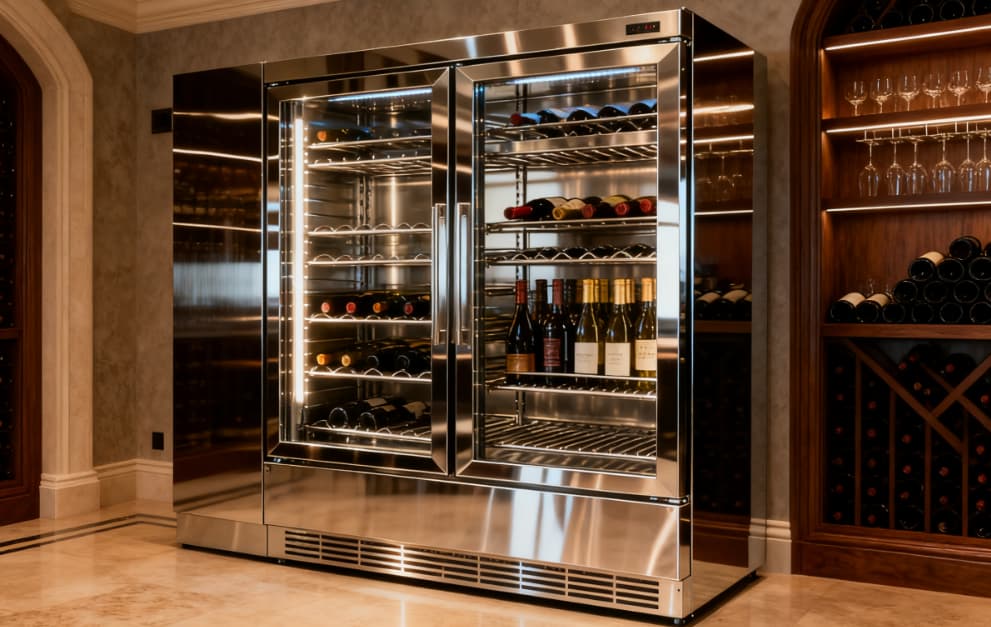
3. Customization Depth and Design Compatibility
In real hospitality projects, customization is not about aesthetics alone—it is about how well a system adapts to architectural constraints, operational flow, and future changes. A truly custom-built wine cellar system must work with the building, not force the building to adapt to it. Problems usually appear when suppliers treat customization as surface-level variation instead of structural engineering. This section focuses on how deep customization affects usability, design alignment, and long-term value in hotel environments.
3.1 Space Adaptability and Layout Engineering
Hotel spaces rarely follow perfect dimensions. Columns, ceiling height transitions, fire systems, and service corridors often dictate layout decisions. Effective manufacturers start with site-condition mapping, not product selection. In practice, successful layout engineering follows a clear sequence:
-
Measure clear spans, ceiling tolerances, and obstruction zones
-
Define bottle density targets per square meter
-
Engineer rack geometry around circulation paths and service access
In a hotel-grade stainless wine storage setup, depth flexibility (usually 350–550 mm) determines whether aisles feel open or congested. For hotel projects, custom fabricators usually outperform mass manufacturers in layout adaptability, especially when floor plans change mid-project or branding teams request last-minute adjustments.
3.2 Finish Options and Visual Integration with Interior Design
Finish selection influences guest perception more than most operators expect. Brushed, bead-blasted, PVD-coated, or mirror-polished stainless surfaces each interact differently with lighting, glass enclosures, and surrounding materials. The wrong finish can visually overpower a space, even if the structure performs well.
Interior designers typically evaluate finishes based on:
-
Reflectivity under warm vs neutral lighting
-
Color harmony with stone, wood, or leather finishes
-
Fingerprint resistance in guest-facing areas
For bar-adjacent installations or lobby displays, स्टेनलेस स्टील वाइन कैबिनेट often integrate better than open racks because they allow controlled reflections and concealed hardware. A well-matched cabinet system can visually anchor the space without competing with architectural focal points.
3.3 Support for Mixed-Use Storage, Display, and Tasting Areas
Modern hotel wine programs rarely separate storage, display, and tasting into isolated zones. Instead, they combine them into layered environments that serve staff efficiency and guest experience simultaneously. A commercial wine cellar solution must support this hybrid use without compromising storage conditions.
Effective mixed-use planning usually includes:
-
Zoned temperature control between storage and tasting areas
-
Load-rated display sections that still meet storage standards
-
Integrated service clearances for sommeliers and staff movement
Manufacturers that design systems around operational flow—not just visual symmetry—deliver better long-term performance in hospitality settings. When customization supports both function and design intent, the wine cellar becomes a revenue-supporting asset, not just a decorative feature.
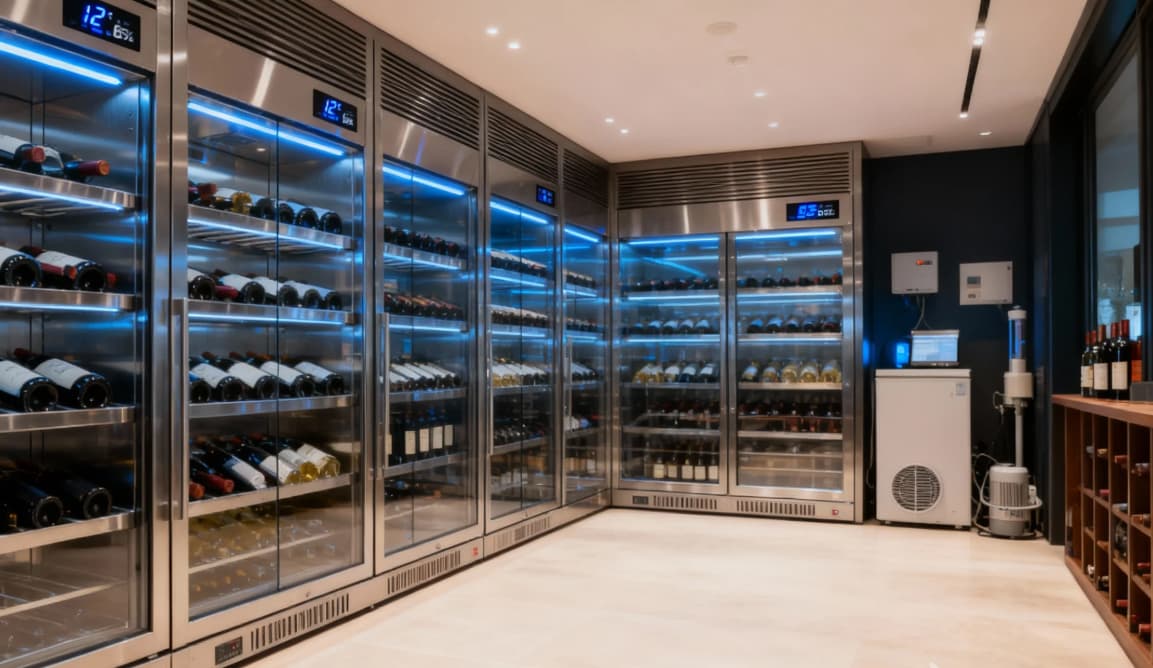
4. Production Capacity and Delivery Reliability
In hotel and commercial projects, a manufacturer’s production capacity directly impacts timelines, project cost, and operational risk. Hotels with tight renovation schedules cannot afford delays from batch-limited suppliers, making lead times and scaling ability crucial decision points. Batch capacity, assembly line flexibility, and the ability to scale orders rapidly define whether a supplier can reliably deliver a custom-built wine cellar system without compromising quality.
4.1 Lead Times, Batch Size, and Scaling Ability
When selecting a supplier, evaluating lead times in combination with batch size is critical. Shorter lead times often indicate robust production processes, but overly small batch capabilities can stall large hotel projects. In practice, successful project execution usually involves:
-
Verifying standard lead times and production schedules
-
Confirming batch size limits against project volume
-
Testing the supplier’s ability to scale rapidly if last-minute order adjustments occur
For hospitality-grade wine storage, vendors that maintain modular assembly lines often outperform those relying on traditional sequential production, ensuring project deadlines remain intact even under high-volume conditions.
4.2 Quality Control Processes and Consistency
Even with reliable delivery, inconsistent quality undermines project outcomes. Leading suppliers implement multi-step inspections, including raw material verification, welding and structural checks, and final surface finish assessment. For hotel projects, this ensures that every rack, cabinet, or wine storage module meets precise specifications. A commercial wine cellar solution should guarantee minimal variation across units to prevent installation delays and long-term maintenance issues. Metrics like defect rate, batch rework percentage, and certification adherence are strong indicators of reliability.
4.3 Packaging, Shipping Methods, and Damage Prevention
Proper packaging and shipping are often underestimated but critical in commercial wine cellar installations. High-end stainless steel modules are prone to scratches, dents, and misalignment during transport. Standard precautions include:
-
Padding with shock-absorbing materials and corner guards
-
Custom crates designed for modular racks or cabinets
-
Secured shipment tracking and controlled-environment transport for sensitive finishes
Suppliers experienced in hotel projects reduce on-site assembly disruptions by using pre-labeled, damage-proof packaging, ensuring modules arrive ready for immediate installation. This level of attention can dramatically reduce labor costs and prevent project delays, especially in multi-floor or high-traffic hotel locations.
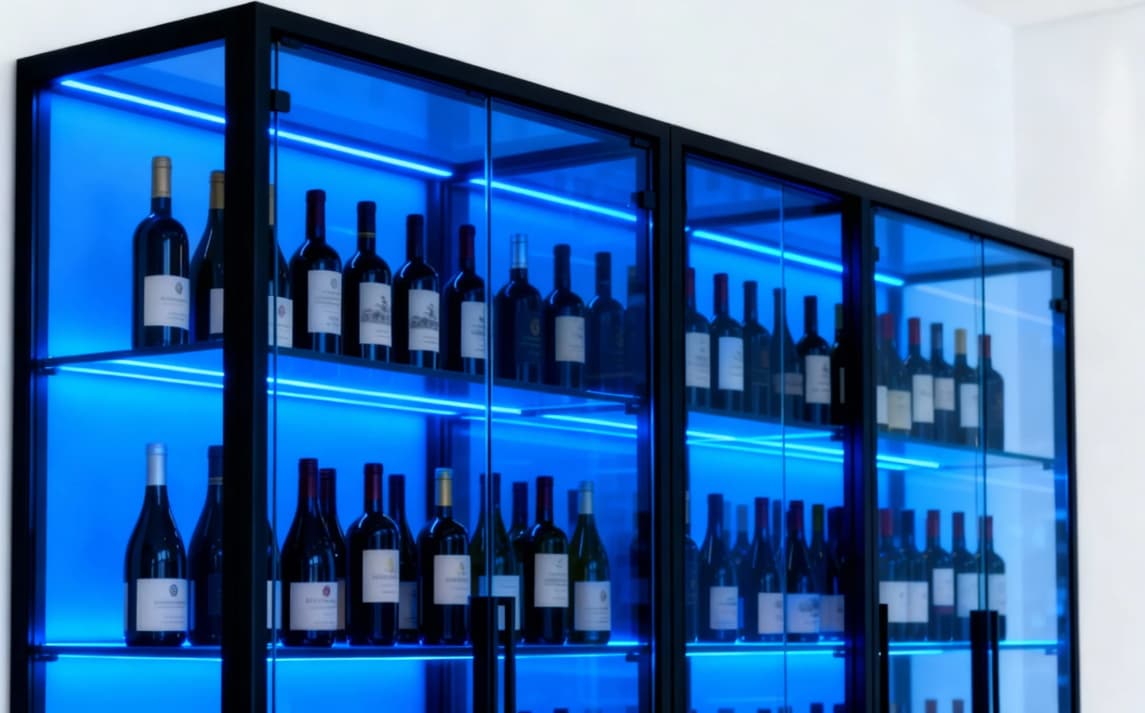
5. Project Experience and Commercial Readiness
Suppliers’ prior experience in hospitality and luxury projects is a strong predictor of successful execution. Vendors familiar with hotel, restaurant, and high-end residential environments understand the pacing, coordination, and design standards required, reducing the risk of costly errors. For instance, working with a commercial partner like pvdstainlesssteel ensures that every wine storage module meets aesthetic and functional expectations, while also providing technical guidance aligned with project-specific constraints.
5.1 Experience with Hotel, Restaurant, and Luxury Residential Projects
When evaluating suppliers, confirm whether they have delivered large-scale, multi-location installations. Key indicators include:
-
Number of hospitality projects completed in the past 3–5 years
-
Ability to meet custom layout and design requirements under tight deadlines
-
References or documented case studies demonstrating problem-solving under complex conditions
Teams with a strong portfolio in hotel and luxury settings usually handle last-minute adjustments more efficiently, ensuring the wine cellar or modular wine cabinet aligns with both operational and design standards.
5.2 Coordination with Designers, Contractors, and Project Managers
Successful projects rely on tight collaboration between fabricators and on-site teams. Effective suppliers establish clear communication channels with interior designers, general contractors, and project managers, scheduling deliveries to coincide with renovation phases and avoiding workflow bottlenecks. Practical steps include:
-
Providing CAD models and layout suggestions for integration
-
Coordinating delivery windows and storage of pre-fabricated components
-
Offering guidance on assembly sequencing to minimize disruption to other trades
For commercial wine cellar solutions, proactive coordination prevents installation delays and ensures seamless integration with the hotel’s overall interior scheme.
5.3 Installation Support and On-Site Technical Guidance
Top-tier suppliers don’t just ship products—they provide on-site technical support. Installation support often includes pre-assembly verification, on-site supervision, and immediate troubleshooting of alignment, leveling, or modular fit issues. Typical steps involve:
-
Pre-installation inspection of modules
-
On-site adjustment to accommodate floor plan deviations
-
Final walkthrough with project manager to verify structural and aesthetic standards
Vendors experienced in high-end hospitality projects minimize rework, ensuring that the stainless steel wine cellar or wine rack cabinet performs flawlessly from day one.