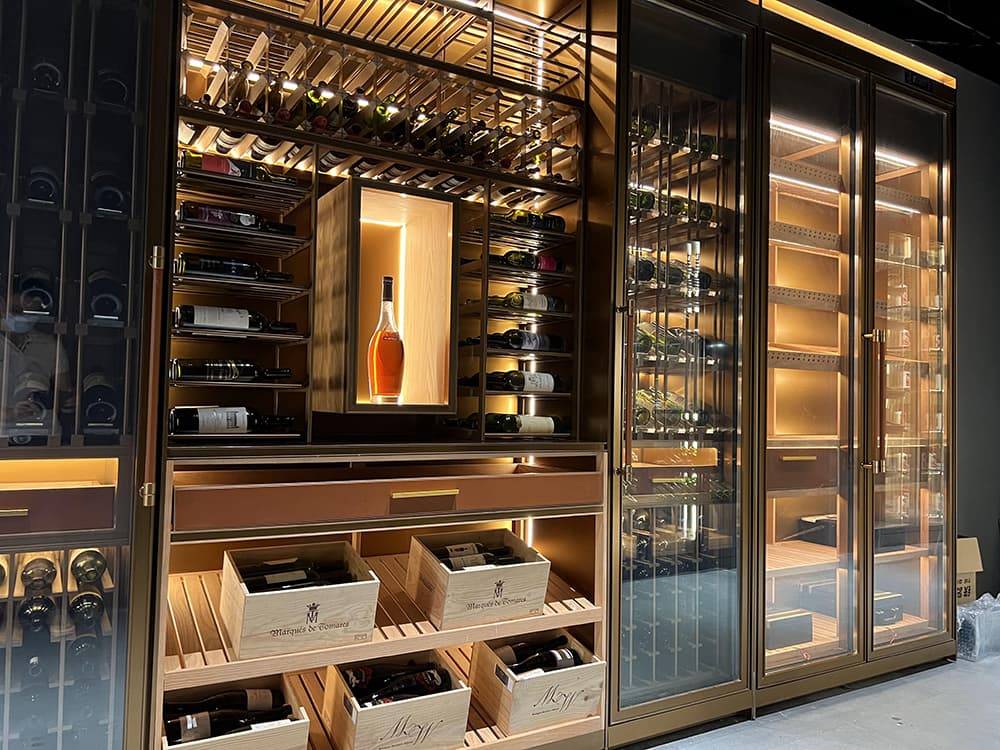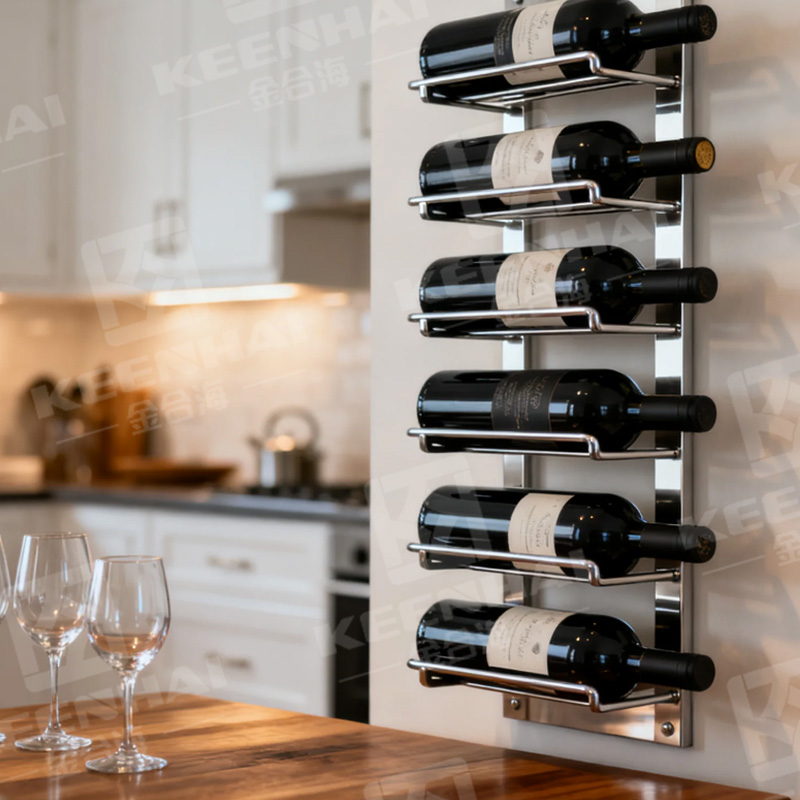
Ordering in bulk or combining multiple cabinet types can influence the unit price. Suppliers often offer discounts for larger quantities, and strategically mixing standard and custom units can reduce per-cabinet costs while still delivering tailored solutions that meet unique storage needs for restaurants, hotels, or commercial wine cellars.
1.Factors Affecting Custom Stainless Steel Wine Cabinet Pricing
When evaluating the cost of a custom stainless steel wine cabinet, multiple factors come into play, and each can significantly affect the final price. Understanding these variables helps buyers make informed decisions and ensures they get the best balance between quality, functionality, and budget.
1.1 Cabinet Size and Storage Capacity
The overall size of the wine cabinet directly influences material usage, fabrication time, and shipping complexity. For example, a cabinet designed to store 500 bottles will require more stainless steel, more robust shelving, and potentially reinforced structural supports compared to a 200-bottle unit. Larger units often need custom shelving layouts or modular sections, which can add to labor costs. In real-world applications, a restaurant might install a 600-bottle Stainless Steel Wine Cabinet behind the bar, requiring additional considerations for accessibility and airflow management.
Size vs. Storage Example Table:
| Storage Capacity | Approx. Cabinet Dimensions | Estimated Material Cost (USD) | Fabrication Complexity |
|---|---|---|---|
| 200 bottles | 48” W x 24” D x 72” H | $2,800 | Közepes |
| 400 bottles | 72” W x 30” D x 78” H | $4,500 | Magas |
| 600 bottles | 96” W x 36” D x 84” H | $6,800 | Very High |
1.2 Stainless Steel Grades and Surface Finishes
The choice of stainless steel grade affects durability, corrosion resistance, and cost. Common options include 304 for premium corrosion resistance or 430 for budget-conscious solutions. Surface treatments such as brushed, mirror-polished, PVD-coated, or matte finishes not only enhance aesthetics but also influence pricing due to additional labor and equipment requirements. For instance, a high-end hotel installing a custom Stainless Steel Wine Rack Cabinet may prefer a brushed finish to match interior décor, which adds 10–15% to material processing costs.
1.3 Custom Design Complexity and Layout Variations
Customization goes beyond size; it encompasses shelf spacing, integrated cooling compartments, glass doors, and multi-tiered racks. The more intricate the layout, the longer it takes for engineers to create technical drawings and for craftsmen to assemble components. A Stainless Steel Room Temperature Wine Cabinet with adjustable shelving and mixed-use zones requires precise welding and finishing, directly impacting labor costs.
Always provide suppliers with clear specifications, including dimensions, bottle types, and intended storage zones. This ensures accurate pricing and avoids unexpected costs during fabrication.
1.4 Additional Structural and Functional Considerations
Other factors include the need for reinforced frames, vibration-free shelving, lockable compartments, or modular expansion capability. For example, a winery might require a Rozsdamentes acél borospince section that can expand later, which increases initial engineering and material expenses but offers long-term flexibility. Integrating ventilation channels, lighting systems, or access panels also contributes to the total cost.
1.5 Real-World Scenario Integration
Consider a luxury restaurant chain in Miami that needed a custom 500-bottle wine cabinet with both chilled and ambient storage zones. The cabinet combined brushed 304 stainless steel with a mirrored front panel and adjustable Stainless Steel Wine Racks. The project required:
-
On-site measurements to optimize space utilization.
-
Custom technical drawings approved by interior designers.
-
Modular fabrication to allow future expansion.
-
Integration of temperature control systems.
This example shows how practical requirements and design intricacies naturally affect pricing, ensuring that the cabinet meets both operational and aesthetic needs.
2.Cooling Systems and Temperature Control Impact on Cost
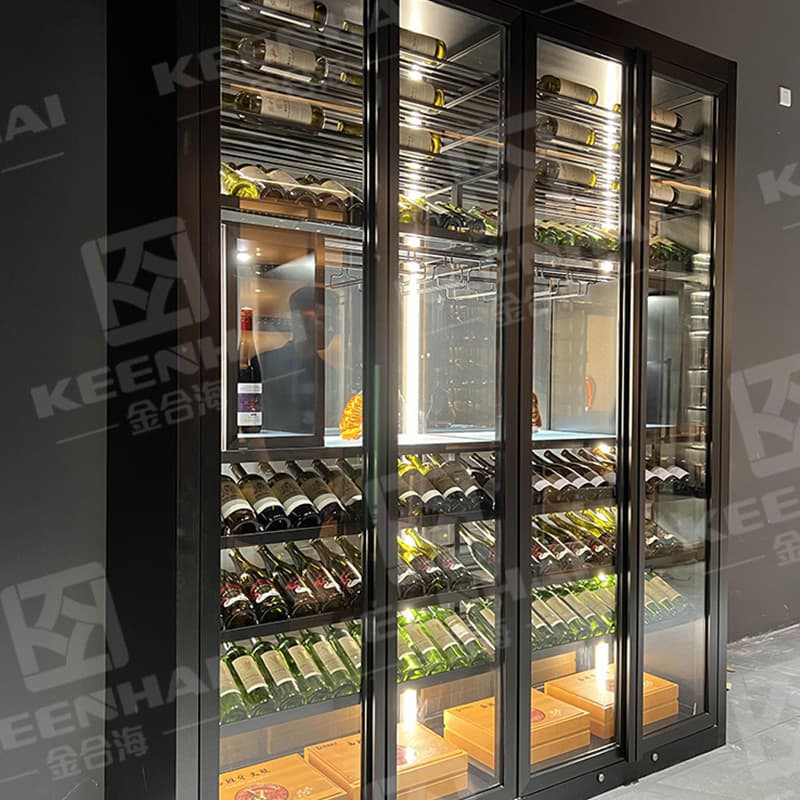
Proper cooling and precise temperature management are essential for maintaining the quality of wine stored in custom stainless steel wine cabinets. The type of cooling system, zoning capability, and efficiency directly affect both initial costs and ongoing operational expenses, making these considerations critical for both commercial and residential buyers.
2.1 Single vs. Multi-Zone Temperature Configurations
Single-zone units maintain a uniform temperature throughout the cabinet, which simplifies refrigeration design and reduces upfront costs. In contrast, multi-zone systems allow for distinct temperatures in different compartments, such as storing reds at 55–65°F and whites at 45–50°F. While multi-zone setups increase initial investment due to additional compressors and control panels, they significantly enhance wine preservation for diverse collections.
Example Configuration Table:
| Configuration | Typical Cost Impact | Temperature Range Flexibility | Maintenance Complexity |
|---|---|---|---|
| Single-Zone | Base cost | Uniform | Alacsony |
| Dual-Zone | +15–25% | Separate zones for reds/whites | Közepes |
| Multi-Zone (>3) | +30–50% | Custom zones, sparkling, reds, whites | Magas |
A commercial setting, like a hotel wine bar, may opt for a Stainless Steel Wine Rack Cabinet with dual or triple zones to ensure optimal serving conditions for different varietals.
2.2 Energy Efficiency and Operational Expenses
Energy efficiency plays a major role in total cost over time. Units with high-efficiency compressors, improved insulation, and LED display lighting consume less electricity, which reduces monthly operating expenses. Key design considerations include:
-
Compressor efficiency ratings and cooling cycle optimization.
-
Cabinet insulation thickness and material quality.
-
Ventilation and airflow management to prevent hot spots.
For instance, a multi-zone Stainless Steel Room Temperature Wine Cabinet may cost more upfront, but energy savings of 20–30% annually make it cost-effective over a 5-year period.
2.3 Integrated Humidity and Airflow Management
Maintaining proper humidity (50–70%) prevents corks from drying out and protects labels. Integrated airflow systems distribute cold air evenly across shelves, eliminating temperature gradients that could compromise wine quality. Advanced cabinets often feature:
-
Humidity sensors with automatic regulation.
-
Quiet fans ensuring even circulation without vibration.
-
Adjustable vents for localized airflow control.
Adding these features increases the custom stainless steel wine cabinet cost due to additional hardware, wiring, and engineering time, but the investment preserves the wine and reduces long-term spoilage risks.
3.Material, Fabrication, and Labor Cost Components
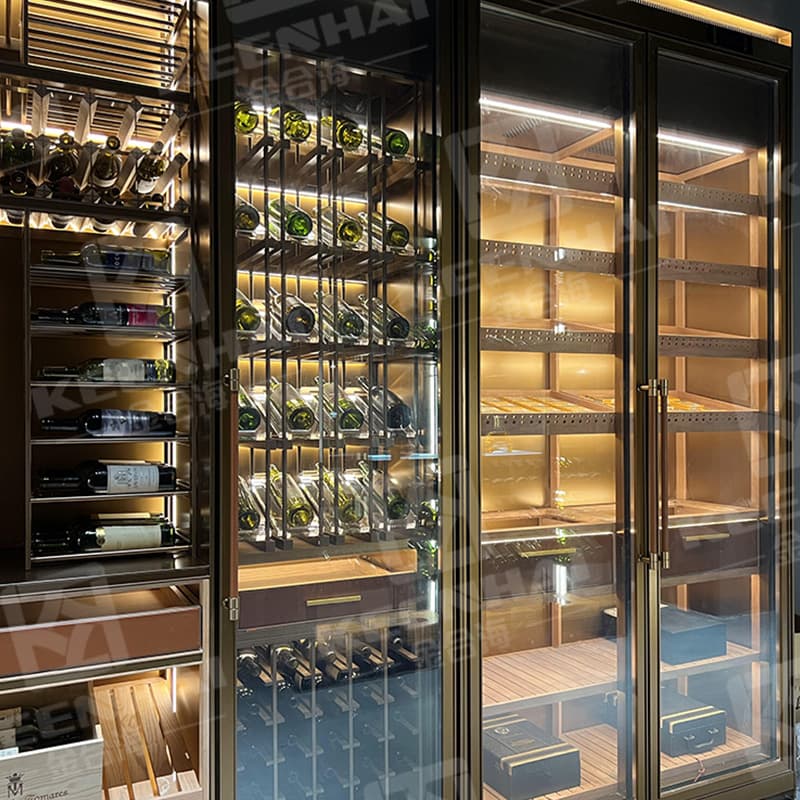
When evaluating the cost of custom stainless steel wine cabinets, understanding the interplay between material quality, fabrication complexity, and labor intensity is essential. Each element contributes to the overall price and affects durability, finish, and long-term performance.
3.1 Material Selection: Steel Thickness and Grade
The choice of stainless steel grade and sheet thickness directly impacts both cost and longevity. Higher-grade steels such as 304 or 316 offer superior corrosion resistance and a smoother finish, which is crucial for environments with high humidity or frequent handling. Cabinet panels with greater thickness not only improve structural integrity but also support heavier racks and wine bottles.
For example, a 16-gauge 304 stainless steel panel will typically cost 15–25% more than an 18-gauge alternative, but it allows for larger wine capacity and sturdier shelving, particularly in units like Rozsdamentes acél borszekrények used in commercial wine cellars.
3.2 Welding, Assembly, and Surface Treatment Expenses
Fabrication intricacies such as precise welding, seamless joints, and surface finishing significantly influence pricing. Key factors include:
-
Welding Type – TIG welding ensures clean, polished seams but requires skilled labor.
-
Surface Treatments – Options like brushed, mirror-polished, or PVD-coated finishes add 10–40% to production costs depending on complexity.
-
Assembly Precision – Multi-tier shelving, sliding racks, and integrated lighting increase fabrication hours.
Commercial projects often prefer Stainless Steel Wine Rack Cabinets with high-quality finishing because it reduces maintenance and enhances visual appeal in showrooms or tasting rooms.
3.3 Labor Intensity for Custom Features
Custom features such as irregular cabinet shapes, modular inserts, or integrated temperature zones require additional labor hours. Steps typically involve:
-
3D modeling and layout verification.
-
Cutting, bending, and welding panels to precise dimensions.
-
Installing specialized components such as sliding racks, digital thermometers, and humidity controllers.
-
Final surface finishing and quality inspection to ensure uniformity.
Each additional step contributes to higher labor costs but ensures that the custom stainless steel wine cabinet functions efficiently and meets exact design specifications. Careful planning of these processes allows manufacturers to maintain both quality and cost-effectiveness.
4.Quantity and Bulk Order Considerations
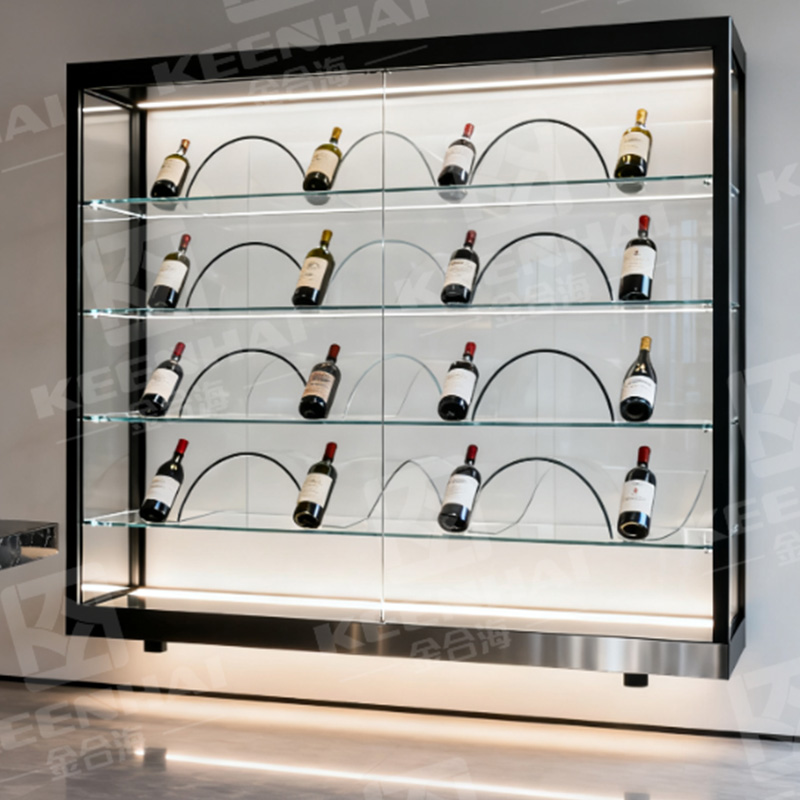
Understanding how order size and quantity affect pricing is crucial when purchasing custom stainless steel wine cabinets. Larger orders often benefit from economies of scale, while smaller or mixed-unit orders can still be cost-effective if carefully planned.
4.1 Pricing Variations for Single vs. Multiple Units
Unit price decreases significantly when moving from a single cabinet to bulk orders. For instance, ordering 10–20 units can reduce the per-unit cost by 15–25%, while orders exceeding 50 units often receive negotiated discounts. Factors influencing these variations include material procurement efficiency, labor allocation, and reduced setup time.
Businesses often compare the cost per unit for single versus multiple units, especially when equipping restaurants, hotels, or tasting rooms with Rozsdamentes acél borszekrények, ensuring that investment scales favorably without compromising quality.
4.2 Cost Benefits of Ordering Mixed or Standardized Units
Ordering a combination of standardized and custom models can maximize flexibility and cost efficiency. Standard units reduce fabrication time and raw material costs, while a limited number of custom cabinets accommodate specialized spaces or display preferences.
Key steps to optimize mixed orders:
-
Identify core storage requirements and preferred configurations.
-
Determine which cabinets can remain standardized versus custom.
-
Calculate projected savings on material, labor, and shipping.
This approach allows clients to maintain functional and aesthetic consistency across spaces while controlling overall budget. Mixed orders often include modular designs, allowing easier installation and future scalability.
4.3 MOQ Requirements and Supplier Discounts
Most manufacturers establish a minimum order quantity (MOQ) to justify production setup. Typical MOQs for commercial projects range from 5–10 units for custom cabinets, but suppliers may offer tiered discounts for larger orders.
Practical tips for leveraging MOQ advantages:
-
Consolidate orders to meet or slightly exceed MOQ.
-
Negotiate bulk shipping and packaging options.
-
Align product mix to balance inventory and immediate usage.
Strategically managing MOQs ensures that buyers secure better pricing without overcommitting inventory, particularly for high-quality custom stainless steel wine cabinets vagy Stainless Steel Wine Rack Cabinets designed for multiple locations.
5.Additional Costs for Shipping, Installation, and Handling
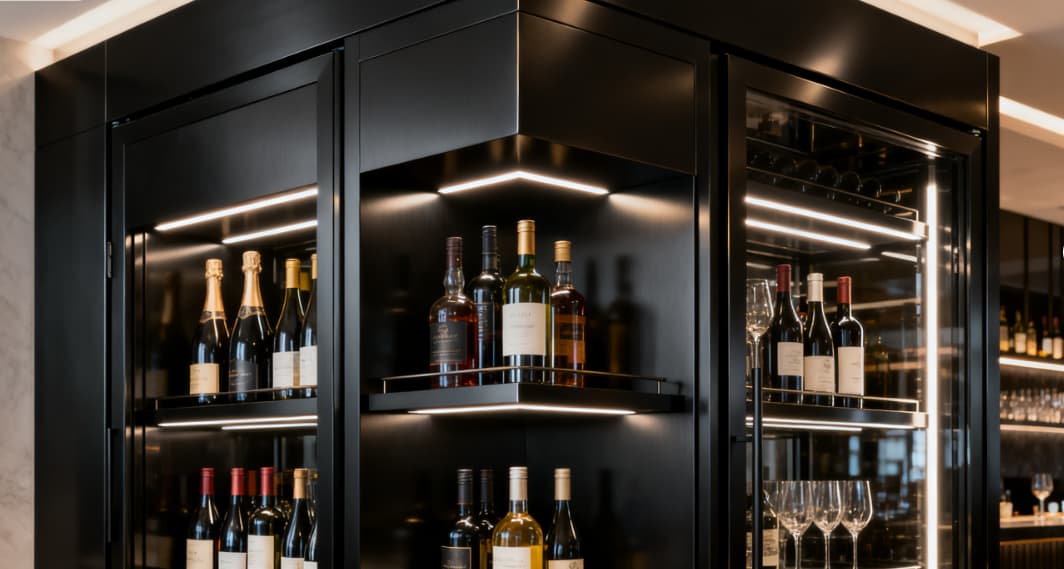
When budgeting for custom stainless steel wine cabinets, it’s essential to consider costs beyond production. Shipping, handling, and installation can add a significant portion to the total expense, especially for bulk or international orders. Proper planning ensures smooth delivery and installation while avoiding unexpected charges.
5.1 Export Packaging Standards and Safety Measures
High-quality packaging is crucial to prevent damage during transit. Export shipments typically require reinforced crates, protective padding, and secure strapping to safeguard stainless steel surfaces. For delicate glass panels or temperature-sensitive units, additional shock absorbers and moisture barriers are often included.
Steps to ensure proper packaging:
-
Confirm the cabinet dimensions and weight for crate specifications.
-
Add padding at all contact points to prevent scratches or dents.
-
Label packages clearly for handling orientation and fragile components.
Manufacturers of Rozsdamentes acél borszekrények often provide standardized export packaging compliant with international shipping regulations, ensuring that even long-distance shipments arrive intact.
5.2 International Shipping vs. Local Delivery Costs
Shipping costs vary greatly depending on distance, method, and volume. Sea freight is more cost-efficient for bulk orders, whereas air freight delivers faster but at higher rates. Local delivery for nearby installations reduces logistics complexity but still requires careful handling to protect cabinet surfaces.
Cost comparison table (example for a bulk shipment of 20 cabinets):
| Shipping Method | Approx. Cost per Unit | Transit Time | Notes |
|---|---|---|---|
| Sea Freight | $120–$180 | 20–30 days | Economical for large volumes |
| Air Freight | $350–$500 | 3–7 days | Expensive but fast |
| Local Trucking | $50–$80 | 1–3 days | Ideal for nearby installations |
Properly evaluating shipping options ensures the total cost aligns with budget expectations and delivery timelines.
5.3 Installation Support and On-Site Labor Charges
Even with robust cabinets, professional installation ensures proper functionality and preserves warranty coverage. Installation costs vary based on complexity and site conditions, particularly for multi-zone temperature cabinets or integrated wine racks.
Installation process typically involves:
-
Site preparation and floor leveling.
-
Placement of cabinets with precise alignment.
-
Electrical and cooling system connections.
-
Final testing for temperature and humidity stability.
Some suppliers offer full-service installation, including Stainless Steel Wine Rack Cabinets, reducing onsite labor responsibilities while guaranteeing professional setup.
Custom stainless steel wine cabinets vary widely in cost depending on size, materials, cooling systems, and design complexity. By understanding the factors that drive pricing—such as multi-zone temperature setups, premium stainless steel grades, and specialized cabinetry layouts—you can make informed decisions that balance performance, aesthetics, and long-term value. Planning for shipping, installation, and labor ensures the total investment aligns with expectations while delivering a durable, professional wine storage solution.