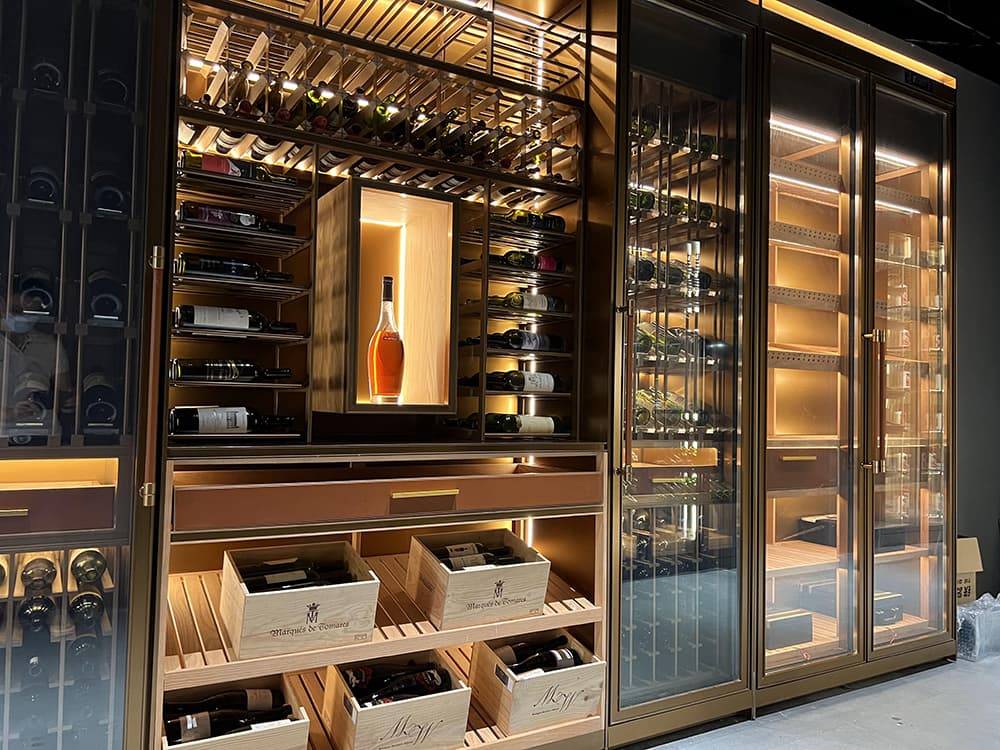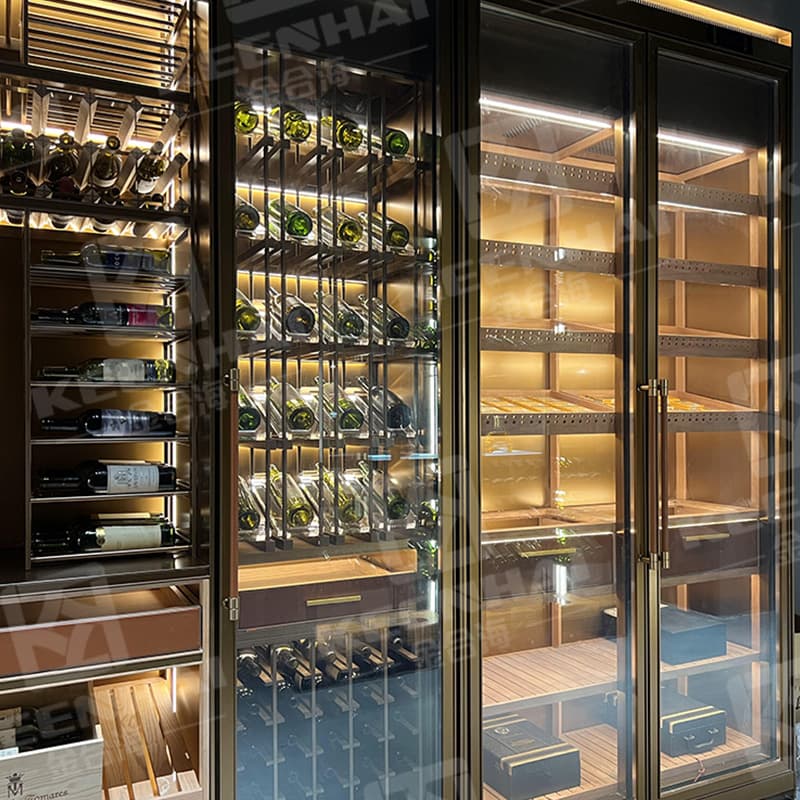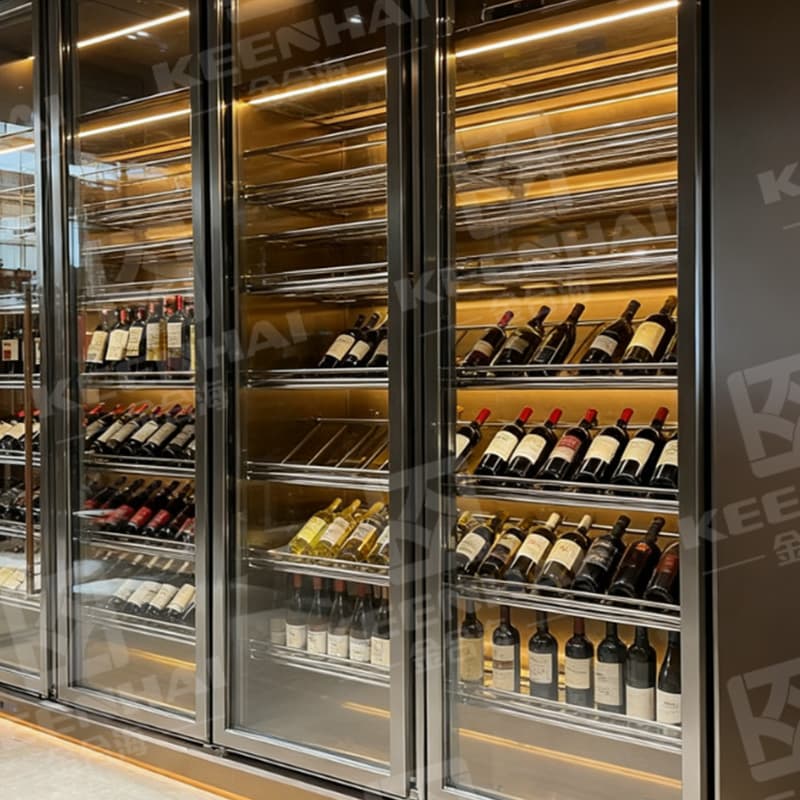
For large commercial projects, the cost of Stainless Steel Interior Screens is primarily driven by scale and material choice. Offices, hotels, and atriums benefit from standardized panels and repeated layouts, while premium finishes or custom patterns push pricing higher. Efficient planning of quantities, batch production, and modular repetition helps maintain predictable budgets, making large projects easier to manage financially without compromising design integrity or structural requirements.
1. Pricing Structure of Stainless Steel Interior Screens for Large Projects
For large commercial and architectural projects, pricing follows a clear logic: structure first, volume second, details last. Whether the screens appear in hotel lobbies, office atriums, or retail interiors, the cost framework stays consistent across most architectural stainless steel interior screen solutions used for space division and decorative purposes.
What changes is not the pricing model, but how efficiently it scales across floors, zones, and repeated layouts. Projects that standardize specifications early always control cost better than those that adjust details mid-design.
1.1 Base Material Cost per Square Meter
Base material cost sets the baseline, but it rarely defines the final budget. In most interior applications, projects rely on 304 or 316 stainless steel, selected based on humidity, cleaning frequency, and visual expectations. Thickness typically ranges from 1.2 mm to 3.0 mm, balancing stiffness and weight for interior use.
For applications such as fixed lobby partitions or corridor dividers, Fixed Stainless Steel Interior Screen systems help stabilize material usage by locking specifications early and reducing waste across large quantities.
For large commercial projects, price differences usually come from three measurable factors.
| Tényező | Typical Options | Cost Impact |
|---|---|---|
| Stainless Steel Grade | 304 / 316 | 316 increases cost due to higher corrosion resistance |
| Sheet Thickness | 1.2 mm – 3.0 mm | Thicker sheets raise material and handling cost |
| Panel Yield Rate | Efficient vs low nesting | Low yield increases scrap and material loss |
Material pricing stays predictable when grades and thickness remain consistent across the project scope.
1.2 Fabrication and Processing Cost Breakdown
Fabrication is where pricing starts to diverge between average and well-controlled projects. Cutting method, pattern density, edge finishing, and frame integration directly affect labor time and machine usage. Laser cutting remains the standard for decorative panels, especially in projects using patterned layouts similar to a metal interior decorative screen in public-facing areas.
Costs rise quickly when patterns demand tight tolerances, oversized panels require segmentation, or reinforcement must hide behind decorative surfaces. By contrast, projects that repeat modular layouts across floors benefit from tooling and programming efficiencies.
1.3 Surface Finish and Pattern Complexity Impact on Price
Surface finish often determines whether a screen feels standard or premium. Brushed and satin finishes remain cost-effective and forgiving under interior lighting, while mirror polishing and color treatments require stricter surface control and inspection. In high-end hospitality or retail spaces, PVD coated stainless steel interior screen systems frequently appear in gold, bronze, or black to match brand identity and lighting design.
Pattern density further amplifies finishing cost. Dense perforations and layered motifs demand extra deburring, surface correction, and consistency checks before coating. In focal areas such as reception zones or atrium dividers, finishing quality often outweighs material thickness in perceived value.
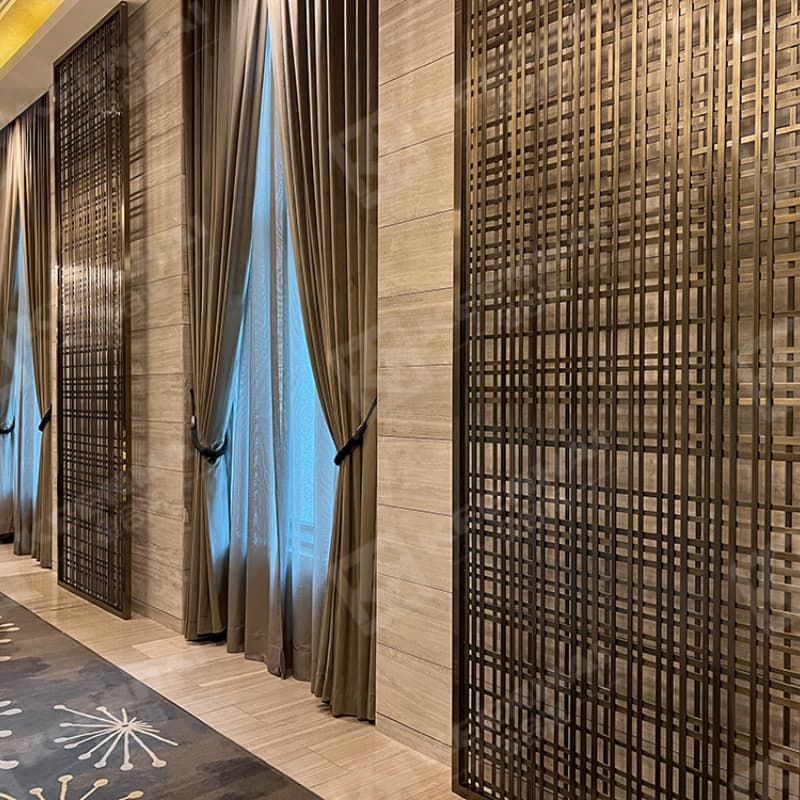
2. Key Cost Drivers in Large-Scale Stainless Steel Interior Screen Projektek
In large-scale projects, cost escalation rarely comes from a single factor. It usually results from how volume, customization, and structural requirements interact under real construction conditions. When these three variables stay controlled, pricing remains predictable; once any of them shifts, costs rise fast and rarely return.
2.1 Project Volume and Batch Production Effects
Project volume directly determines whether pricing benefits from scale or suffers from fragmentation. Large, continuous batches allow factories to optimize material nesting, stabilize labor allocation, and reuse tooling setups across production cycles. Once a project breaks into small, irregular batches—often due to late design changes—unit cost increases immediately.
From a production standpoint, batch efficiency improves when:
-
Panel sizes remain consistent across zones or floors.
-
Pattern files repeat without revision.
-
Delivery schedules align with fabrication cycles instead of site urgency.
Projects that lock quantities early always secure better unit pricing than those that finalize layouts floor by floor.
2.2 Design Customization and Engineering Requirements
Customization introduces cost through engineering time rather than materials. Once screens require non-standard fixing methods, concealed frames, or coordination with lighting and MEP systems, engineering hours increase before fabrication even starts. This often appears in feature walls, curved partitions, or visually dominant interior dividers.
Engineering-driven cost increases usually come from:
-
Custom fixing details that differ by location.
-
Load verification for oversized panels.
-
Coordination drawings required by consultants or contractors.
Highly customized designs can still scale efficiently—but only when engineering solutions repeat across the project instead of being redesigned per area.
2.3 Tolerance, Thickness, and Structural Reinforcement Costs
Tolerance control quietly drives cost in large interiors. Tight alignment between panels, frames, and adjacent finishes demands thicker material, reinforced backing, or secondary framing. These elements add weight, increase handling effort, and extend installation time on site.
Structural cost typically rises when:
-
Panel thickness increases to control deflection.
-
Hidden reinforcement frames become necessary.
-
Installation tolerances tighten to meet visual alignment requirements.
On-site installation follows a predictable logic:
-
Reinforcement frames install and level first.
-
Panels align to fixed reference points.
-
Final adjustments absorb accumulated tolerances.
The tighter the tolerance, the more structure hides behind the surface.
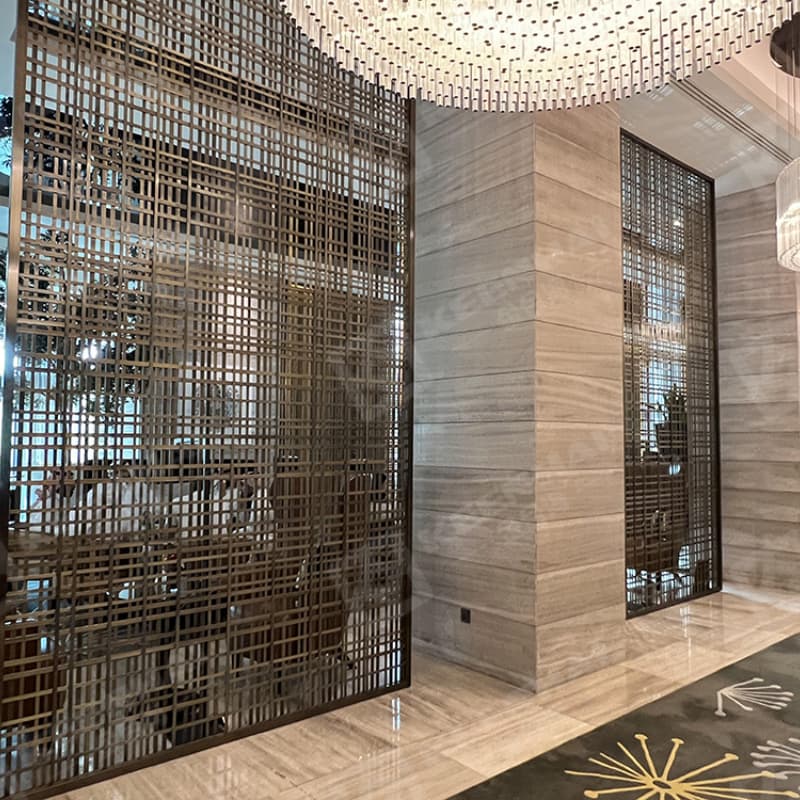
3. Typical Price Ranges for Large Commercial Applications
For large commercial projects, pricing does not fluctuate randomly. Once application type, finish level, and installation conditions are defined, price ranges for Stainless Steel Interior Screens fall into relatively stable brackets. What changes is not the range itself, but where a project lands within it.
3.1 Office, Hotel, and Lobby Interior Screen Pricing
Office buildings, hotels, and lobby areas typically prioritize durability, visual consistency, and controlled installation timelines. Screens in these spaces often function as partitions, feature walls, or circulation dividers, with specifications standardized across multiple floors.
For large commercial projects, price differences usually come from three measurable factors.
| Application Area | Typical Price Range (USD/m²) | Primary Cost Drivers |
|---|---|---|
| Office interiors | 120–220 | Panel size, repetition, fixing method |
| Hotel lobbies | 180–320 | Finish quality, pattern density |
| Public atriums | 220–380 | Panel height, reinforcement needs |
Projects that reuse panel modules across floors stay near the lower end of each range.
3.2 Retail and High-Traffic Interior Space Cost Ranges
Retail environments push pricing upward due to visual exposure and traffic intensity. Interior screens often act as brand elements, requiring tighter tolerances, cleaner edges, and more resilient finishes. Installation windows remain short, which increases coordination pressure.
Costs rise quickly when:
-
Screens install during active store fit-out phases.
-
Panels integrate with lighting, signage, or display systems.
-
Finishes must remain flawless under close-range viewing.
Compared with office interiors, retail projects typically sit 15–30% higher within the same material category.
3.3 Luxury Residential and High-End Interior Project Pricing
Luxury residential and high-end interiors operate under different expectations. Screens often appear as statement pieces rather than partitions, with custom patterns, color treatments, or layered compositions similar to decorative stainless steel interior screen systems. Unit areas remain smaller, but detailing intensity increases sharply.
Pricing shifts upward due to:
-
Bespoke patterns with low repetition.
-
Premium surface finishes.
-
Higher installation precision per panel.
While total quantities stay limited, per-square-meter pricing often exceeds commercial averages.
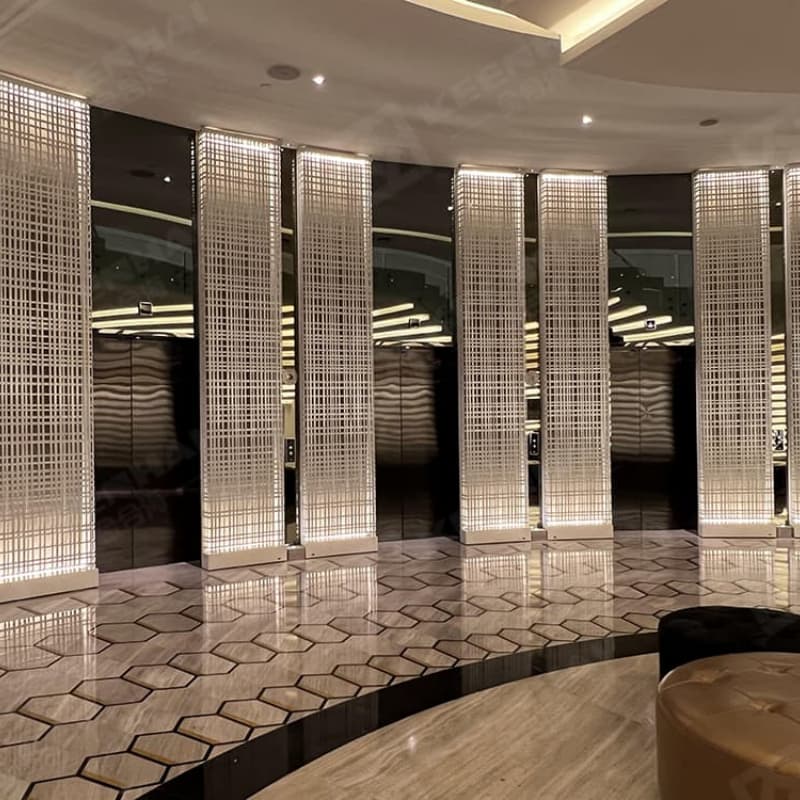
4. Cost Comparison by Manufacturing and Supply Model
Manufacturing and supply models shape cost transparency more than most buyers expect. Once quantities increase and delivery schedules tighten, pricing differences between supply models become structural rather than negotiable. This comparison applies to most Stainless Steel Interior Screens used in large commercial interiors.
4.1 Factory-Direct Pricing vs Distributor Pricing
Factory-direct sourcing shortens the pricing chain and exposes real production costs. Distributors, by contrast, bundle logistics, coordination, and risk into the final number. The price gap widens as quantities increase.
For large commercial projects, cost differences usually come from three measurable factors.
| Supply Model | Price Structure | Cost Behavior |
|---|---|---|
| Factory-direct | Production + logistics | Lower unit cost at scale |
| Distributor-based | Markup + service buffer | Stable but higher overall cost |
Factory-direct models benefit projects that lock specifications early and manage coordination internally. Distributor pricing suits projects prioritizing local support over unit cost.
4.2 Local Fabrication vs Overseas Manufacturing Cost Differences
Local fabrication trades speed and site flexibility for higher labor cost. Overseas manufacturing lowers unit pricing through labor efficiency and batch production but requires longer lead times and stricter planning.
Cost behavior typically shifts when:
-
Overseas production locks drawings before fabrication starts.
-
Shipping and customs schedules align with site readiness.
-
Installation teams receive pre-assembled or clearly labeled panels.
Projects with stable designs and predictable schedules gain more from overseas manufacturing than those still adjusting details during construction.
4.3 Standardized Panels vs Fully Custom Screen Pricing
Standardized panels control cost by repeating geometry, fixing methods, and finishes. Fully custom screens raise cost through engineering time, low repetition, and installation precision. The price difference grows faster than most clients anticipate.
Custom pricing increases when:
-
Each zone requires unique dimensions.
-
Patterns change without shared geometry.
-
Installation tolerances tighten without structural repetition.
Standardized systems scale efficiently; custom designs demand precision at every step.
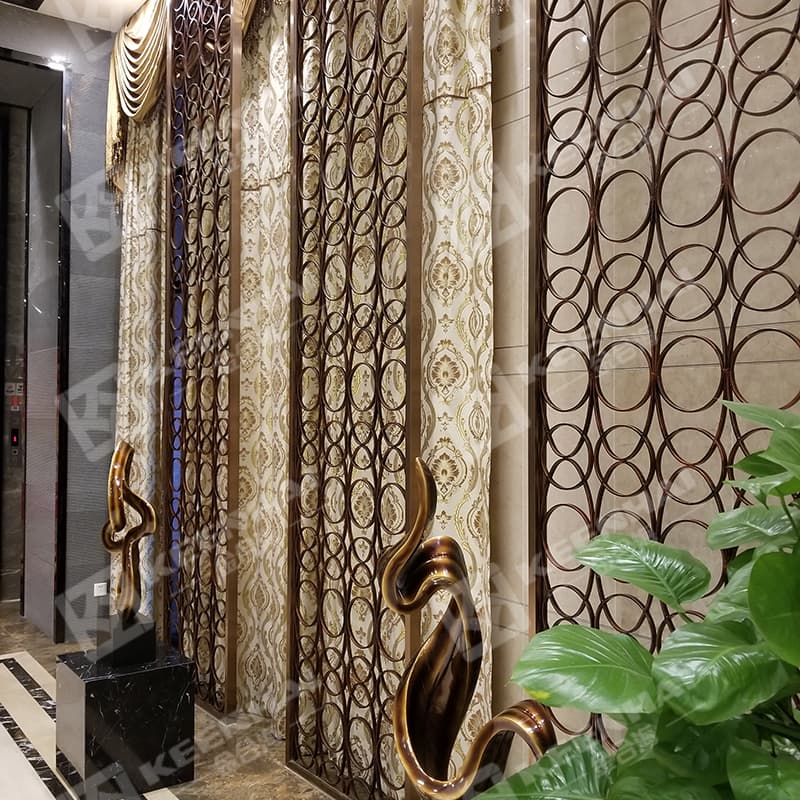
5. Budget Planning Tips for Large Stainless Steel Interior Screen Projects
Effective budget planning avoids surprises more than negotiating unit prices. In large-scale interior projects, early decisions on specifications, layout, and installation sequence dictate total cost far more than material or labor alone. Projects that anticipate constraints, modularize designs, and coordinate installation upfront usually stay within budget without compromising design intent.
5.1 Early Specification Locking and Volume Planning
Locking specifications early—material grade, panel thickness, surface finish, and pattern—stabilizes both fabrication and procurement cost. Volume planning further ensures factories can optimize nesting, minimize scrap, and schedule labor efficiently.
Critical steps include:
-
Define panel sizes and patterns for each zone before fabrication.
-
Confirm all finish requirements and coating options, including decorative options similar to Decorative Stainless Steel Interior Screen where needed.
-
Align total quantities with production batches to maximize efficiency.
Projects that freeze specifications early typically reduce cost by 10–20% compared with late-stage design changes.
5.2 Modular vs Fully Custom Layout Cost Management
Modular designs scale efficiently because repeated panels require less engineering time and fewer fabrication adjustments. Fully custom layouts increase cost due to low repetition, unique reinforcement requirements, and tighter tolerances.
Cost management tips:
-
Group panels by repeatable size or pattern.
-
Reserve fully custom panels only for focal areas.
-
Track cumulative material and labor cost for custom zones separately.
Using modular systems for the majority of the project protects budgets while still allowing visual highlights.
5.3 Installation Sequencing and On-Site Coordination
Installation sequencing directly impacts labor cost and risk of damage. Projects that coordinate panel delivery, frame setup, and site readiness reduce rework and downtime.
Recommended approach:
-
Install reinforcement frames and reference points first.
-
Place panels following a planned sequence to avoid conflicts.
-
Inspect alignment and tolerances continuously before final fixing.
-
Schedule specialized finishes, like PVD coated stainless steel interior screens, after structural installation to avoid damage.
In practice, well-planned sequencing can reduce on-site labor by 15–25% and prevent costly rework.
When it comes to Stainless Steel Interior Screens for large projects, pricing is predictable once you understand structure, volume, and finish requirements. Large-scale offices, hotels, retail, and luxury interiors follow clear cost brackets, and savings come from early specification locking, modular design, and coordinated installation. Projects that plan ahead and align fabrication, delivery, and on-site sequencing can control costs without sacrificing design impact or visual quality.