The price of a Stainless Steel Exterior Wall depends heavily on project size and complexity. Commercial buildings with large facades generally benefit from volume efficiency, reducing cost per square meter, while smaller renovations or boutique projects often have higher unit costs due to custom fabrication. Coordinating material grade, panel finish, and substructure design early ensures accurate budgeting and avoids unexpected price escalations.
1. Stainless Steel Exterior Wall Price Range by Project Type
For most commercial developments, pricing a സ്റ്റെയിൻലെസ്സ് സ്റ്റീൽ പുറംഭിത്തി starts with how the project uses the facade rather than with material cost alone. Office buildings, hotels, and retail complexes usually demand consistent finishes, tighter tolerances, and clean joint alignment, all of which raise fabrication and coordination requirements. In contrast, industrial or logistics buildings prioritize coverage area and durability, which keeps design complexity lower even when the total surface area increases. In real projects, developers rarely look at “cheap vs expensive” materials; they compare how long the facade performs without repainting, corrosion repair, or visual degradation. That long-term value is why stainless steel often appears in high-traffic urban environments where exposure to pollution, moisture, and temperature change is constant. Cost forms around function, and the more public-facing or design-driven the building is, the higher the facade budget typically goes.
1.1 Average Cost per Square Meter for Commercial Buildings
In commercial construction, budgets usually estimate facade cost per square meter during the feasibility stage. For stainless steel systems, this figure reflects three concrete variables: steel grade, panel thickness, and surface finish. A standard brushed or satin surface sits at the lower end of the range, while mirror-polished or patterned finishes increase cost due to additional processing and stricter quality control. Architects often specify a stainless steel metal cladding facade when they need visual consistency across large elevations without sacrificing corrosion resistance. Installation also affects the final number. Flat panel layouts with regular module sizes install faster and more efficiently, while curved walls, recessed joints, or mixed materials push labor and alignment costs higher. Developers who understand these drivers avoid unrealistic early budgets and move faster toward quotations that reflect real construction conditions instead of generic price assumptions.
1.2 Price Differences Between Small-Scale and Large-Scale Projects
Project scale directly changes how stainless steel exterior wall pricing behaves. Small projects often look simpler on paper, but they usually cost more per square meter because tooling, setup, and logistics spread over a limited area. Large projects benefit from volume efficiency, standardized panel dimensions, and continuous production schedules, which reduce unit cost even when total investment increases.
| Project Size | Typical Facade Area | Cost per m² Trend | Primary Reason |
|---|---|---|---|
| Small-scale | < 500 m² | Higher | Custom fabrication, low volume efficiency |
| Mid-size commercial | 500–3,000 m² | Stable | Balanced material and labor allocation |
| Large-scale projects | > 3,000 m² | Lower | Bulk sourcing, standardized modules |
On large developments, early coordination between facade engineers and architects often focuses on panel sizing and joint rhythm. Those early decisions influence cost more than material choice itself, especially when the goal is to control budgets without compromising appearance or service life.
2. Key Cost Factors That Affect Stainless Steel Exterior Wall Pricing
When project teams evaluate pricing, they rarely look at surface appearance alone. Cost forms at the intersection of material specification and fabrication logic, and small technical choices can shift the budget significantly. In real projects, stainless steel wall systems gain their price advantage not from being “cheap,” but from predictable performance, low maintenance cycles, and structural reliability over decades. Two factors dominate almost every quotation: what the panels are made of, and how difficult they are to manufacture and install. Understanding these variables helps developers and contractors control cost early instead of reacting to it after drawings are finalized.
2.1 Material Grade, Thickness, and Surface Finish
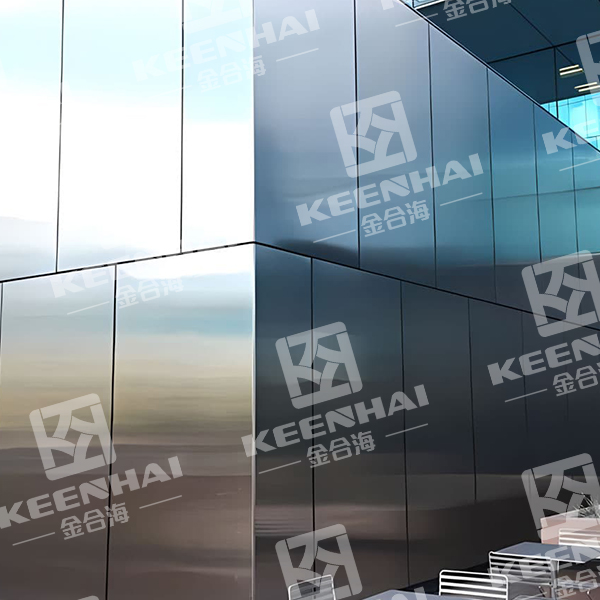
Material selection sets the baseline price for any stainless steel exterior wall system. Grade determines corrosion resistance, thickness controls structural rigidity, and surface finish influences both appearance and processing time. For example, 304-grade stainless steel suits most urban environments, while 316-grade appears more often in coastal or industrial zones due to higher molybdenum content. Thickness directly affects wind-load resistance and panel flatness; thinner sheets reduce material cost but demand tighter subframe spacing. Surface finish adds another layer of cost logic. Brushed or satin finishes process quickly and hide fingerprints, whereas mirror-polished or patterned surfaces require multiple polishing stages and stricter inspection. The key point is simple: higher performance and visual precision always translate into higher fabrication input, not just higher raw material cost.
| ഘടകം | Common Options | Cost Impact | Practical Effect |
|---|---|---|---|
| Material grade | 304 / 316 | Medium to high | Corrosion resistance level |
| Thickness | 1.2–2.5 mm | ഇടത്തരം | Panel stiffness and flatness |
| ഉപരിതല ഫിനിഷ് | Brushed / Mirror / Textured | Medium to high | Visual quality and processing time |
2.2 Panel Size, Fabrication Complexity, and Customization Level
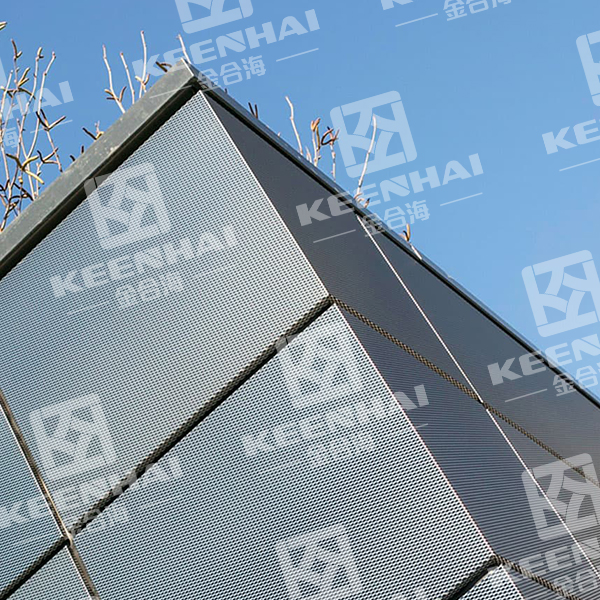
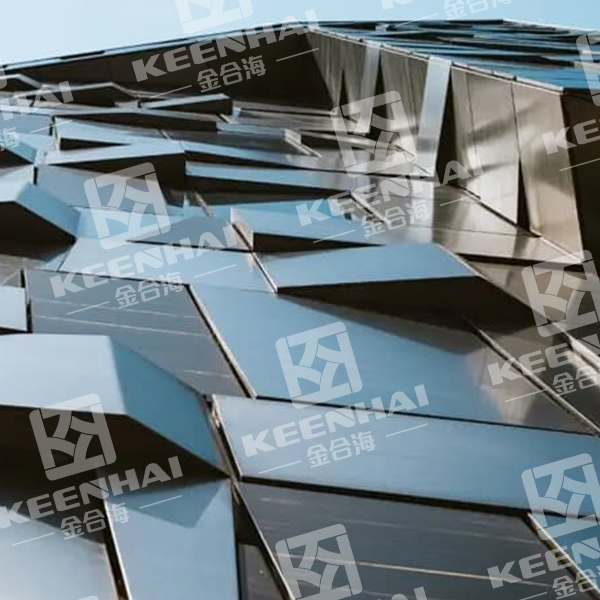
Panel geometry often matters more than material grade once specifications move beyond standard layouts. Exterior stainless steel panels in regular rectangular modules install faster, waste less material, and allow repeatable fabrication. As soon as a project introduces curved surfaces, folded edges, perforations, or mixed joint depths, fabrication time increases sharply. Customization also affects tooling strategy. A facade using five standardized panel sizes moves through production efficiently, while a facade with dozens of unique dimensions slows cutting, bending, and quality checks. During installation, complex geometries require clearer sequencing:
-
Install primary subframe and verify tolerances.
-
Dry-fit panels to confirm alignment.
-
Adjust fixing points before final fastening.
Every additional adjustment step adds labor hours, which directly raises the installed price. This is why experienced teams align panel dimensions early with the overall stainless steel facade design strategy, reducing cost without sacrificing architectural intent.
3. Stainless Steel Exterior Wall System Costs and Structural Requirements
When buyers review pricing, many underestimate how much the wall system structure influences the final figure. A complete സ്റ്റെയിൻലെസ്സ് സ്റ്റീൽ പുറംഭിത്തി never consists of panels alone. The real cost forms through the interaction between panels, substructure, and fixing logic. In commercial projects, structural planning often accounts for 25–40% of the total facade budget, especially on mid- to high-rise buildings. Load transfer, thermal movement, and installation tolerance all shape how the system performs over time. A well-designed structural system reduces long-term deformation, vibration, and maintenance, while a poorly planned one leads to rework and higher labor cost. This is why experienced project teams evaluate wall systems as engineered assemblies, not decorative skins.
3.1 Substructure, Support Frames, and Installation Accessories
Substructure design directly affects both material usage and installation efficiency. Stainless steel wall systems typically rely on aluminum or galvanized steel support frames, adjustable brackets, and concealed fasteners to absorb building movement. Frame spacing determines panel thickness requirements; wider spacing reduces frame cost but demands thicker panels to control deflection. Accessories such as anchors, expansion bolts, and isolation pads also matter. These components prevent galvanic corrosion and ensure stable load transfer over decades. Installation usually follows a clear sequence:
-
Fix primary support frames and verify vertical alignment.
-
Install adjustable brackets to control panel offset.
-
Mount exterior stainless steel panels and lock final tolerances.
Each adjustment point adds labor hours, so precision during frame layout directly controls cost. Projects that rush this stage often face alignment corrections later, which drives up installation expense without improving performance.
3.2 Impact of Installation Method on Total Project Cost
Installation method influences cost more than many buyers expect. Open-joint systems install faster and simplify maintenance, while concealed-fix systems deliver cleaner aesthetics at higher labor input. Mechanical fixing allows quicker replacement but exposes fasteners, whereas concealed hanging systems require tighter tolerances and skilled installers. The choice often depends on architectural intent and building height. Installation speed, access difficulty, and error tolerance define labor cost, not panel price alone.
| Installation Method | Labor Intensity | Cost Impact | സാധാരണ ഉപയോഗം |
|---|---|---|---|
| Open mechanical fixing | താഴ്ന്നത് | Lower | Industrial and utility buildings |
| Concealed hook-on system | Medium–High | Higher | Commercial and public facades |
| Cassette panel system | ഉയർന്ന | Highest | Landmark architectural projects |
On tall buildings or complex geometries, crane access, scaffolding time, and sequencing constraints further increase installation cost. Choosing the right system early prevents budget overruns, especially when stainless steel facade solutions form a major visual element of the building envelope.
4. Manufacturing, Supply, and Logistics Cost Breakdown
Beyond material and installation, a significant portion of the budget comes from how the സ്റ്റെയിൻലെസ്സ് സ്റ്റീൽ പുറംഭിത്തി moves from raw coil to job site. Manufacturing strategy and supply chain decisions often determine whether a quotation stays competitive or becomes inflated. In real projects, fabrication efficiency, production batching, and quality control directly affect unit cost. Large facade orders benefit from continuous production runs, where cutting, bending, welding, and finishing follow a stable workflow. Smaller or fragmented orders interrupt that flow and increase setup time. This is why two projects with identical drawings can end up with very different prices, simply based on where and how the panels are produced. Buyers who understand this logic evaluate suppliers not just on price, but on manufacturing capability and project coordination experience.
4.1 Factory Production Cost vs Local Sourcing
Factory-based production usually offers better cost control than local sourcing, especially for medium to large commercial projects. Centralized factories invest in CNC cutting, automated bending, and standardized surface finishing lines, which reduce labor hours per panel. Local workshops, while flexible, often rely on manual processes that increase unit cost and introduce inconsistency. For exterior stainless steel panels, factory production also improves dimensional accuracy, which shortens installation time on site. The cost difference becomes more obvious when projects require repeatable panel sizes and consistent finishes. Lower fabrication cost does not mean lower quality; it usually reflects higher process efficiency. Many developers sourcing through established manufacturers connected to the broader pvdstainlesssteel supply chain see more predictable pricing because production, inspection, and packing follow unified standards rather than ad-hoc methods.
4.2 Packaging, Shipping, and Export-Related Expenses
Logistics represent a smaller percentage of total cost, but poor planning can still erode savings. Stainless steel facade components require protective packaging to prevent surface damage during transit. Standard practice includes PE film protection, foam separation, reinforced crates, and moisture barriers for long-distance shipping. Export projects also add cost layers such as inland transport, container loading, and customs documentation. Shipping strategy often follows a clear process:
-
Group panels by installation sequence to reduce on-site handling.
-
Optimize crate dimensions to maximize container space.
-
Schedule deliveries to align with installation phases.
Efficient logistics reduce handling damage and site delays, which indirectly lowers labor cost. When facade panels arrive organized and ready for installation, contractors spend less time sorting materials and more time installing, keeping the overall project budget under control.

5. Budget Planning Tips for Stainless Steel Exterior Wall Projects
Planning a budget for a സ്റ്റെയിൻലെസ് സ്റ്റീൽ പുറംഭിത്തി project requires more than just multiplying material cost by area. Successful developers focus on identifying cost drivers early, understanding how design decisions affect installation, and coordinating with manufacturers to align production and delivery schedules. In practice, budgeting starts by breaking down the project into key components: panel material and finish, substructure, installation method, and logistics. Accurate forecasting depends on assessing each variable quantitatively, such as panel size variance, expected labor hours, and shipping distances. Developers who adopt this approach can minimize surprises during procurement and maintain consistent quality without overspending.
5.1 Cost Control Strategies for Contractors and Developers
Contractors often reduce total expenditure by implementing strategic measures during both design and execution. Key strategies include:
-
Standardizing panel sizes to reduce cutting and fabrication complexity.
-
Optimizing subframe layout to minimize material usage while ensuring structural performance.
-
Selecting finishes that balance appearance and fabrication cost, such as brushed or satin surfaces for large facades.
-
Coordinating deliveries to align with installation phases, which avoids storage delays and handling damage.
Developers who combine these strategies with early supplier consultation achieve predictable pricing, allowing them to maintain both visual quality and long-term durability. Many successful projects also integrate minor design adjustments to simplify installation sequences, which directly reduces labor cost without compromising aesthetic intent.
5.2 How to Request Accurate Pricing from Manufacturers
Obtaining precise quotations requires a detailed, structured approach. Buyers should:
-
Provide full project drawings, including facade dimensions, panel layouts, and support frame details.
-
Specify material grade, thickness, and surface finish, highlighting areas needing higher precision or durability.
-
Clarify installation method, access constraints, and delivery schedule.
-
Ask for breakdowns of material, labor, and logistics costs, which helps compare suppliers fairly.
Clear communication reduces estimation errors and prevents scope creep, while also allowing manufacturers to suggest cost-saving alternatives such as modular panel sizes or standardized fastening systems. Contractors who follow this structured request process often secure competitive quotes that reflect real-world installation effort, minimizing risk of budget overruns and delays.