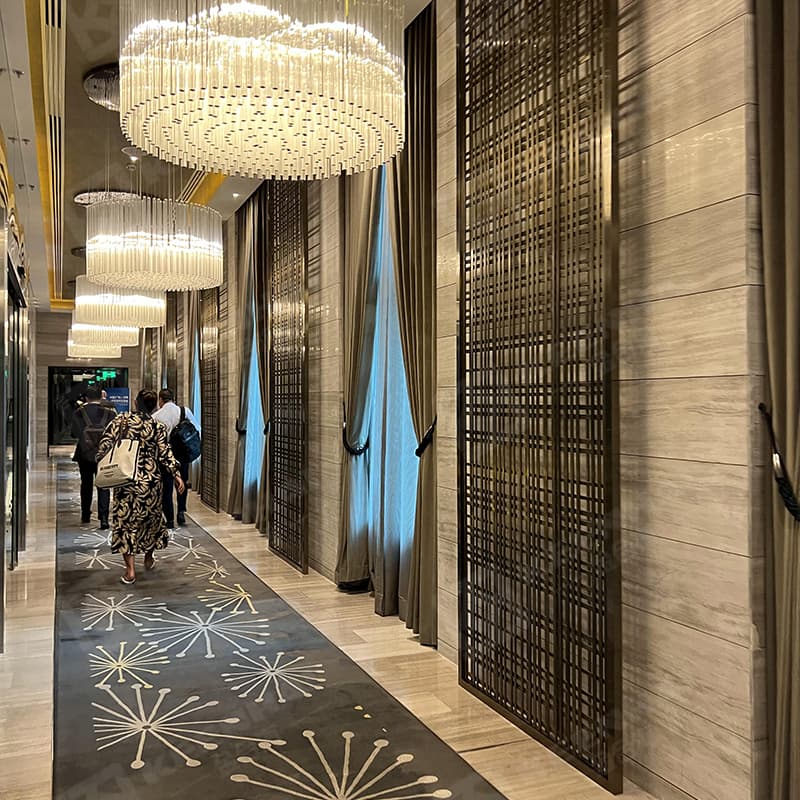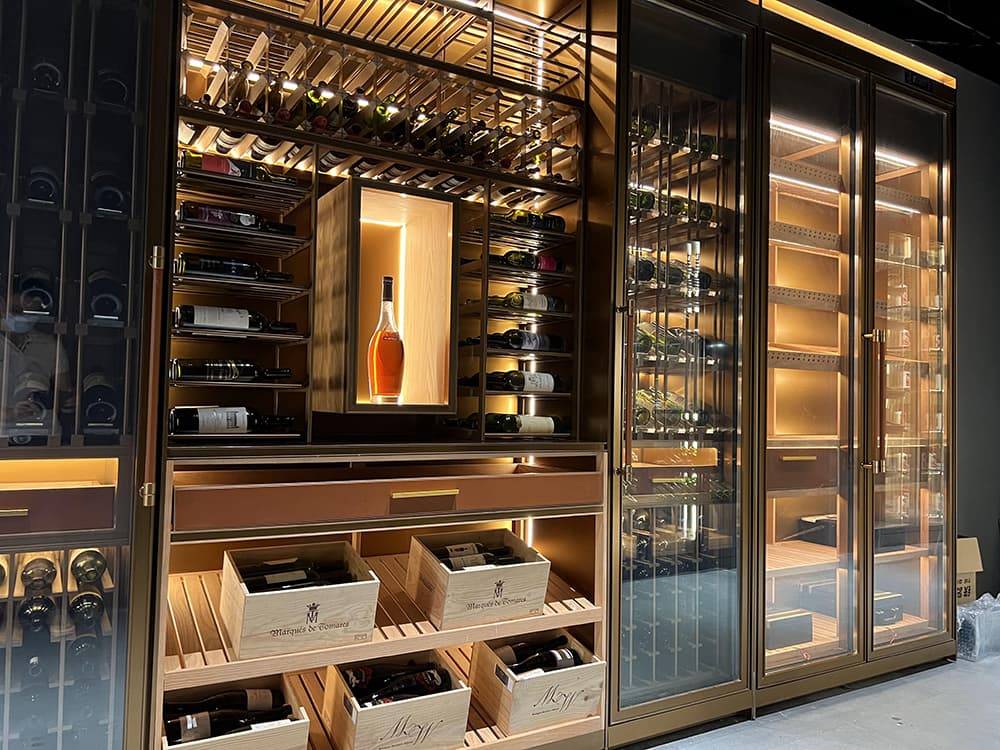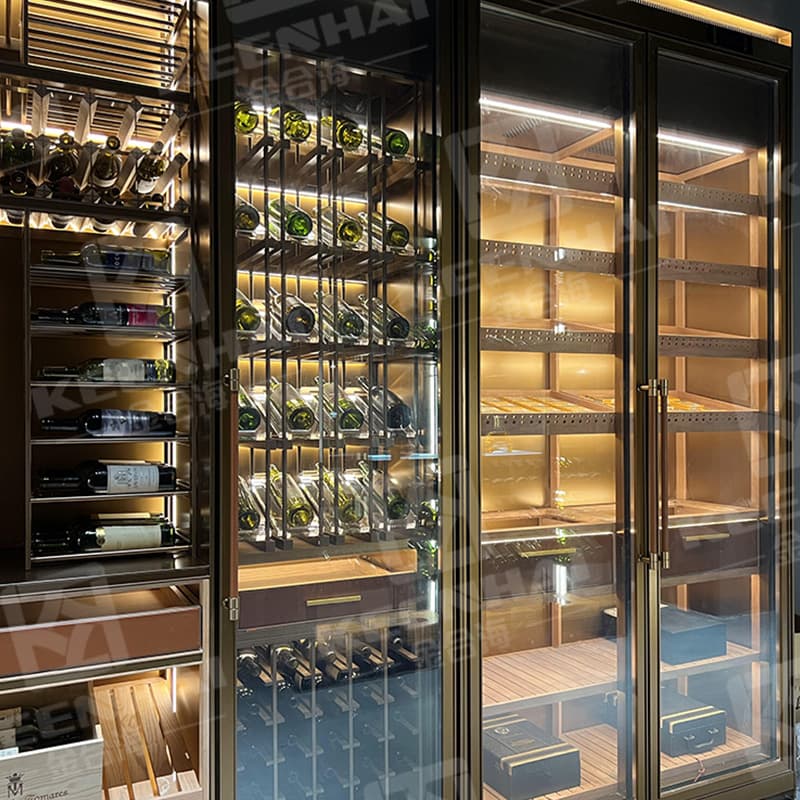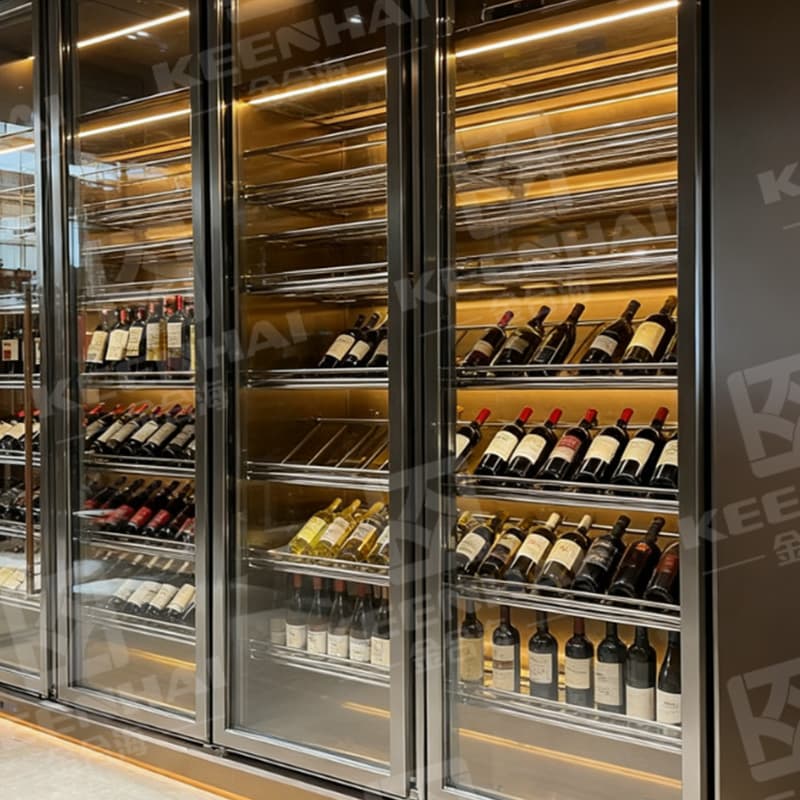
A Stainless Steel Wine Cellar Supplier for High-End Projects provides fully customized solutions that combine structural precision, premium materials, and flawless integration with glass, lighting, and climate control systems. They manage every stage from design to installation, ensuring that your wine storage is both visually stunning and functionally reliable. High-end suppliers also offer guidance on maintenance and long-term performance, guaranteeing a wine cellar that remains a centerpiece for years.
1. Core Capabilities of a Stainless Steel Wine Cellar Supplier for High-End Projects
For high-end residential and commercial developments, a altzairu herdoilgaitzezko ardo-upategia is not a decorative add-on—it is a permanent architectural system. Developers, architects, and private owners expect a supplier to deliver precision manufacturing, correct material selection, and structurally reliable systems that integrate seamlessly into luxury interiors. A qualified supplier must demonstrate these capabilities consistently across complex project conditions, not just in small custom orders.
1.1 Precision Manufacturing Standards for Luxury Wine Cellars
High-end wine cellar projects demand manufacturing accuracy rather than visual complexity. In premium villas, penthouses, and hospitality spaces, stainless steel structures are often fully exposed, paired with glass enclosures and architectural lighting. Even minor dimensional deviations become visible once reflections and shadows interact with the structure.
A capable supplier establishes manufacturing precision through a clearly controlled process:
-
Digital modeling and tolerance definition at the design stage, ensuring that all load-bearing components align before production begins.
-
CNC cutting and precision bending to maintain consistent geometry across repeated modules, especially for vertical wine display walls.
-
Controlled welding and joint finishing, allowing connections to remain visually clean without compromising structural strength.
In a double-height wine room or a feature cellar positioned between living spaces, this level of precision ensures that the wine storage system reads as part of the architecture, not as an installed fixture. Luxury projects do not tolerate on-site corrections caused by manufacturing inaccuracies.
1.2 Material Grade Selection for Premium Stainless Steel Wine Cellar Systems
Material selection plays a decisive role in durability, maintenance effort, and long-term appearance. High-end projects never rely on a single default specification; instead, material grades are selected based on environmental conditions, visual requirements, and expected service life.
Professional suppliers clearly differentiate material applications within a premium stainless steel wine cellar system, as shown below:
| Stainless Steel Grade | Aplikazio tipikoa | Key Performance Characteristics | High-End Project Suitability |
|---|---|---|---|
| 304 Altzairu Herdoilgaitza | Climate-controlled indoor wine rooms | Stable structure, refined surface finish | Suitable for most luxury residential interiors |
| 316 Altzairu Herdoilgaitza | Coastal or high-humidity environments | Enhanced corrosion resistance | Preferred for seaside villas and hotels |
| Brushed / Satin Finish | Display-oriented wine cellars | Reduced glare, lower fingerprint visibility | Ideal for premium visual presentation |
Correct material selection is not about excess specification; it is about alignment with project conditions.
For example, in enclosed urban residences with stable temperature and humidity, 304 stainless steel performs reliably for decades. In contrast, coastal properties benefit significantly from 316-grade materials to avoid surface degradation over time.
1.3 Structural Engineering for Large-Scale and Custom Wine Cellar Projects
High-end wine cellar projects often extend beyond standard residential scale. Full-height display walls, suspended storage systems, and multi-zone layouts introduce structural challenges that cannot be addressed through generic designs.
An experienced supplier approaches structural engineering as a coordinated system:
-
Load calculations based on full bottle capacity, accounting for both static weight and long-term material fatigue.
-
Independent support logic, allowing stainless steel frames to remain stable without transferring stress to glass panels or decorative finishes.
-
Modular structural segmentation, enabling large installations to be transported, installed, and aligned without compromising overall rigidity.
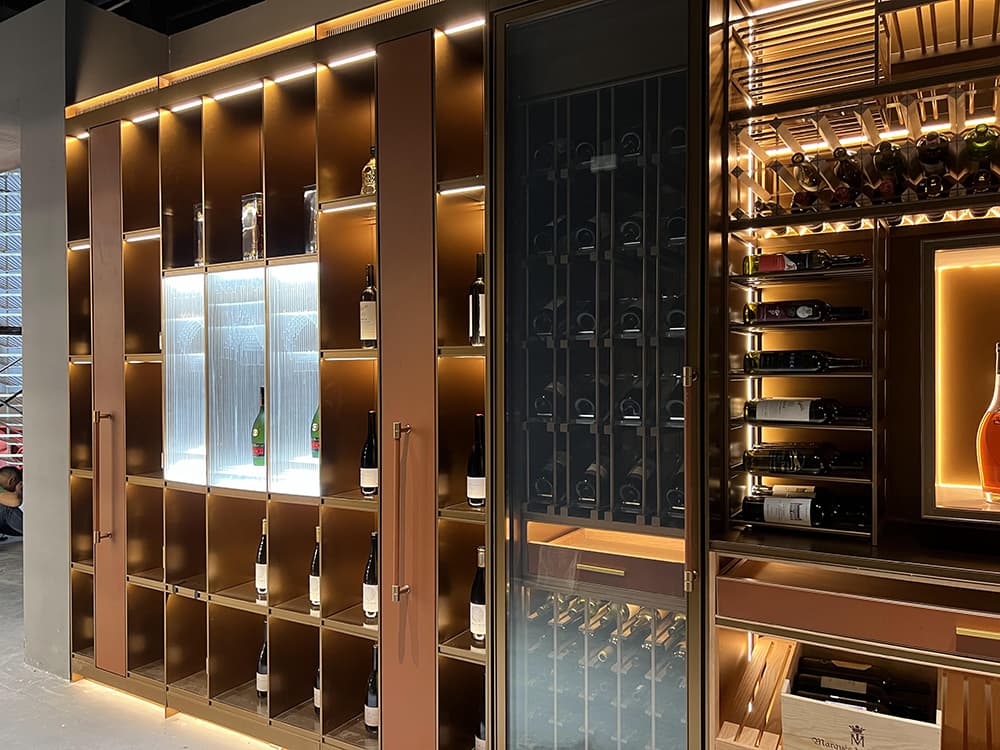
In large custom installations, stainless steel frameworks frequently support integrated wine racks, lighting channels, and glass partitions simultaneously. Structural integrity at this level determines whether the wine cellar remains visually aligned and mechanically stable years after installation, especially in projects where architectural tolerances are unforgiving.
2. Customization Expertise for High-End Stainless Steel Wine Cellar Projects
In high-end projects, customization does not mean visual variation alone. It means the supplier can translate architectural intent into a structurally precise, buildable, and repeatable system. A supplier’s customization expertise determines whether a wine cellar integrates seamlessly into the space or remains a standalone installation with visible compromises.
2.1 Bespoke Stainless Steel Wine Cellar Design and Fabrication
True bespoke capability begins before fabrication. In luxury projects, a Altzairu herdoilgaitzezko upategia often aligns with fixed architectural constraints such as slab heights, column grids, stair voids, or glass curtain walls. A capable supplier treats these constraints as design inputs rather than obstacles.
The customization process typically follows a structured workflow:
-
Project-specific dimensional mapping, capturing exact floor-to-ceiling heights, structural offsets, and integration points with surrounding finishes.
-
Section-based system design, allowing wine storage modules to align with architectural rhythms instead of forcing uniform spacing.
-
Fabrication sequencing based on installation order, ensuring that larger structural components install first, followed by precision display elements.
In high-end residential cellars, this approach allows wine displays to wrap around staircases or float between glass partitions. In hospitality projects, it enables feature wine walls to act as visual anchors within open-plan dining spaces. Bespoke fabrication succeeds when the final installation appears inevitable, not assembled.
2.2 Integration with Glass, Lighting, and Climate Control Systems
Customization reaches its highest value at the integration level. High-end wine cellars rarely exist as isolated metal structures; they operate as part of a coordinated system involving glass enclosures, architectural lighting, and environmental controls.
A professional supplier coordinates these systems through precise interface control:
-
Glass alignment logic, ensuring stainless steel frames maintain consistent reveal lines and prevent stress transfer to glass panels.
-
Lighting channel integration, embedding LED profiles within structural members to avoid secondary mounting hardware.
-
Climate system accommodation, reserving airflow paths and service clearances without disrupting visual continuity.
In premium projects, integrated stainless steel wine cabinets—such as custom display modules or enclosed storage units—often connect directly to climate-controlled zones. In these cases, referencing engineered custom stainless steel wine cabinets ensures consistent material behavior, thermal stability, and visual alignment across the entire system.
Successful integration eliminates visible transitions between systems, allowing the wine cellar to function as both a storage solution and an architectural feature.
2.3 Flexibility for Residential, Hospitality, and Commercial Luxury Projects
High-end suppliers demonstrate customization strength through adaptability across project types. Residential, hospitality, and commercial luxury projects impose different priorities, yet they often rely on the same underlying engineering logic.
-
Residential projects prioritize visual refinement, quiet operation, and precise fit within limited spatial envelopes.
-
Hospitality environments demand higher bottle density, durable finishes, and rapid installation to meet opening schedules.
-
Commercial luxury spaces require modular scalability, allowing systems to expand or reconfigure without full replacement.
Flexibility at this level depends on modular structural logic combined with project-specific detailing. For example, a wine cellar designed for a private villa may later inform a hotel installation, with adjusted load ratings and access logic but identical core components.
A supplier capable of supporting all three environments does not redesign from zero; instead, they recalibrate proven systems to match project intent. This capability reduces risk for developers and ensures consistent execution across diverse luxury applications.
3. Quality Control and Performance Requirements in High-End Projects
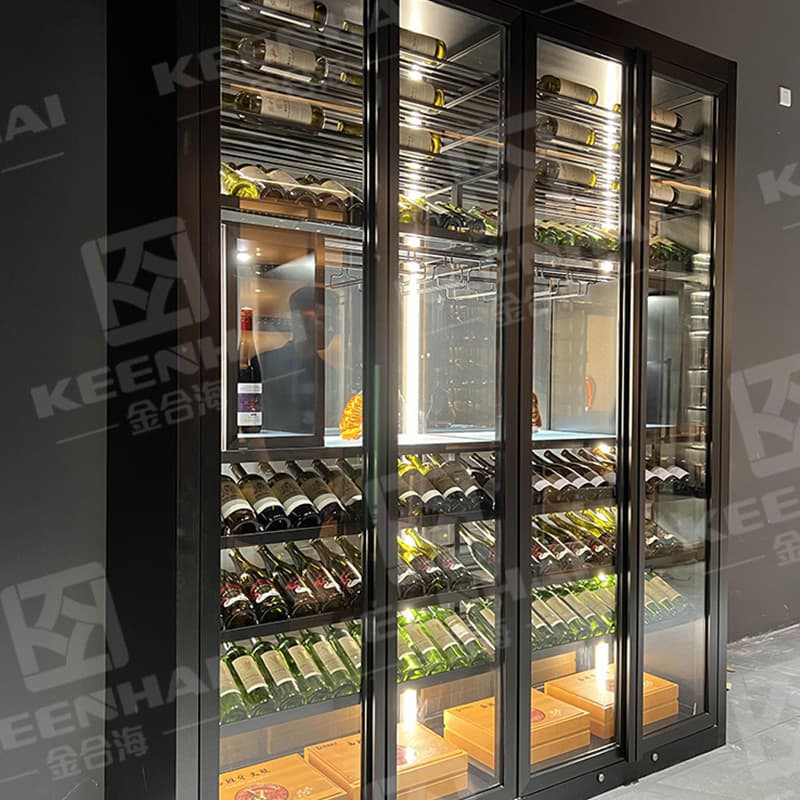
In high-end environments, quality control defines whether a system maintains its original appearance and performance years after installation. A Altzairu herdoilgaitzezko upategia does not operate as a disposable interior element; it functions as a long-term architectural asset. For this reason, suppliers must control surface quality, structural performance, and environmental resistance at a measurable level.
3.1 Surface Finish Consistency and Visual Uniformity
Visual consistency ranks as a non-negotiable requirement in luxury wine cellar installations. Stainless steel surfaces interact directly with glass panels, architectural lighting, and reflective interior finishes. Even slight variations in grain direction or gloss level become immediately noticeable once the system installs.
Professional suppliers enforce surface quality through controlled production steps:
-
Unified surface treatment batches, ensuring that all visible components receive finishing under identical parameters.
-
Directional grain alignment, maintaining consistent brushing orientation across vertical and horizontal elements.
-
Post-fabrication inspection under project lighting conditions, identifying visual inconsistencies before delivery.
In feature installations where stainless steel wine displays serve as focal points—such as lounge-facing wine walls or atrium-adjacent cellars—this level of control ensures that the structure reads as a single, continuous system. Visual uniformity directly affects perceived project value, especially in spaces where design intent centers on refinement rather than ornamentation.
3.2 Load-Bearing Capacity and Long-Term Structural Stability
High-end wine cellar systems often carry substantial static loads. A fully stocked display wall can support hundreds or thousands of bottles, each introducing long-term stress to the structure. Suppliers must engineer systems that maintain alignment and rigidity under continuous load, not just at installation.
Reliable performance depends on several structural controls:
-
Load calculations based on maximum bottle density, not average usage scenarios.
-
Independent support paths, allowing racks and frames to carry weight without transferring stress to glass enclosures or decorative finishes.
-
Connection detailing that limits micro-movement, preventing long-term loosening or deformation.
For modular display configurations that incorporate custom stainless steel wine rack systems, structural consistency becomes even more critical. These systems must maintain spacing accuracy across multiple modules while supporting cumulative weight over time. Structural stability protects both safety and visual precision, especially in tall or freestanding installations.
3.3 Corrosion Resistance and Environmental Adaptability
Environmental exposure varies significantly across high-end projects. Urban residences, coastal villas, underground cellars, and hospitality venues all introduce different humidity levels, temperature fluctuations, and air quality conditions. Suppliers must adapt material and finishing strategies accordingly.
Environmental adaptability typically aligns with material selection and surface protection strategy:
| Project Environment | Primary Risk Factors | Recommended Stainless Steel Strategy | Performance Benefit |
|---|---|---|---|
| Climate-controlled interiors | Stable temperature, low humidity | 304 stainless steel with refined finish | Long-term visual stability |
| Coastal or humid locations | Salt air, moisture exposure | 316 altzairu herdoilgaitza | Enhanced corrosion resistance |
| Commercial hospitality spaces | High usage, cleaning frequency | Brushed or satin finishes | Reduced wear visibility |
Corrosion resistance is not optional in high-end projects—it directly determines lifecycle cost and maintenance effort.
By matching material grade and finish to environmental conditions, suppliers ensure that stainless steel components retain both structural integrity and surface quality throughout extended service periods.
4. Project-Level Supply and Coordination Capabilities
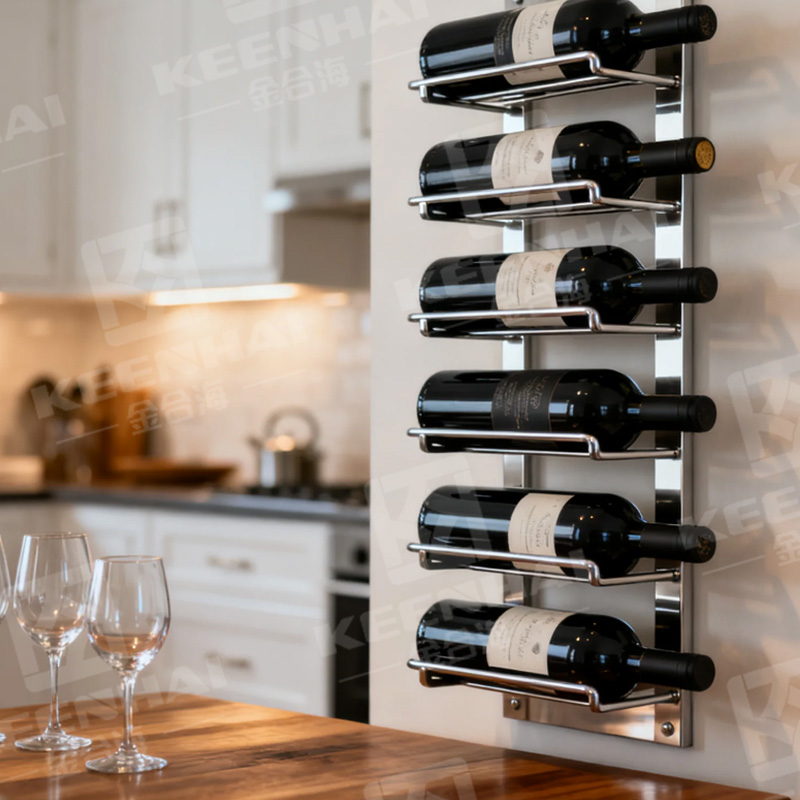
In high-end wine cellar projects, execution risk rarely comes from design alone. It comes from supply fragmentation, unclear responsibility boundaries, and poor coordination across disciplines. A qualified supplier must operate at project level, not just at product level, ensuring continuity from concept to final installation.
4.1 End-to-End Support from Design to Final Installation
High-end projects demand a supplier that maintains control across every stage of delivery. Fragmented handoffs between design, fabrication, and installation often result in dimensional conflicts, schedule delays, and compromised visual outcomes.
A project-capable supplier structures delivery through a defined sequence:
-
Pre-fabrication coordination, aligning shop drawings with architectural sections, reflected ceiling plans, and MEP layouts.
-
Production sequencing tied to site conditions, ensuring structural components arrive before glass panels, lighting fixtures, or finish materials.
-
Installation logic validation, confirming anchor points, tolerances, and access paths before materials reach site.
In large custom installations, this approach ensures that a stainless steel wine cellar system installs once, correctly, and without rework. End-to-end responsibility eliminates ambiguity, which high-end projects cannot afford under tight timelines and premium budgets.
4.2 Production Capacity for High-End and Large-Volume Wine Cellar Projects
Customization alone does not qualify a supplier for high-end projects. Production capacity determines whether the supplier can scale bespoke systems without sacrificing precision or delivery reliability.
Project-grade suppliers demonstrate capacity through measurable capabilities:
-
Dedicated fabrication lines for stainless steel structures, avoiding cross-contamination with unrelated product categories.
-
Parallel production workflows, allowing multiple large projects to progress without bottlenecks.
-
Consistent output under schedule pressure, maintaining dimensional accuracy across hundreds of components.
For developers managing multiple luxury residences or hospitality operators executing phased rollouts, production scalability reduces risk. This level of execution typically comes from manufacturers with integrated engineering and fabrication resources, such as pvdstainlesssteel’s in-house production capabilities, where customization and volume coexist without conflict.
Capacity protects timelines. Precision protects reputation. High-end projects require both.
4.3 Coordination with Architects, Designers, and Contractors
Successful high-end installations depend on early and continuous coordination. Wine cellar systems often intersect with architectural finishes, glass assemblies, lighting design, and climate infrastructure. Without alignment, even well-designed systems encounter site conflicts.
Effective coordination focuses on three priorities:
-
Design intent translation, ensuring structural logic supports visual goals defined by architects and interior designers.
-
Clear interface definition, preventing clashes between stainless steel components and adjacent trades.
-
Responsive technical communication, resolving site conditions without compromising approved designs.
In collaborative environments, suppliers who speak the language of architects and contractors reduce friction across the project lifecycle. Coordination at this level transforms the supplier from a vendor into a project partner, which high-end stakeholders actively seek when complexity increases.
5. Commercial Value and Supplier Reliability for High-End Buyers
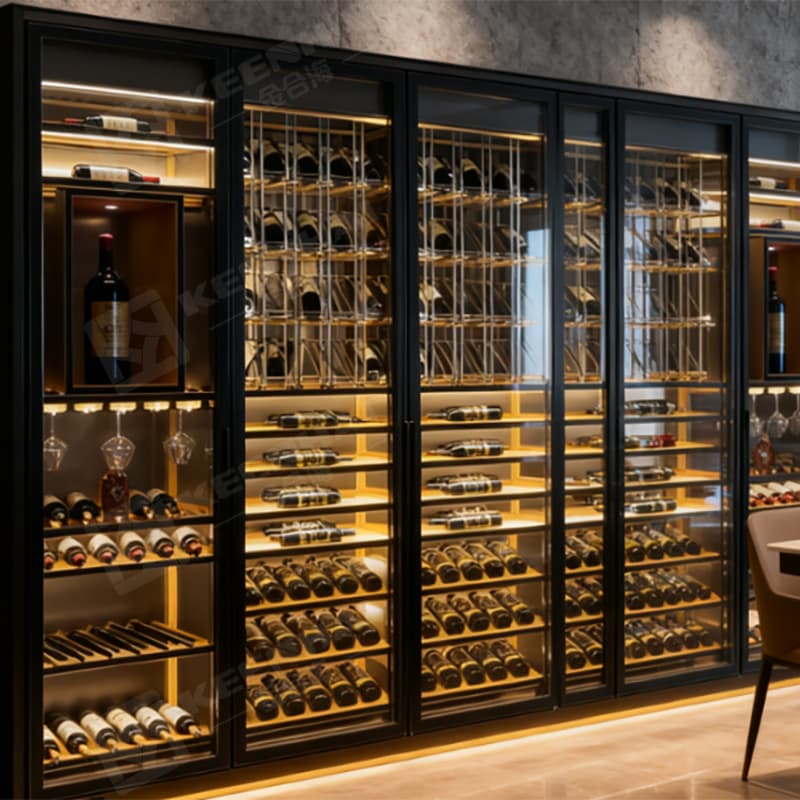
For high-end buyers, a wine cellar is not just a storage solution—it’s a long-term investment in both functionality and luxury experience. Selecting a reliable supplier ensures your project delivers on both fronts, avoiding costly delays and preserving aesthetic integrity.
5.1 Cost Transparency and Pricing Structure for Premium Projects
Luxury projects demand clear and detailed pricing. A trustworthy supplier breaks down costs for materials, fabrication, installation, and optional custom features. This transparency allows buyers to plan budgets accurately and avoid hidden fees. For multi-phase or modular installations, suppliers may offer tiered pricing based on volume or complexity, helping high-end buyers scale without renegotiation.
5.2 Lead Time Control and On-Time Delivery Assurance
Timely delivery is critical in premium projects. Delays can disrupt coordinated work with flooring, lighting, glass, or climate systems. Top suppliers implement precise production schedules and logistics planning, ensuring materials arrive in sequence.
-
Schedule sequencing: critical components arrive first, followed by secondary modules.
-
Pre-assembly where possible, reducing installation time on site.
-
Real-time tracking and communication, so project managers know exactly when each module reaches the site.
For buyers seeking full confidence in high-end stainless steel wine cellar systems, partnering with pvdstainlesssteel’s project capabilities guarantees that production capacity, modular design, and on-site coordination are fully aligned with project timelines. This single partnership covers both custom design and delivery reliability, reducing risk and increasing efficiency.
5.3 After-Sales Support for High-End Stainless Steel Wine Cellar Systems
Even after installation, high-end buyers expect long-term support. Leading suppliers provide:
-
Maintenance guidance, including cleaning methods and minor adjustments.
-
Warranty coverage for structural components and finishes.
-
Remote and on-site technical support, ensuring any issues are addressed promptly.
This level of service ensures your wine cellar maintains its visual and functional excellence for years, making your investment not only beautiful but reliable. After-sales support is the ultimate proof of supplier trustworthiness in high-end projects.